


Introduction: Navigating Global Trade Tensions and Indian Market Resilience in November 2025
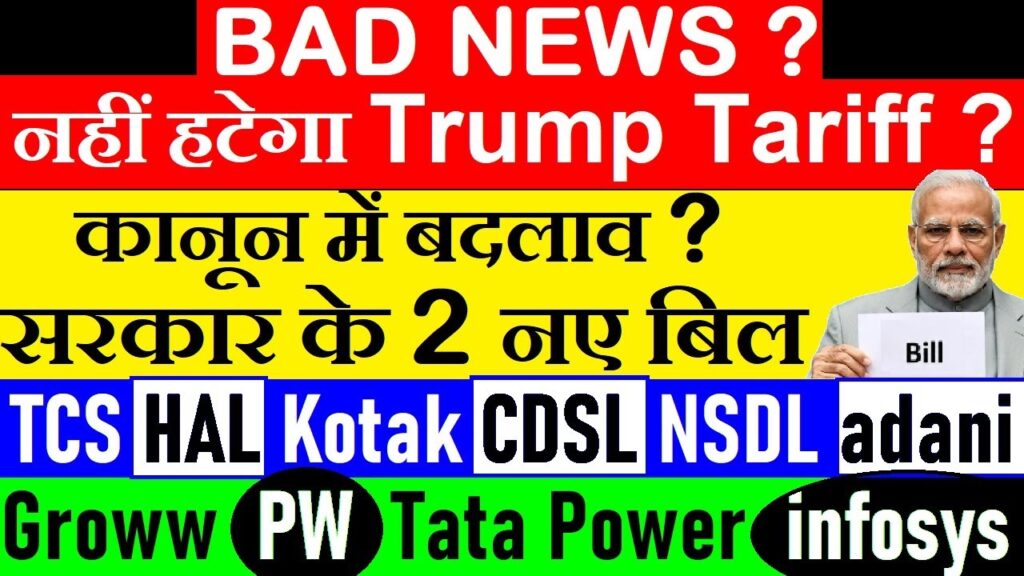
Investors across India are closely watching the unfolding drama in the United States as the Supreme Court deliberates on President Donald Trump’s controversial tariffs. Set for a decision in the first week of December 2025, this ruling could reshape global trade dynamics, sending ripples through emerging markets like India. Trump’s administration has already signaled preparedness for alternative measures if the court strikes down the tariffs, insisting on a “game two plan” to impose duties on imports from key partners including India. This stance has heightened volatility in sectors reliant on exports, such as information technology (IT) services, manufacturing, and renewables.
Yet, amid these uncertainties, the Indian stock market demonstrates remarkable resilience. The Nifty 50 index hovers near 26,000, buoyed by strong domestic inflows and retail participation that has pushed demat accounts beyond the 20 crore milestone. Companies like Groww, Tata Consultancy Services (TCS), Adani Enterprises, Infosys, Kotak Mahindra Bank, and power giants such as Tata Power and Hindustan Aeronautics Limited (HAL) remain in sharp focus. Recent developments—from SEBI’s leadership changes to electricity sector reforms and the tragic Tejas fighter jet crash at the Dubai Air Show—add layers of intrigue.
This comprehensive analysis explores how Trump’s tariffs could disrupt Indian equities, while highlighting opportunities in high-growth stocks. We delve into sector-specific updates, stock performances, and strategic investment insights to help you position your portfolio for the weeks ahead. Whether you’re a seasoned trader eyeing short-term reactions or a long-term investor building wealth, understanding these interconnections is key to thriving in 2025’s volatile landscape.
Trump Tariffs and Supreme Court Showdown: Why Indian Investors Should Brace for Volatility
President Trump’s aggressive trade policies, leveraging a 1977 emergency law to impose tariffs on over 50 countries, face a pivotal test in the U.S. Supreme Court. Oral arguments on November 5, 2025, revealed bipartisan skepticism among justices, with even conservative voices like Chief Justice John Roberts questioning the president’s unilateral authority. The tariffs, aimed at addressing trade deficits and national security concerns, have already generated $90 billion in revenue for the U.S. but at the cost of higher prices for American consumers and strained global supply chains.
For India, the stakes are high. As one of the top targets, these duties could hike costs for IT exports, pharmaceuticals, and textiles—sectors contributing over 40% of India’s $80 billion annual U.S. trade surplus. Analysts estimate a potential 10-15% erosion in earnings for export-heavy firms if the tariffs persist. Trump’s team, however, remains defiant. Treasury Secretary Scott Bessent, attending the hearings, expressed optimism, noting that alternative laws like Section 301 could swiftly replace any invalidated measures. “Even if we lose, tariffs aren’t going anywhere,” he told Fox Business, underscoring preparations for sector-specific duties on autos, steel, and electronics.
The court’s expedited timeline—ruling expected by early December—amplifies short-term uncertainty. A strike-down might trigger a relief rally in Indian stocks, boosting sentiment in Nifty IT and midcaps. Conversely, an uphold or workaround could exacerbate volatility, pushing the rupee toward 85 per dollar and inflating import costs for oil and gold. Historical precedents, like the 2018 trade war, saw Nifty dip 5% initially before rebounding on domestic fundamentals.
Indian regulators are proactive. The Reserve Bank of India (RBI) has signaled readiness to intervene in forex markets, while SEBI’s recent appointment of Sandeep Pradhan as Whole-Time Member aims to fortify oversight amid rising retail frenzy. As markets digest these cues, focus shifts to resilient plays: discount brokers like Groww, which thrive on domestic volume surges, and diversified giants like Adani Enterprises, pivoting toward infrastructure.
In essence, Trump’s tariffs represent a double-edged sword—challenges for exporters, but tailwinds for import-substitution themes like renewables and defense. Smart investors will hedge with a mix of defensive IT buybacks and aggressive power sector bets.
Indian Stock Market Outlook: Nifty Targets 26,000 Amid Global Headwinds
As November 2025 draws to a close, the Indian equity benchmark Nifty 50 trades around 26,000, defending this psychological level with tenacity despite global tremors. Friday’s close saw a modest 0.47% dip to 26,068, driven by selling in metals and finance, yet rotational buying in IT and autos cushioned the fall. Gift Nifty futures point to a flat open on Monday, November 24, with eyes on U.S. futures and Trump’s tariff rhetoric.
Domestic macro indicators shine brightly. Retail participation has exploded, with demat accounts crossing 20.81 crore by October’s end—a staggering 8.8% year-on-year surge, led by millennials under 30 accounting for 75% of new openings. Systematic Investment Plans (SIPs) hit a record Rs 29,500 crore in October, underscoring faith in long-term compounding. This surge owes much to discount brokers like Zerodha and Groww, whose low-cost models have democratized access, fueling IPO frenzy and secondary market volumes.
Yet, challenges loom. Foreign institutional investors (FIIs) remain net sellers, offloading Rs 15,000 crore in November amid U.S. election jitters. The rupee’s depreciation to 84.50 adds pressure on import-dependent sectors. Inflation cooled to 4.2% in October, but food prices and monsoon deficits could nudge RBI toward a hawkish pause on rate cuts.
Analysts forecast Nifty consolidating between 25,800-26,200 short-term, with upside to 26,500 if tariffs ease. Key supports at 25,900 align with the 200-day moving average. Sector rotation favors IT (up 2% weekly) and renewables, while metals lag on China demand woes. For Monday’s session, watch resistance at 26,150— a breakout could ignite fresh buying.
In this environment, selective stock picks matter. Power stocks rally on reforms, while IT weathers legal storms. The market’s breadth—80% of Nifty 50 stocks above their 50-day SMA—signals underlying strength, rewarding patient investors who avoid FOMO traps.
Electricity Sector Reforms 2025: Amendments Boosting Power Stocks Like Tata Power and Adani
India’s power sector stands at a transformative crossroads with the Electricity (Amendment) Bill 2025, unveiled in October and now under public consultation. This landmark legislation promises to dismantle monopolies, enforce cost-reflective tariffs, and slash cross-subsidies, targeting inefficiencies that have plagued distribution companies (discoms) for decades. By introducing competition—allowing private and public discoms to coexist—the bill aims to cut aggregate technical and commercial (AT&C) losses from 18% to under 10%, unlocking Rs 2 lakh crore in annual savings.
Core reforms include mandatory cost-based pricing from April 2026, phasing out cross-subsidies for manufacturing, railways, and metros within five years. This directly benefits industrial users, reducing tariffs by 15-20% and enhancing “Make in India” competitiveness. A new Electricity Council will harmonize Centre-State policies, while shared infrastructure provisions lower entry barriers for renewables. Subsidies for farmers and low-income households remain intact, funded transparently via budgets to avoid tariff distortions.
The impact on stocks is profound. Tata Power, already a frontrunner in clean energy, surges on its Rs 1,572 crore commitment to Bhutan’s 1,125 MW Dorjilung hydro project—a Rs 13,100 crore PPP venture exporting 80% power to India. Shares climbed 3% post-announcement, trading at Rs 387 with a 15x FY26 P/E, undervalued against peers. Adani Power faces headwinds from Uttar Pradesh’s delayed Rs 2,000 crore coal project approval but rebounds on Adani Enterprises’ Rs 231 crore Trade Castle Tech Park acquisition for data centers.
HAL, however, grapples with fallout from the Tejas crash. The November 21 Dubai Air Show tragedy—India’s second in 2025—claims a pilot’s life, denting export ambitions for the indigenous fighter. Shares dipped 4% to Rs 4,800, with analysts slashing FY26 targets by 5% amid scrutiny on reliability. Despite a stellar Q2 profit of Rs 1,669 crore (up 10.5%), HAL’s order book of Rs 94,000 crore offers long-term solace.
These reforms catalyze a Rs 10 lakh crore capex cycle, favoring integrated players. Expect 20-25% upside in power indices by March 2026, with Tata Power and Adani Green as top buys.
Electric Vehicles Shake-Up: Honda Halts Activa e Production, Boosting Rivals
The electric two-wheeler (E2W) segment witnesses a seismic shift as Honda Motorcycle & Scooter India (HMSI) suspends production of its Activa e: and QC1 scooters since August 2025. Citing tepid demand—only 5,201 units sold against 11,168 produced between February and July—Honda grapples with inventory overhang and stiff competition from TVS iQube and Bajaj Chetak, which posted 38% YoY growth in October.
Priced at Rs 1.17 lakh and Rs 90,000 respectively, the models boasted battery-swapping tech but faltered on range anxiety and charging infrastructure gaps. Honda’s pause underscores EV market maturation: consumers demand affordability under Rs 1 lakh and 150+ km range. This vacuum benefits Ola Electric and Ather Energy, whose shares jumped 5-7% post-news.
Broader implications ripple through auto ancillaries and batteries. Exide Industries and Amara Raja gain from rising localization mandates under FAME-III. For investors, this signals a pivot to established players—TVS Motor eyes 20% E2W share by FY26.
Insurance FDI Hike to 100%: Winter Session Bill Signals Boom for Sector Penetration
The government’s bold push to elevate foreign direct investment (FDI) in insurance to 100%—from 74%—takes center stage in Parliament’s Winter Session starting December 1, 2025. The Insurance Laws (Amendment) Bill 2025, alongside tweaks to LIC and IRDAI Acts, aims to infuse Rs 50,000 crore in fresh capital, targeting “Insurance for All by 2047.”
Currently, insurance penetration lags at 4% of GDP—half the global average—hampered by high entry barriers and low density. Full FDI will lure global giants like Allianz and AXA, fostering product innovation in health and cyber policies. LIC’s board gains autonomy for expansions, while composite licenses streamline operations.
Stocks react bullishly: HDFC Life and SBI Life rose 2-3% on anticipation, trading at 25-30x P/E. The bill’s passage could add 15% to sector valuations, with ICICI Prudential as a defensive pick amid tariff risks.
SEBI’s New Guard: Sandeep Pradhan’s Appointment Strengthens Market Oversight
SEBI bolsters its arsenal with the November 19, 2025, appointment of IRS officer Sandeep Pradhan as Whole-Time Member for a three-year term. A 1990-batch IIT Kanpur alumnus and ex-CEO of Khelo India, Pradhan brings investigative prowess to combat insider trading and F&O excesses.
This move aligns with SEBI’s 2025 agenda: curbing derivatives speculation (volumes hit Rs 400 lakh crore monthly) and enhancing cybersecurity. Markets welcomed it—Nifty Financials up 0.8%—as Pradhan joins Amarjeet Singh in fortifying retail protections. Expect tighter norms on algo trading, benefiting compliant brokers like Groww.
Kotak Mahindra Bank’s IDBI Privatization Play: Frontrunner in Rs 1 Lakh Crore Deal
Kotak Mahindra Bank emerges as the dark horse in IDBI Bank’s Rs 1 lakh crore privatization race, targeting completion by FY26-end. The government and LIC plan to divest 61% stake (45.48% + 49.24%), with Kotak leading over Fairfax and Oaktree via a part-cash, part-equity merger.
IDBI’s turnaround—NPAs down to 3%—makes it attractive, but valuation hurdles loom. Kotak’s Rs 4.14 lakh crore market cap enables the bid, potentially creating a Rs 5 lakh crore entity. Shares gained 1.5% to Rs 1,950; analysts eye 20% upside on success.
Airline Refund Revolution: 80% Payouts on Last-Minute Cancellations by 2026
Aviation woes ease with the Ministry of Civil Aviation’s proposal for inbuilt insurance in tickets, enabling 80% refunds on cancellations up to four hours pre-departure. Rolled out in 2-3 months, a Rs 50 premium—split between airlines and insurers—addresses no-show penalties, a top grievance.
IndiGo and SpiceJet shares ticked up 2%, but full implementation hinges on DGCA norms. This could boost passenger confidence, lifting sector volumes 10% amid 15% capacity growth.
TCS Faces $194 Million US Verdict: Trade Secrets Case Hits Valuation Lows
TCS confronts a body blow as the U.S. Fifth Circuit Court upholds $194 million damages in a trade secrets suit by DXC Technology. The November 21 ruling—$56 million compensatory, $112 million punitive—stems from 2019 allegations of software misuse in a Transamerica deal.
TCS denies wrongdoing, eyeing Supreme Court appeal; shares fell 1.2% to Rs 3,142, P/E dipping below Infosys at 25x for the first time. Q2 woes compound: revenues flat, margins at 24%. Yet, NHS Supply Chain’s five-year AI deal offers solace. Hold for 10% rebound by March.
Demat Accounts Surge Past 20 Crore: CDSL and NSDL Ride Retail Wave
India’s retail revolution accelerates with demat accounts hitting 20.81 crore by October 2025—surpassing Bangladesh’s population. Monthly additions slowed to 20-28 lakh from 2024’s 46 lakh, but SIPs at Rs 29,500 crore underscore depth.
CDSL, handling 70% retail flows, shines: shares up 5% to Rs 1,450, FY26 EPS eyed at Rs 120. NSDL lags but benefits from IPO boom. Both trade at 40x; buy CDSL for 15% upside.
Tejas Crash Shadows HAL: Dubai Tragedy Tests Defense Export Dreams
The November 21 Dubai Air Show crash of a Tejas Mk-1A—claiming an IAF pilot’s life—marks the second incident in 2025, eroding HAL’s export halo. Amid 100+ nations scouting fighters, the low-altitude stall raises reliability flags, with shares slumping 4% to Rs 4,800.
HAL’s Q2 profit rose 10.5% to Rs 1,669 crore, order book at Rs 94,000 crore intact. Yet, delays in 180 Mk-1A deliveries (GE engine snags) amplify risks. Long-term, indigenous push sustains; target Rs 5,500 by FY27.
Groww’s FOMO Rollercoaster: 94% Post-IPO Surge Meets Profit Booking
Groww’s IPO debut on November 12 ignited FOMO frenzy: shares rocketed 94% to Rs 194 from Rs 100 issue price, before correcting 17% to Rs 166. Retail chasers, spurning muted GMP, piled in—26% client share, 77% retention.
Q2 previews: revenues up 40% YoY on user growth, but valuations at 34x FY25 P/E scream caution. Angel One (20x) offers value; trim Groww at Rs 180.
PhysicsWallah’s Volatile Ride: 44% Listing Pop Fades to 15% Correction
PW’s November 18 listing dazzled—44% gain to Rs 157 from Rs 109—but Day 3 sell-off erased Rs 12,000 crore m-cap, shares at Rs 134. Losses narrowed to Rs 243 crore in FY25 via cost tweaks, ARPU up 20%.
Edtech rebound: hybrid model, 71 million app downloads fuel 25% revenue growth. Buy dips to Rs 120 for 30% FY26 upside.
Tata Power’s Bhutan Bet: Rs 1,572 Crore Hydro Push Amid Reforms
Tata Power doubles down on greens with Rs 1,572 crore equity in Bhutan’s 1,125 MW Dorjilung—Rs 13,100 crore total, 80% export to India. Shares at Rs 387, up 3%, P/E 15x undervalues 20 GW clean pipeline.
Reforms amplify: cross-subsidy cuts boost industrials 15%. Target Rs 450.
Infosys Buyback Bonanza: Rs 18,000 Crore Tender at Rs 1,800/Share
Infosys’ Rs 18,000 crore buyback—2.41% equity at Rs 1,800 (20% premium)—opened November 20, closing November 26. Record date November 14 holders eligible; acceptance ratio ~20%.
Shares at Rs 1,520; post-buyback EPS boost 3%. Strategic cash return amid flat Q2; hold for Rs 1,700.
Gold and Silver Volatility: Festive Dip Offers Buy-on-Dips Opportunity
November’s bullion bazaar swings wildly: gold at Rs 1,23,448/10g (down 2.45% from Rs 1,26,554 peak), silver Rs 1,56,300/kg (off 3.95%). U.S. data, rupee at 84.50 fuel dips.
Wedding season cushions; MCX gold eyes Rs 1,25,000 support. Silver’s industrial shine (solar, EVs) targets Rs 1,65,000. Accumulate on weakness—gold hedges tariffs.
Investment Strategies: Positioning for Tariff Outcomes and Sector Shifts
As 2025 wraps, diversify: 40% defensives (Infosys buyback, Kotak IDBI play), 30% growth (Groww, PW dips), 30% cyclicals (Tata Power, CDSL). Monitor SCOTUS December 1-5; upside if tariffs fall.
Risks: FII outflows, rupee pressure. Opportunities: Retail boom, reforms. Aim 15-20% portfolio alpha via SIPs, hedges.