


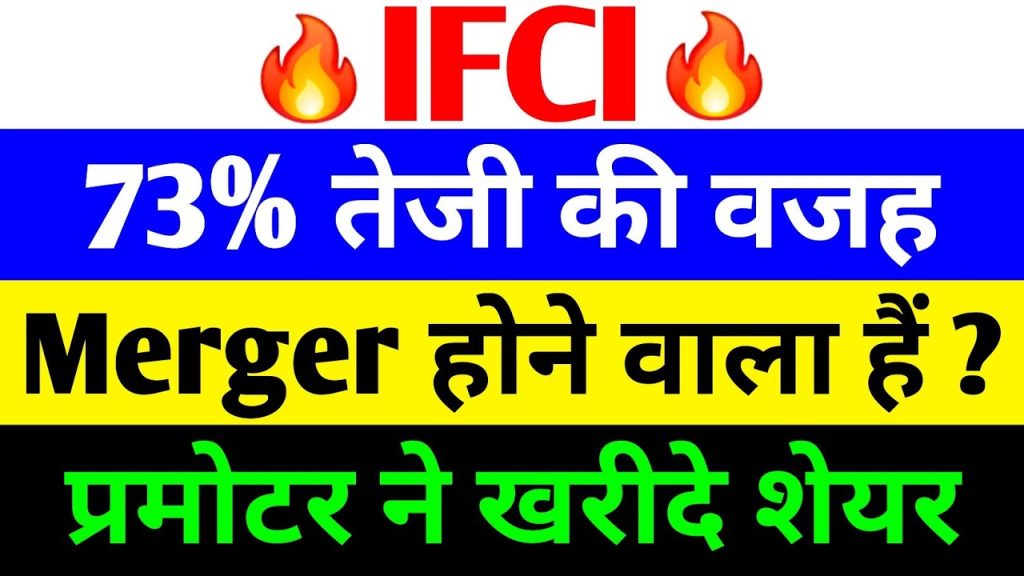
The Indian stock market is a dynamic landscape, and one stock that has recently captured investors’ attention is IFCI Ltd. With a remarkable 73% surge in its share price over a short period, IFCI has become a focal point for traders and investors alike. This article delves into the reasons behind this meteoric rise, analyzes the company’s fundamentals, explores merger developments, and evaluates future growth potential. Whether you’re a seasoned investor or a newcomer, this comprehensive guide will equip you with insights to understand IFCI’s performance and its implications in the financial market.
What Drives IFCI’s Remarkable Share Price Surge?
IFCI Ltd., or the Industrial Finance Corporation of India, has witnessed an extraordinary rally, with its stock price soaring by 74% in just 13 trading sessions as of May 2025. This surge has been fueled by a combination of robust financial performance, strategic corporate developments, and favorable market dynamics. Let’s break down the key factors contributing to this momentum.
Stellar Financial Results Boost Investor Confidence
IFCI’s latest quarterly results for March 2025 have been a game-changer. The company reported a staggering profit of ₹260 crore, a significant improvement from the ₹8.74 crore loss recorded in the December 2024 quarter. This turnaround showcases IFCI’s ability to recover from losses and deliver substantial gains, boosting investor sentiment.
Key financial highlights include:
- Revenue Trends: Although revenue dipped to ₹46 crore in March 2025 from ₹457 crore in December 2024, the company’s focus on profitability has yielded impressive results. For context, revenue in September 2024 stood at ₹786 crore, indicating fluctuations but a strong recovery in profit margins.
- Profit Growth: On a year-on-year basis, IFCI’s profit surged by over ₹100 crore compared to March 2024, reflecting a robust growth trajectory.
- Net Worth Expansion: The company’s net worth has grown steadily, reaching ₹7,679 crore in 2024 from ₹6,669 crore in 2023, signaling financial stability.
This financial resilience has positioned IFCI as a standout performer in the non-banking financial company (NBFC) sector, attracting significant buying interest.
Merger Approvals Fuel Optimism
A pivotal factor behind IFCI’s rally is the government’s approval for merging its subsidiaries into a single entity. As of November 2024, the Department of Financial Services and the Ministry of Finance granted principal approval for consolidating IFCI’s six subsidiaries and one associate company. These include:
- Stock Holding Corporation of India
- IFCI Factors
- IFCI Infrastructure Development
- IIDIL Realtors
- IFCI Financial Services
- IFN Credit Limited
This merger aims to streamline operations, reduce redundancies, and create a larger, more competitive entity under the IFCI umbrella. The restructuring is expected to enhance operational efficiency, expand business scale, and strengthen IFCI’s market position, further driving investor confidence.
Reduction in Gross NPA Strengthens Fundamentals
IFCI has made significant strides in improving its asset quality. The company reported a substantial reduction in gross non-performing assets (NPAs) in the March 2025 quarter. This improvement stems from IFCI’s strategic decision to avoid new loans and focus on resolving standard loan accounts. A lower NPA ratio enhances the company’s creditworthiness, making it an attractive investment for risk-averse investors.
Understanding IFCI: A Legacy NBFC with Diverse Operations
Established in 1948, IFCI holds the distinction of being India’s first development financial institution. As a government-backed NBFC, it plays a crucial role in providing long-term financial assistance to sectors such as manufacturing, services, and infrastructure. Its extensive portfolio spans:
- Corporate and Syndicated Loans: Supporting large-scale business operations.
- Renewable Energy: Financing projects in solar, wind, and other sustainable energy sources.
- Infrastructure Development: Funding roads, ports, airports, and urban infrastructure projects.
- Diverse Industries: Catering to metals, chemicals, pharmaceuticals, electronics, textiles, real estate, and smart cities.
With a 72.57% stake held by the Government of India as of March 2025, IFCI enjoys strong backing, which enhances its credibility and stability in the financial market.
Market Performance: A Closer Look at IFCI’s Rally
IFCI’s stock has been a standout performer, with a 14% intraday surge on May 28, 2025, pushing the price to ₹69.70. The stock even crossed the ₹70 mark intraday, reflecting strong bullish sentiment. Here’s a snapshot of its recent performance:
- 13-Day Surge: A 74% increase in share price since May 9, 2025, when it traded at ₹39.19.
- Four-Day Rally: Consecutive gains on May 23 (10%), May 26 (4%), May 27 (5%), and May 28 (14%), totaling a 35% rise in just four sessions.
- Volume Leadership: IFCI ranked third in trading volume across the market, with approximately 20 crore shares traded, indicating significant investor interest.
Despite a broader market downturn, with the BSE Sensex dropping 156 points (0.19%) to 81,394 on May 28, IFCI defied the trend, showcasing its resilience and investor appeal.
Analyzing IFCI’s Fundamentals: Strengths and Risks
To evaluate IFCI’s investment potential, let’s examine its key financial metrics and fundamentals as of March 2025:
Key Financial Metrics
- Market Capitalization: ₹18,752 crore, reflecting a sizable presence in the NBFC sector.
- Price-to-Earnings (P/E) Ratio: 119, higher than the industry average, suggesting the stock may be overvalued but also reflecting high growth expectations.
- Book Value: ₹32.30, indicating the stock is trading at a premium to its intrinsic value.
- Return on Capital (ROC): 8.08%, a healthy indicator of efficient capital utilization.
- Return on Equity (ROE): 2.60%, modest but improving.
- Dividend Yield: IFCI offers dividends, adding to its appeal for income-focused investors.
- Debt Reduction: The company has consistently reduced its debt, with a 5-year CAGR profit growth of 22.6%.
Shareholding Pattern
- Promoter Holding: The Government of India increased its stake from 71.72% in September 2024 to 72.57% in March 2025, signaling strong confidence in IFCI’s future.
- Foreign Institutional Investors (FIIs): FIIs raised their stake from 2.54% in September 2024 to 2.73% in March 2025, indicating growing international interest.
- Domestic Institutional Investors (DIIs): DII holdings slightly declined from 1.67% to 1.60% over the same period.
- Public Shareholding: Stands at 20.23%, providing liquidity to the stock.
Risks to Consider
While IFCI’s fundamentals are strong, certain risks warrant caution:
- High P/E Ratio: The elevated P/E suggests potential overvaluation, which could lead to a correction if growth expectations are not met.
- Revenue Volatility: Fluctuating quarterly revenues indicate operational challenges that need addressing.
- Market Sensitivity: As seen in the broader market’s limited range, external factors like profit booking could impact IFCI’s momentum.
Future Outlook: Can IFCI Sustain Its Momentum?
The question on every investor’s mind is whether IFCI can maintain its upward trajectory or face pressure due to its rapid run-up. Several factors will shape its future performance:
Positive Catalysts
- Merger Synergies: The consolidation of subsidiaries is expected to streamline operations, reduce costs, and enhance profitability, positioning IFCI as a stronger player in the NBFC space.
- Government Support: Increased promoter holding and government backing provide stability and confidence.
- Improved Asset Quality: Continued reduction in NPAs will strengthen IFCI’s balance sheet, attracting more institutional investors.
- Sectoral Growth: India’s focus on infrastructure and renewable energy aligns with IFCI’s lending portfolio, offering growth opportunities.
Potential Challenges
- Market Corrections: With the stock already up 74% in 13 sessions, profit booking could trigger short-term volatility.
- Revenue Stabilization: IFCI must address revenue fluctuations to ensure consistent growth.
- Macroeconomic Factors: Broader market trends, interest rate hikes, or economic slowdowns could impact NBFC stocks.
Given these factors, IFCI’s long-term prospects appear promising, particularly with the merger and government support. However, short-term investors should remain cautious of potential pullbacks due to the stock’s rapid ascent.
Why IFCI Stands Out Among NBFCs
IFCI’s unique position as India’s oldest development financial institution, coupled with its diverse lending portfolio, sets it apart from other NBFCs. Its focus on high-growth sectors like renewable energy, infrastructure, and smart cities aligns with India’s economic priorities. Additionally, the company’s efforts to reduce NPAs and improve profitability demonstrate a commitment to financial discipline.
The government’s increased stake and the impending merger further enhance IFCI’s appeal. For investors seeking exposure to a government-backed NBFC with growth potential, IFCI presents a compelling opportunity, provided they account for market risks and conduct thorough research.
How to Approach IFCI as an Investment
Before investing in IFCI, consider the following steps:
- Consult a Financial Advisor: Seek professional guidance to align IFCI with your investment goals and risk tolerance.
- Conduct Independent Research: Analyze IFCI’s financials, market trends, and sector developments to make informed decisions.
- Monitor Market Trends: Stay updated on broader market movements and NBFC sector performance to time your investments effectively.
- Diversify Your Portfolio: Avoid overexposure to a single stock to mitigate risks associated with volatility.
Conclusion: IFCI’s Bright Future Amidst Challenges
IFCI’s 73% share price surge is a testament to its strong fundamentals, strategic restructuring, and government support. The company’s improved profitability, reduced NPAs, and upcoming merger position it as a leader in the NBFC sector. While short-term volatility remains a concern due to its rapid rise, IFCI’s long-term growth potential is undeniable, particularly for investors bullish on India’s infrastructure and financial sectors.
As with any investment, thorough research and caution are essential. By staying informed and leveraging professional advice, investors can capitalize on IFCI’s momentum while managing risks effectively. Stay tuned to market developments, and consider IFCI as a potential addition to a diversified portfolio.
Disclaimer: This article is for educational purposes only and does not constitute financial advice. Always consult a qualified financial advisor before making investment decisions.