


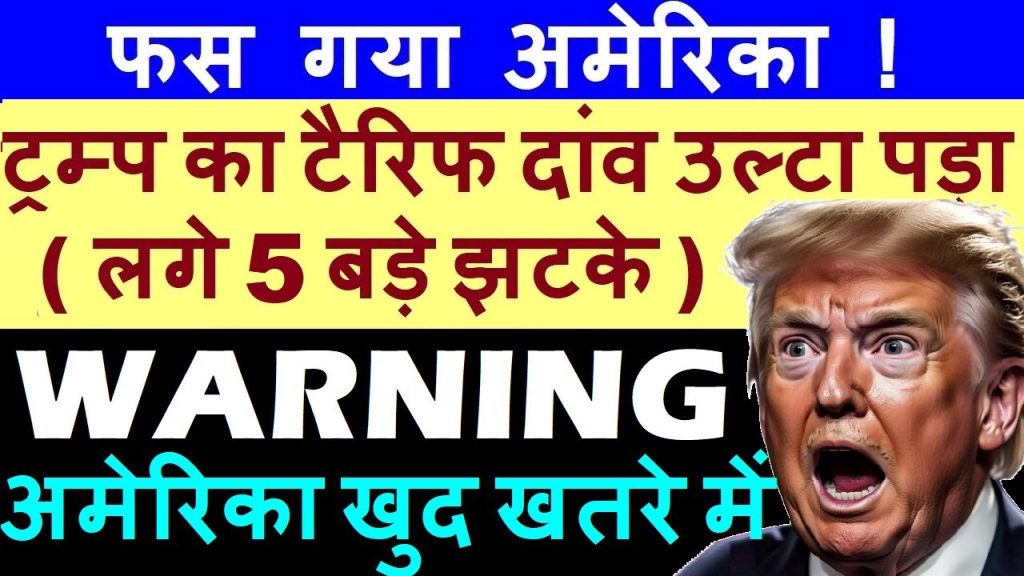
In recent years, the United States has faced significant economic challenges, with former President Donald Trump’s tariff policies emerging as a central point of contention. These policies, initially designed to protect American industries and bolster the economy, have instead triggered a cascade of unintended consequences. From skyrocketing inflation to shaken investor confidence, the ripple effects of these tariffs are threatening the stability of the U.S. economy and its global standing. This article delves into the five major economic shocks the U.S. is experiencing as a result of Trump’s tariff strategy, exploring why these policies are backfiring and what they mean for the future.
The Return of Trump’s Tariff Strategy
Donald Trump’s tariff policies have long been a hallmark of his economic approach. Aimed at protecting domestic industries and reducing reliance on foreign imports, these tariffs impose additional taxes on goods entering the U.S. However, what began as a bold move to strengthen the American economy has led to significant disruptions. The reintroduction of high tariffs, including a proposed 35% levy on Canadian imports and even higher rates on other trading partners, has reignited concerns among economists, businesses, and global markets.
Financial institutions and rating agencies have issued stark warnings, predicting that unchecked tariff hikes could push the U.S. economy into a recession. The policies, which Trump touts as a way to bring prosperity, are instead creating uncertainty, stifling growth, and burdening American consumers. Let’s explore the five major blows these tariffs have dealt to the U.S. economy.
1. Inflation Surge: A Growing Burden on American Consumers
One of the most immediate and visible impacts of Trump’s tariffs is the surge in inflation. Tariffs increase the cost of imported goods, which directly affects the prices consumers pay. For years, the Federal Reserve has worked to stabilize inflation around a 2% target, a goal that was nearly achieved under previous administrations. However, the reintroduction of tariffs has disrupted this delicate balance.
When tariffs are imposed, the additional costs are often passed on to consumers. For instance, a 35% tariff on Canadian goods or a proposed 50% tariff on select imports could lead to price increases for everyday items like food, electronics, and automobiles. This burden falls squarely on American households, many of whom are already grappling with rising living costs. Financial reports indicate that inflation, which had stabilized at around 2% in 2024, is now at risk of spiking as tariffs take effect. Without intervention, experts warn that inflation could climb to levels not seen in decades, eroding purchasing power and stifling consumer spending.
2. Market Volatility: A Rollercoaster for Investors
The U.S. stock market has experienced significant volatility as a direct result of Trump’s tariff announcements. Historical data shows that markets react sharply to tariff-related news. For example, in April 2025, when Trump first hinted at reintroducing tariffs, the U.S. stock market plummeted by over 1%. This wasn’t an isolated incident—similar declines occurred whenever tariff talks resurfaced.
When Trump paused his tariff plans for 90 days, markets stabilized, reflecting investor confidence in a tariff-free environment. However, the renewed focus on tariffs in 2025 has reignited fears of economic instability. Major financial institutions, including brokerage firms and rating agencies, have issued warnings that prolonged tariff policies could lead to a sustained market downturn. The uncertainty surrounding these policies makes it difficult for companies to forecast earnings, further eroding investor confidence. As a result, the U.S. stock market is stuck in a consolidation phase, unable to break through previous highs.
3. GDP Decline: From Growth to Stagnation
The U.S. economy, once a global powerhouse with consistent GDP growth, is now facing stagnation due to Trump’s tariff policies. Historically, U.S. GDP growth hovered around 2.4% to 2.5% annually. However, recent data shows GDP slipping into negative territory, a trend attributed to the uncertainty and cost increases caused by tariffs.
Businesses, anticipating higher costs, have resorted to front-loading imports to avoid tariff-related expenses. This strategy temporarily boosts import volumes but creates a false sense of economic activity. Once tariffs are implemented, the increased costs discourage imports, leading to reduced trade activity and slower economic growth. Financial analysts warn that prolonged tariff policies could push the U.S. into a full-blown recession, with GDP growth remaining in the negative for multiple quarters.
4. Corporate Uncertainty: Struggling to Plan Ahead
American companies are grappling with unprecedented uncertainty due to the unpredictable nature of Trump’s tariff policies. Major corporations, such as Accenture, have reported solid financial performance but are unable to provide accurate forecasts due to the volatile economic environment. The threat of tariffs ranging from 10% to as high as 100% on certain countries creates a challenging landscape for businesses reliant on global supply chains.
This uncertainty has led companies to scale back investments and delay expansion plans. Clients are also hesitant to commit to long-term spending, further complicating corporate forecasting. The lack of clarity in U.S. trade policy is stifling innovation and growth, as businesses struggle to navigate an ever-changing economic landscape. As a result, many companies are issuing conservative or no forecasts at all, signaling a lack of confidence in the economy’s future.
5. Erosion of Global Trust: A Blow to U.S. Credibility
Perhaps the most significant long-term consequence of Trump’s tariff policies is the erosion of global trust in the United States. Historically, the U.S. has been seen as a reliable trading partner, fostering strong economic ties with countries worldwide. However, the aggressive tariff strategy has led other nations to question the U.S.’s commitment to fair trade practices.
Countries are now seeking alternative trade partners and developing contingency plans to reduce reliance on the U.S. market. This shift is evident in the actions of nations like China, which is facing tariffs as high as 200%. The global perception of the U.S. as an untrustworthy partner is growing, with many countries diversifying their trade relationships to mitigate risks. This loss of trust could have far-reaching implications, weakening the U.S.’s position in global trade and diminishing its economic influence.
The Dollar’s Decline: A Warning from Warren Buffett
The U.S. dollar, long considered a global safe-haven currency, is also under pressure due to Trump’s tariff policies. On June 17, 2025, legendary investor Warren Buffett issued a stark warning, stating that the dollar is “headed to hell” if current policies persist. The Dollar Index, which measures the dollar’s value against a basket of six foreign currencies, has fallen below critical levels, dipping to 97 and even lower at times. This decline signals a loss of confidence in the dollar’s stability, driven by the economic uncertainty created by tariffs.
A weaker dollar increases the cost of imports, further fueling inflation and reducing the purchasing power of American consumers. It also makes U.S. exports less competitive, as foreign buyers face higher costs. Buffett’s warning underscores the need for a policy shift to stabilize the dollar and restore confidence in the U.S. economy.
Global Implications: A Ripple Effect Across Economies
The impact of Trump’s tariffs extends beyond the U.S., affecting global markets and economies. As the world’s largest economy, any disruption in the U.S. has far-reaching consequences. Countries like India, which rely on trade with the U.S., are already feeling the effects of market uncertainty. Global stock markets are stuck in a consolidation phase, unable to break through previous highs due to fears of a U.S.-led economic slowdown.
If the U.S. economy enters a recession, the ripple effects will be felt worldwide. Reduced U.S. consumer spending will lead to lower demand for imported goods, impacting exporting nations. Additionally, the uncertainty surrounding U.S. trade policy is pushing other countries to seek alternative trade agreements, further isolating the U.S. in the global economy.
The Path Forward: Can the U.S. Recover?
The challenges posed by Trump’s tariff policies are significant, but there are steps the U.S. can take to mitigate the damage. Financial experts, including Warren Buffett, have called for a reevaluation of the tariff strategy. A more moderate approach, such as implementing tariffs at a lower rate (e.g., 10%) and providing clear timelines, could reduce uncertainty and stabilize markets.
Additionally, the Federal Reserve must navigate a delicate balance. While interest rate cuts were implemented in 2024, bringing rates from 5.5% to 4.5%, the current economic uncertainty has stalled further cuts. The Fed’s reluctance to lower rates stems from fears that tariffs will drive inflation higher, negating the benefits of monetary easing. A coordinated effort between policymakers and the administration is essential to restore economic stability.
Conclusion: A Cautionary Tale for Economic Policy
Trump’s tariff policies, while rooted in the desire to protect American interests, have backfired in spectacular fashion. From soaring inflation to declining GDP, corporate uncertainty, and a loss of global trust, the U.S. is facing a series of economic blows that threaten its long-term prosperity. The warnings from financial institutions, rating agencies, and even Warren Buffett highlight the urgent need for a policy shift.
As the U.S. navigates this turbulent economic landscape, the stakes could not be higher. The decisions made in the coming months will determine whether the U.S. can avoid a full-blown recession and regain its position asa global economic leader. For now, the world watches as America grapples with the consequences of its own policies, hoping for a resolution that benefits both the U.S. and the global economy.
Call to Action
Stay informed about the latest economic developments and their impact on global markets. Subscribe to our newsletter for expert insights and analysis on U.S. trade policies, market trends, and more. Share this article to spark a conversation about the future of the U.S. economy and the global implications of tariff policies.