


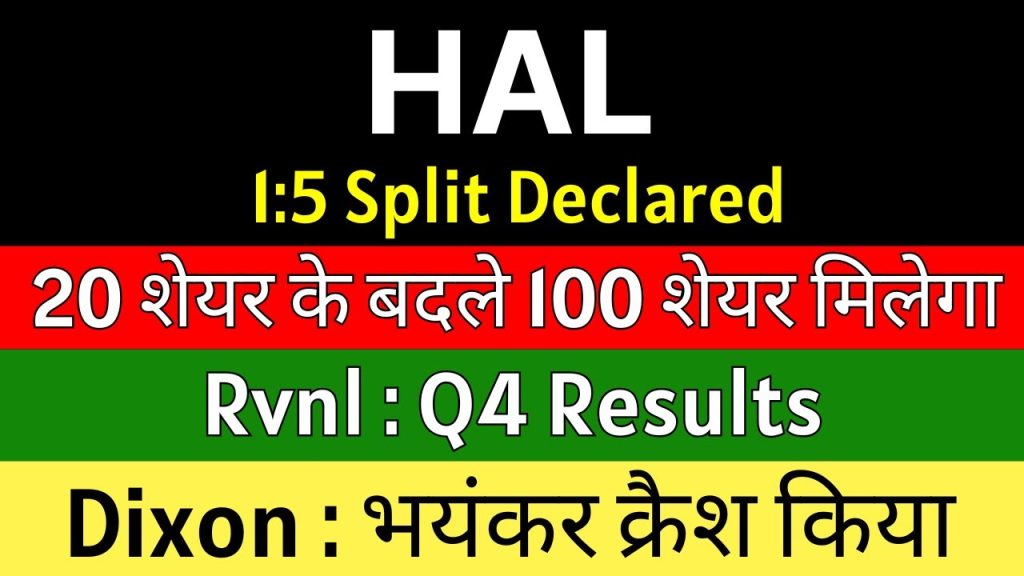
In the dynamic world of stock market investing, staying informed about the latest company updates is crucial for making sound investment decisions. This article dives deep into the recent developments surrounding four key players: Hindustan Aeronautics Limited (HAL), Rail Vikas Nigam Limited (RVNL), Dixon Technologies, and Coforge. From stock splits to quarterly results and market performance, we’ll explore the factors driving these companies’ stock prices and what they mean for investors. Whether you’re a seasoned trader or a beginner, this comprehensive analysis will equip you with actionable insights to navigate the market effectively.
Why Staying Updated on Stock Market News Matters
The stock market is a reflection of economic trends, corporate performance, and investor sentiment. Companies like HAL, RVNL, Dixon Technologies, and Coforge operate in diverse sectors—defense, infrastructure, electronics manufacturing, and IT—each influenced by unique market dynamics. By understanding their latest updates, investors can identify opportunities, mitigate risks, and align their portfolios with emerging trends. Let’s break down the recent developments for each company, starting with Dixon Technologies.
Dixon Technologies: Strong Fundamentals Amid Market Volatility
Q4 Results: Impressive Growth with a Catch
Dixon Technologies, a leading electronics manufacturing services (EMS) provider, has been in the spotlight due to its robust Q4 performance. The company reported stellar numbers, with revenue and profit growth exceeding expectations. On a year-on-year basis, Dixon has consistently delivered over 100% growth in revenue and profit for the past four quarters, showcasing its ability to capitalize on the booming demand for consumer electronics in India.
However, despite these strong fundamentals, Dixon’s stock experienced a 6% decline following the Q4 results announcement. This drop, while significant, is less severe compared to previous quarters, where the stock saw corrections of 14–15%. So, what’s driving this volatility?
Why Did Dixon’s Stock Fall?
The recent dip in Dixon’s stock price can be attributed to two primary factors:
- Expensive Valuations: Dixon Technologies trades at a premium valuation, reflecting its strong growth trajectory. However, high valuations make the stock susceptible to profit booking, especially when investors perceive even minor uncertainties. After the Q4 results, some investors seized the opportunity to lock in gains, contributing to the 6% correction.
- Production Delays in Key Partnerships: Dixon’s partnerships with global brands like Vivo and HKC for manufacturing smartphones and display assemblies have faced delays. Originally slated to begin production in Q2 FY26, these projects have been postponed to Q4 FY26. This delay introduces uncertainty about Dixon’s short-term revenue growth, prompting some investors to adopt a cautious stance.
Bright Spots: Export Opportunities and Guidance
Despite the delays, Dixon’s long-term outlook remains promising. The company continues to strengthen its partnerships with global players like Motorola, positioning itself as a key player in the global EMS market. Dixon’s management has issued optimistic guidance, projecting sustained growth in FY26 and FY27. Brokerage houses, while trimming growth estimates by 6–7% due to the delays, still view Dixon as a strong long-term bet, given its dominance in India’s electronics manufacturing sector.
Investment Takeaway
For investors, Dixon Technologies represents a high-growth stock with short-term volatility. The recent correction could be a buying opportunity for those with a long-term horizon, but caution is warranted due to the stock’s premium valuations and potential near-term headwinds.
RVNL: Navigating Challenges in a Competitive Landscape
Q4 Earnings Expectations
Rail Vikas Nigam Limited (RVNL), a key player in India’s railway infrastructure sector, has been under scrutiny as it approaches its Q4 earnings release. The stock has already corrected by approximately 36% from its peak, reflecting investor concerns about its performance. Unlike Dixon, RVNL has struggled with degrowth in recent quarters, leading to subdued market sentiment.
Management Guidance and Revenue Targets
RVNL’s management has set a revenue target of ₹22,000 crore for FY25, a modest increase from the ₹21,733 crore reported in FY24. However, the company’s performance in the first three quarters of FY25 suggests it may fall short of expectations. By aggregating the revenue from these quarters and subtracting it from the FY25 target, analysts estimate Q4 revenue to be around ₹8,500 crore. Achieving this target would signal that RVNL is meeting its guidance, but failure to do so could exacerbate the stock’s downward trajectory.
Why the Weak Performance?
RVNL’s lackluster performance stems from several factors:
- Degrowth in Recent Quarters: Unlike Dixon’s consistent growth, RVNL has reported declining revenue in each of the past three quarters. This trend has eroded investor confidence, contributing to the stock’s negative performance.
- High Expectations, Low Execution: The market had anticipated stronger execution from RVNL, given its role in India’s ambitious railway modernization projects. However, the company’s inability to deliver consistent growth has led to disappointment.
Investment Takeaway
RVNL’s stock is currently trading at a discount due to its recent correction, but the lack of growth momentum makes it a risky bet. Investors should closely monitor the Q4 earnings release to assess whether RVNL can regain its footing. A strong Q4 performance could signal a turnaround, while continued degrowth may lead to further downside.
Hindustan Aeronautics Limited (HAL): A Defense Sector Powerhouse
Recent Market Performance
Hindustan Aeronautics Limited (HAL), a leading player in India’s defense sector, has experienced a rollercoaster ride in recent trading sessions. After a period of strong upward momentum, HAL and other defense stocks faced significant profit booking, resulting in a notable correction over the past two to three sessions. However, on the latest trading day, the defense sector index rebounded by approximately 3%, with HAL contributing to the recovery.
Why the Correction?
The recent pullback in HAL’s stock price can be attributed to profit booking, a common phenomenon in high-performing sectors. Defense stocks, including HAL, have seen substantial gains in recent months, driven by strong government support for domestic defense manufacturing and rising global demand for defense equipment. However, periods of rapid gains often lead to corrections as investors lock in profits.
HAL’s Growth Outlook
HAL’s management has provided encouraging guidance for FY26, projecting sales growth of 8–10%. Historically, HAL’s profit growth has outpaced its sales growth, often doubling the revenue growth rate. This trend bodes well for investors, as it suggests strong profitability even in a competitive sector. The company’s focus on innovation, export opportunities, and government contracts positions it as a leader in India’s defense industry.
Investment Takeaway
HAL remains a compelling investment for those bullish on India’s defense sector. The recent correction may present a buying opportunity, but investors should be prepared for periodic volatility due to profit booking. With strong fundamentals and a favorable growth outlook, HAL is well-positioned for long-term success.
Coforge: A Game-Changing Stock Split
Stock Split Announcement
Coforge, a mid-cap IT company, recently made headlines with its first-ever stock split announcement. The company declared a 1:5 stock split, meaning that for every share held, investors will receive five equity shares. The record date for the split is set for June 4, 2025, and shareholders who own the stock before this date will be eligible for the additional shares.
What Does the Stock Split Mean?
A stock split is typically a positive signal, as it makes the stock more accessible to retail investors by reducing the per-share price. While the split does not change the company’s overall valuation, it can boost liquidity and attract new investors. For existing shareholders, this development is a welcome move, as it enhances the stock’s marketability without altering its fundamental value.
Coforge’s Growth Potential
As an IT services provider, Coforge operates in a high-growth sector driven by digital transformation and global demand for technology solutions. The stock split reflects management’s confidence in the company’s future growth and its commitment to creating value for shareholders. With a strong track record and a focus on emerging technologies, Coforge is well-positioned to capitalize on industry trends.
Investment Takeaway
For current Coforge shareholders, the stock split is a positive development that could enhance the stock’s appeal. For potential investors, the lower post-split price may present an attractive entry point, provided the company continues to deliver strong financial performance.
Key Factors Influencing Stock Performance
Several macroeconomic and sector-specific factors are shaping the performance of HAL, RVNL, Dixon Technologies, and Coforge. Understanding these drivers can help investors make informed decisions:
- Market Sentiment: The stock market is influenced by investor sentiment, which can lead to short-term volatility. Profit booking, as seen in HAL and Dixon, is a natural response to strong gains but does not necessarily reflect underlying weaknesses.
- Sector-Specific Trends: The defense sector (HAL) benefits from government support, while infrastructure (RVNL) faces execution challenges. Electronics manufacturing (Dixon) is driven by consumer demand, and IT (Coforge) thrives on digital transformation.
- Valuations and Expectations: High valuations, as in Dixon’s case, make stocks vulnerable to corrections, while subdued expectations, as with RVNL, can lead to underperformance.
- Corporate Actions: Stock splits (Coforge) and strategic partnerships (Dixon) can influence investor confidence and stock liquidity.
How to Stay Ahead in the Stock Market
To capitalize on opportunities in stocks like HAL, RVNL, Dixon Technologies, and Coforge, investors should adopt a proactive approach:
- Monitor Quarterly Results: Earnings reports provide critical insights into a company’s financial health and growth trajectory. Keep an eye on upcoming results for RVNL and HAL to gauge their performance.
- Follow Management Guidance: Companies like Dixon and HAL provide forward-looking guidance that can help investors anticipate future growth.
- Leverage Market Corrections: Use pullbacks, such as those seen in HAL and Dixon, as potential buying opportunities, but always assess valuations and risks.
- Stay Informed: Subscribe to reliable financial news sources and join communities like SEBI-registered research analysts’ Telegram channels for real-time updates and insights.
Conclusion: Navigating Opportunities in a Dynamic Market
The stock market offers immense opportunities for those who stay informed and act strategically. Dixon Technologies, despite short-term volatility, remains a leader in electronics manufacturing with strong growth prospects. RVNL faces challenges but could rebound with a solid Q4 performance. HAL continues to dominate the defense sector, supported by robust fundamentals and government backing. Coforge’s stock split signals confidence in its IT-driven growth story.
By understanding these companies’ latest developments and the factors driving their stock prices, investors can make informed decisions to build wealth in 2025 and beyond. Stay vigilant, monitor market trends, and seize opportunities to unlock the full potential of your investments.