Site icon Telangana NavaNirmana Sena

Google Maps Gulf of America Debuts, Strategic Shift in US Policy and Digital Cartography

In a move blending geopolitics with technology, Google Maps has officially updated the name of the Gulf of Mexico to the “Gulf of America” for users within the United States. This landmark change, driven by an executive order from former President Donald Trump, underscores the intersection of national policy and digital mapping. Below, we explore the implications, historical context, and global reactions to this pivotal update. Google Maps Implements "Gulf of America" Name Change Google’s recent update to its mapping services reflects a direct response to US government directives. The tech giant confirmed the alteration in a statement, emphasizing its policy of aligning with official geographic names issued by federal authorities. “We apply name changes when updated in government sources,” Google stated, referencing its adherence to the United States Board on Geographic Names (BGN). For US-based users, the body of water adjacent to the southern coast now appears as the “Gulf of America.” However, international users—particularly in Mexico—will continue to see “Gulf of Mexico,” while others may encounter dual labels based on regional conventions. Executive Orders and Digital Cartography: The Trump Administration's Influence The renaming traces back to a 2017 executive order signed by Trump, titled “Honoring American Greatness in Geographic Nomenclature.” The order criticized prior administrations for reversing historical names, specifically targeting President Barack Obama’s 2015 decision to rename Alaska’s Mount McKinley to Denali. Trump’s directive mandated the restoration of “patriotic” names, asserting that such changes reflect national pride and sovereignty. Notably, the order framed Obama’s Denali renaming as a disrespect to President William McKinley, assassinated in 1901. It also highlighted McKinley’s economic policies, drawing parallels to Trump’s “America First” agenda. International Reactions and Mapping Variations Google’s approach to international users highlights the complexities of geopolitical naming. A spokesperson explained, “When names differ by country, Maps displays the local official name.” Thus, Mexican users retain “Gulf of Mexico,” while global audiences see both names. This mirrors practices in other disputed regions, such as labeling the “Sea of Japan (East Sea)” to accommodate South Korean preferences. Critics argue the change could strain US-Mexico relations, already tense over border policies. Mexican officials have yet to formally respond, but cultural advocates condemn the move as erasing shared heritage. Historical Context: From Gulf of Mexico to Gulf of America The Gulf of Mexico’s name dates back to early European explorers, but efforts to rebrand it aren’t new. In 2012, Mississippi State Representative Steve Palazzo proposed renaming the northern portion the “Gulf of America” to assert US stewardship post-Deepwater Horizon oil spill. Though the bill failed, it ignited debates over territorial identity. Comedian Stephen Colbert humorously endorsed the idea in 2010, quipping, “We broke it, we bought it.” However, Trump’s executive order marks the first federal effort to enforce the change. Denali vs. Mount McKinley: A Parallel in Geographic Renaming The Gulf update follows a similar directive to revert Denali to Mount McKinley on federal documents. While the USGS and FAA have adopted “Mount McKinley” in official charts, Google Maps still displays “Denali” as of September 2023. This discrepancy highlights challenges in synchronizing digital platforms with policy shifts. Alaska’s Indigenous communities, who originally named the peak Denali, view the reversal as a cultural slight. Historians note that McKinley, an Ohioan, had no direct ties to Alaska, unlike the Koyukon people who revered the mountain for centuries. Government Agencies Align with New Nomenclature Federal entities like the FAA and US Coast Guard have swiftly adopted the “Gulf of America” in navigational charts and public notices. The FAA announced, “We’re updating our databases to reflect these patriotic changes,” while the Coast Guard revised maritime alerts to enforce the new terminology. Such updates are critical for consistency in aviation and maritime operations, though international organizations like the International Hydrographic Organization (IHO) retain “Gulf of Mexico” in global registries. Public and Political Responses to the Name Change The rebranding has sparked polarized reactions. Conservative groups laud it as a reaffirmation of sovereignty, while environmental and cultural organizations criticize it as politically motivated. Social media trends reveal hashtags like #GulfOfAmerica and #KeepItMexico, reflecting public divide. Notably, the renaming occurs amid broader debates over historic preservation versus modernization. Similar controversies include Confederate monument removals and school renamings, illustrating America’s ongoing identity reckoning. The Role of Technology in Geopolitical Branding Google’s compliance with the directive underscores tech companies’ role in shaping geopolitical narratives. While platforms like Google Maps strive for neutrality, their reliance on government data often necessitates alignment with national policies. This raises questions about the ethical responsibilities of tech giants in mediating global information. For instance, during the 2020 Nagorno-Karabakh conflict, Google temporarily adjusted borders based on Azerbaijani government requests, later reverting after international backlash. Such precedents highlight the fluidity of digital cartography in contested regions. Future Implications for International Relations and Mapping Services The Gulf’s renaming could set a precedent for future US policy-driven changes. Experts speculate about potential updates to other geographic features, such as the Rio Grande (referred to as “Río Bravo” in Mexico). Such alterations may further complicate bilateral agreements and environmental treaties. Additionally, the shift underscores the need for international standards in digital mapping. Organizations like the United Nations Group of Experts on Geographical Names (UNGEGN) advocate for neutral naming conventions, but enforcement remains challenging. Conclusion: A New Chapter in Cartography and National Identity The Gulf of America’s debut on Google Maps epitomizes the evolving relationship between technology, policy, and identity. While the change aligns with US directives, its global reception reveals the delicate balance tech companies must strike between compliance and neutrality. As digital maps increasingly influence public perception, the stakes for accurate, inclusive representation have never been higher. This update not only redefines a geographic landmark but also invites broader conversations about heritage, sovereignty, and the power of a name. Whether the “Gulf of America” endures or becomes a footnote in history may depend on the intersection of policy, technology, and public sentiment in the years ahead.

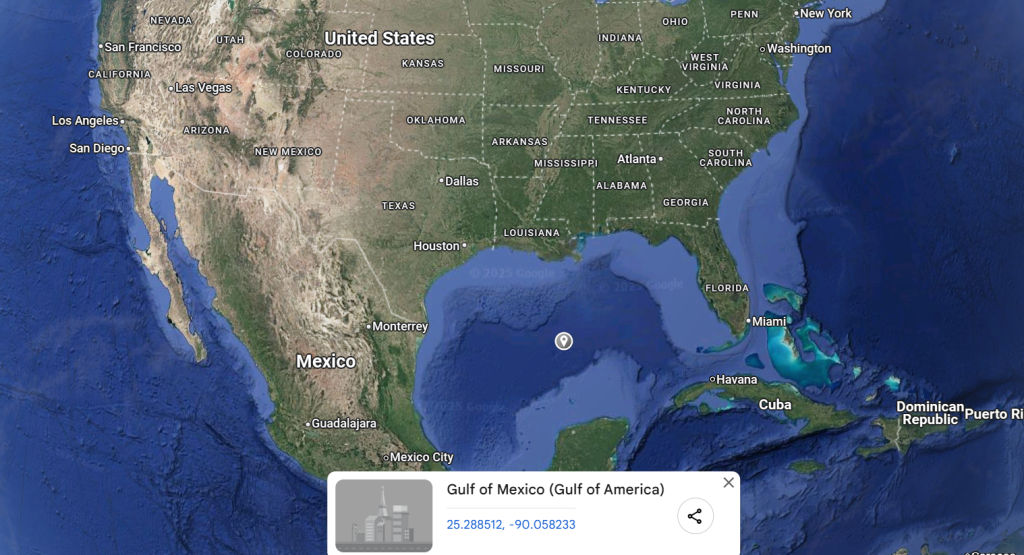
In a move blending geopolitics with technology, Google Maps has officially updated the name of the Gulf of Mexico to the “Gulf of America” for users within the United States. This landmark change, driven by an executive order from former President Donald Trump, underscores the intersection of national policy and digital mapping. Below, we explore the implications, historical context, and global reactions to this pivotal update.

Google Maps Implements “Gulf of America” Name Change

Google’s recent update to its mapping services reflects a direct response to US government directives. The tech giant confirmed the alteration in a statement, emphasizing its policy of aligning with official geographic names issued by federal authorities. “We apply name changes when updated in government sources,” Google stated, referencing its adherence to the United States Board on Geographic Names (BGN).

For US-based users, the body of water adjacent to the southern coast now appears as the “Gulf of America.” However, international users—particularly in Mexico—will continue to see “Gulf of Mexico,” while others may encounter dual labels based on regional conventions.

Executive Orders and Digital Cartography: The Trump Administration’s Influence

The renaming traces back to a 2017 executive order signed by Trump, titled “Honoring American Greatness in Geographic Nomenclature.” The order criticized prior administrations for reversing historical names, specifically targeting President Barack Obama’s 2015 decision to rename Alaska’s Mount McKinley to Denali. Trump’s directive mandated the restoration of “patriotic” names, asserting that such changes reflect national pride and sovereignty.

Notably, the order framed Obama’s Denali renaming as a disrespect to President William McKinley, assassinated in 1901. It also highlighted McKinley’s economic policies, drawing parallels to Trump’s “America First” agenda.

International Reactions and Mapping Variations

Google’s approach to international users highlights the complexities of geopolitical naming. A spokesperson explained, “When names differ by country, Maps displays the local official name.” Thus, Mexican users retain “Gulf of Mexico,” while global audiences see both names. This mirrors practices in other disputed regions, such as labeling the “Sea of Japan (East Sea)” to accommodate South Korean preferences.

Critics argue the change could strain US-Mexico relations, already tense over border policies. Mexican officials have yet to formally respond, but cultural advocates condemn the move as erasing shared heritage.

Historical Context: From Gulf of Mexico to Gulf of America

The Gulf of Mexico’s name dates back to early European explorers, but efforts to rebrand it aren’t new. In 2012, Mississippi State Representative Steve Palazzo proposed renaming the northern portion the “Gulf of America” to assert US stewardship post-Deepwater Horizon oil spill. Though the bill failed, it ignited debates over territorial identity.

Comedian Stephen Colbert humorously endorsed the idea in 2010, quipping, “We broke it, we bought it.” However, Trump’s executive order marks the first federal effort to enforce the change.

Denali vs. Mount McKinley: A Parallel in Geographic Renaming

The Gulf update follows a similar directive to revert Denali to Mount McKinley on federal documents. While the USGS and FAA have adopted “Mount McKinley” in official charts, Google Maps still displays “Denali” as of September 2023. This discrepancy highlights challenges in synchronizing digital platforms with policy shifts.

Alaska’s Indigenous communities, who originally named the peak Denali, view the reversal as a cultural slight. Historians note that McKinley, an Ohioan, had no direct ties to Alaska, unlike the Koyukon people who revered the mountain for centuries.

Government Agencies Align with New Nomenclature

Federal entities like the FAA and US Coast Guard have swiftly adopted the “Gulf of America” in navigational charts and public notices. The FAA announced, “We’re updating our databases to reflect these patriotic changes,” while the Coast Guard revised maritime alerts to enforce the new terminology.

Such updates are critical for consistency in aviation and maritime operations, though international organizations like the International Hydrographic Organization (IHO) retain “Gulf of Mexico” in global registries.

Public and Political Responses to the Name Change

The rebranding has sparked polarized reactions. Conservative groups laud it as a reaffirmation of sovereignty, while environmental and cultural organizations criticize it as politically motivated. Social media trends reveal hashtags like #GulfOfAmerica and #KeepItMexico, reflecting public divide.

Notably, the renaming occurs amid broader debates over historic preservation versus modernization. Similar controversies include Confederate monument removals and school renamings, illustrating America’s ongoing identity reckoning.

The Role of Technology in Geopolitical Branding

Google’s compliance with the directive underscores tech companies’ role in shaping geopolitical narratives. While platforms like Google Maps strive for neutrality, their reliance on government data often necessitates alignment with national policies. This raises questions about the ethical responsibilities of tech giants in mediating global information.

For instance, during the 2020 Nagorno-Karabakh conflict, Google temporarily adjusted borders based on Azerbaijani government requests, later reverting after international backlash. Such precedents highlight the fluidity of digital cartography in contested regions.

Future Implications for International Relations and Mapping Services

The Gulf’s renaming could set a precedent for future US policy-driven changes. Experts speculate about potential updates to other geographic features, such as the Rio Grande (referred to as “Río Bravo” in Mexico). Such alterations may further complicate bilateral agreements and environmental treaties.

Additionally, the shift underscores the need for international standards in digital mapping. Organizations like the United Nations Group of Experts on Geographical Names (UNGEGN) advocate for neutral naming conventions, but enforcement remains challenging.

Conclusion: A New Chapter in Cartography and National Identity

The Gulf of America’s debut on Google Maps epitomizes the evolving relationship between technology, policy, and identity. While the change aligns with US directives, its global reception reveals the delicate balance tech companies must strike between compliance and neutrality. As digital maps increasingly influence public perception, the stakes for accurate, inclusive representation have never been higher.

This update not only redefines a geographic landmark but also invites broader conversations about heritage, sovereignty, and the power of a name. Whether the “Gulf of America” endures or becomes a footnote in history may depend on the intersection of policy, technology, and public sentiment in the years ahead

Exit mobile version