


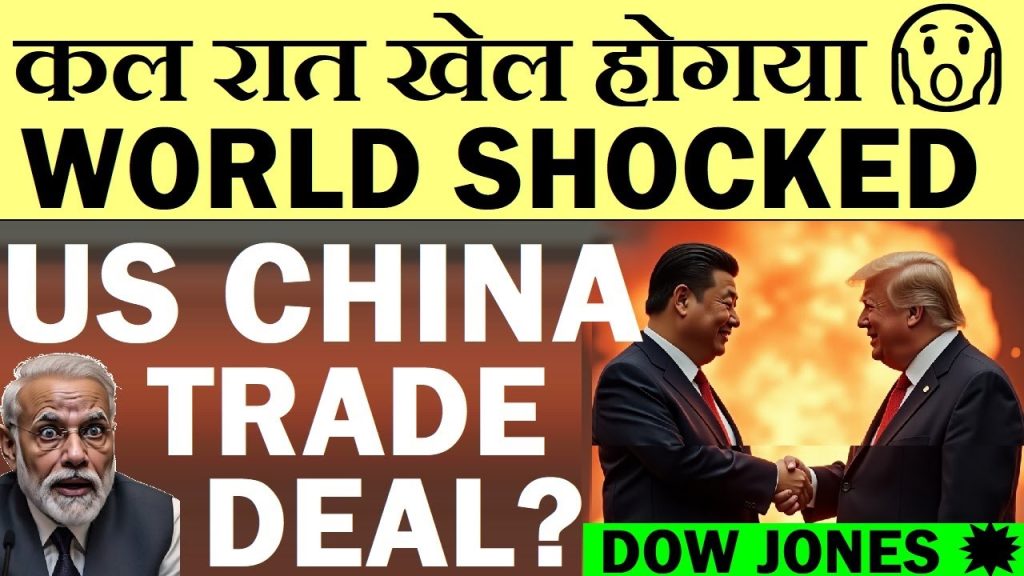
The global economic landscape experienced a seismic shift last night, with unexpected developments in US-China trade relations sending shockwaves through financial markets. The Dow Jones soared, reflecting investor optimism, while trade talks with Canada took a dramatic turn. This article delves into the surprising US-China trade deal framework, its implications for global markets, and the abrupt halt in US-Canada trade negotiations. Packed with insights, this comprehensive guide explores the forces driving these changes and their potential impact on the world economy.
The US-China Trade Deal Framework: A Game-Changer in Global Trade
The announcement of a trade deal framework between the United States and China has stunned analysts and investors alike. After years of escalating tensions, tariffs, and trade wars, this development marks a pivotal moment in international relations. The framework, while not a finalized trade agreement, sets the stage for potentially transformative economic cooperation between the two superpowers.
Why the US-China Trade Deal Matters
The US and China have long been at odds, imposing hefty tariffs and trade restrictions that disrupted global supply chains. The new framework signals a willingness to de-escalate, fostering hope for a more stable economic environment. This unexpected move has sparked optimism, with the Dow Jones climbing nearly 1% in response to the news.
Key points of the framework include:
- Mutual Tariff Reductions: Both nations have agreed to revisit the punitive tariffs imposed over recent years, which ranged from 100% to 250% on various goods.
- Rare Earth Minerals Access: The US has prioritized securing reliable access to China’s rare earth minerals, critical for industries like defense, automotive, and electronics.
- Business-Friendly Policies: The framework addresses barriers faced by American companies operating in China and Chinese firms in the US, aiming for fairer treatment.
The Role of Rare Earth Minerals in the Deal
China’s dominance in rare earth mineral production has been a significant leverage point in negotiations. These minerals are essential for manufacturing semiconductors, electric vehicles, and defense equipment. The US, heavily reliant on Chinese exports, pushed for increased shipments of these materials. The White House confirmed that the framework includes provisions to expedite rare earth shipments, addressing a critical vulnerability in American industries.
This concession highlights China’s strategic advantage and explains why the US, despite its aggressive stance in recent years, adopted a more conciliatory approach. Without access to these minerals, entire sectors of the US economy could face disruptions.
China’s Demands: A Level Playing Field
China, in turn, demanded fair treatment in trade policies. The nation has long argued that US tariffs disproportionately target Chinese goods, while other countries face lighter restrictions. Beijing’s negotiators emphasized:
- Equal Tariff Treatment: China seeks parity with other nations in US trade policies, urging the removal of targeted tariffs.
- Market Access for Chinese Firms: China requested fewer restrictions on its companies, including those seeking IPOs in the US, and an end to delisting threats.
These demands reflect China’s desire to stabilize its economy, which has faced slowdowns amid global uncertainties. The framework’s mutual concessions suggest both nations recognize the benefits of cooperation over continued conflict.
The Market’s Reaction: Dow Jones Surges Amid Optimism
The announcement of the US-China trade framework triggered a swift response in financial markets. The Dow Jones Industrial Average jumped nearly 1%, reflecting investor confidence in the potential for reduced trade tensions. Futures markets also showed positive momentum, though volatility remains a concern given the unpredictable nature of US-China relations.
Why Markets Are Bullish
The prospect of a US-China trade deal has far-reaching implications:
- Supply Chain Stability: Reduced tariffs could lower costs for businesses reliant on cross-border trade, boosting profitability.
- Global Economic Growth: Eased tensions between the world’s two largest economies could stimulate global trade and investment.
- Sector-Specific Gains: Industries like technology, automotive, and manufacturing stand to benefit from improved access to rare earth minerals and lower trade barriers.
However, analysts caution that the framework is a preliminary step. The finalization of a trade deal depends on both nations adhering to the agreed-upon terms and conditions, a process that could face hurdles given past tensions.
US-Canada Trade Talks Collapse: The Digital Services Tax Dispute
While the US-China framework grabbed headlines, another shocking development emerged: the abrupt end of trade talks between the US and Canada. President Trump announced the cancellation of negotiations, citing Canada’s Digital Services Tax (DST) as a dealbreaker.
Understanding the Digital Services Tax
Canada’s DST imposes a 3% tax on revenue generated by major US technology companies, including Google, Meta, Apple, and Microsoft, operating in Canada. Implemented since 2022, the tax targets digital advertising, social media, and other online services. The US views this as a discriminatory measure, arguing it unfairly burdens American firms dominating the global tech landscape.
Trump’s administration demanded the removal of the DST, but Canada’s refusal led to the breakdown of talks. This move has strained US-Canada relations, raising concerns about broader implications for North American trade.
Implications of the US-Canada Rift
The collapse of trade talks could disrupt the economic integration of the US, Canada, and Mexico under the USMCA (United States-Mexico-Canada Agreement). Key impacts include:
- Increased Tariffs: The US may impose retaliatory tariffs on Canadian goods, escalating costs for consumers and businesses.
- Supply Chain Disruptions: Industries reliant on cross-border trade, such as automotive and agriculture, could face challenges.
- Diplomatic Tensions: The rift may complicate cooperation on other issues, including energy and security.
The decision to halt talks underscores the unpredictability of current US trade policy, with Trump’s administration taking a hardline stance on perceived economic slights.
Why China and the US Reached a Compromise
The US-China trade framework represents a rare moment of pragmatism amid years of confrontation. Both nations faced pressures that likely drove them to the negotiating table.
The US Perspective: Economic Vulnerabilities
The US’s reliance on Chinese rare earth minerals exposed a critical weakness. Without consistent access, industries ranging from defense to consumer electronics risked paralysis. Additionally, prolonged trade wars have strained American businesses and consumers, with tariffs driving up costs. The framework offers a path to stabilize these dynamics, providing breathing room for the US economy.
China’s Motivations: Economic Slowdown and Regional Competition
China’s economy has shown signs of slowing, with domestic challenges compounded by global uncertainties. Beijing also faces competition from emerging markets like India, which could attract investment and trade partnerships if US-China relations deteriorate further. By securing a framework with the US, China aims to maintain its position as a global economic powerhouse and avoid losing ground to regional rivals.
The Global Impact: Opportunities and Uncertainties
The US-China trade framework and the US-Canada fallout have created a complex landscape for global markets. While the framework offers hope for stability, the unpredictability of both nations’ policies introduces risks.
Opportunities for Investors
Investors can capitalize on the following trends:
- Technology Sector Growth: Improved US-China trade relations could boost tech firms reliant on Chinese manufacturing and rare earths.
- Commodity Markets: Increased rare earth shipments may stabilize prices, benefiting industries dependent on these materials.
- Emerging Markets: Countries like India could see increased investment if US-China tensions persist, positioning them as alternative trade partners.
Risks to Watch
Despite the optimism, risks remain:
- Policy Reversals: Both the US and China have a history of abrupt policy shifts, which could derail the trade framework.
- Geopolitical Tensions: Broader issues, such as technology bans or territorial disputes, could overshadow trade progress.
- Market Volatility: The Dow Jones’s recent surge may be short-lived if negotiations falter or new conflicts arise.
The Role of Trump in Shaping Trade Dynamics
President Trump’s influence looms large over these developments. Known for his unpredictable approach, Trump’s statements on the US-China framework and Canada’s DST have driven market reactions. His administration’s focus on “America First” policies continues to shape global trade, with mixed outcomes.
Trump’s Strategy: Leverage and Disruption
Trump’s willingness to escalate tensions, as seen with Canada, reflects a strategy of using tariffs and trade restrictions as leverage. However, his openness to the US-China framework suggests a pragmatic side, balancing domestic priorities with global economic realities.
The Road Ahead
As the US approaches key deadlines, such as the July 9, 2025, tariff review, further developments are likely. Investors and businesses must stay vigilant, as Trump’s policies could shift rapidly, impacting markets and trade relations.
How Businesses Can Navigate the New Trade Landscape
For companies operating in the US, China, or Canada, these developments present both opportunities and challenges. Strategies to consider include:
- Diversifying Supply Chains: Reducing reliance on a single market can mitigate risks from tariff changes or trade disputes.
- Monitoring Policy Updates: Staying informed about trade agreements and tariff policies is critical for planning.
- Investing in Resilience: Building flexibility into operations can help businesses adapt to sudden market shifts.
Conclusion: A New Era in Global Trade?
The US-China trade deal framework marks a turning point in global economic relations, offering hope for reduced tensions and increased cooperation. However, the collapse of US-Canada talks underscores the fragility of international trade dynamics. As markets react and policies evolve, businesses and investors must navigate a landscape of opportunity and uncertainty. By staying informed and agile, stakeholders can position themselves to thrive in this new era of global trade.