


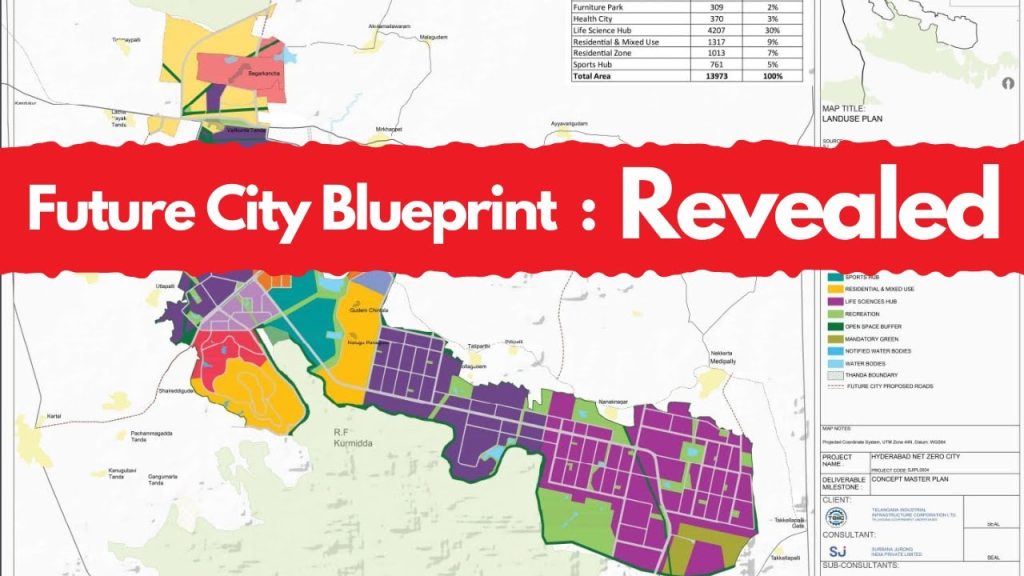
Introduction: The Vision of Future City Hyderabad
Hyderabad, the City of Pearls, is on the cusp of becoming India’s most futuristic metropolis. The Government of Telangana has announced the ambitious development of Future City Hyderabad, a world-class, sustainable urban hub spread over 765 sq. km in the southern region of the state capital. This project aims to create a model city that integrates eco-friendly urban design, smart infrastructure, advanced industries, and sustainable living.
Future City Hyderabad represents India’s most ambitious urban development project, designed to become the country’s first Net-Zero Greenfield Smart City. With the Future City Development Authority (FCDA) now operational since June 2025, this massive 30,000-acre development between the Srisailam and Nagarjunasagar highways is transforming into a reality that will redefine sustainable urban living and create over 300,000 jobs by 2035
With Future City Development Authority (FCDA) established under the Telangana Urban Areas Development Act of 1975, the project is envisioned as a next-generation smart city designed to reduce the pressure on Hyderabad while becoming a global showcase for urban innovation.
Strategic Location of Future City Hyderabad
- Proximity to Rajiv Gandhi International Airport ensures global connectivity.
- Surrounded by Outer Ring Road (ORR), Srisailam Highway, and Nagarjuna Sagar Highway, providing smooth regional access.
- Already home to major industrial clusters that will accelerate economic growth.
- Planned as a decentralized alternative to Hyderabad, balancing population, employment, and urban infrastructure.
Future City is strategically positioned as Telangana’s Fourth City after Hyderabad, Secunderabad, and Cyberabad, located approximately 50 kilometers south of Hyderabad city center in the Rangareddy district. The development spans 762.28 square kilometers across 7 mandals and 56 villages, making it one of the largest planned urban developments in India

This corridor is strategically chosen to make Future City the economic powerhouse of Telangana while maintaining sustainable growth.
Prime Geographic Advantages
The project’s location offers exceptional connectivity advantages. Situated between two major national highways – Srisailam National Highway and Nagarjunasagar State Highway – Future City ensures seamless access to existing urban centers while maintaining proximity to Rajiv Gandhi International Airport at Shamshabad. This strategic positioning places the development at the intersection of major transport corridors, facilitating easy movement of goods, services, and people
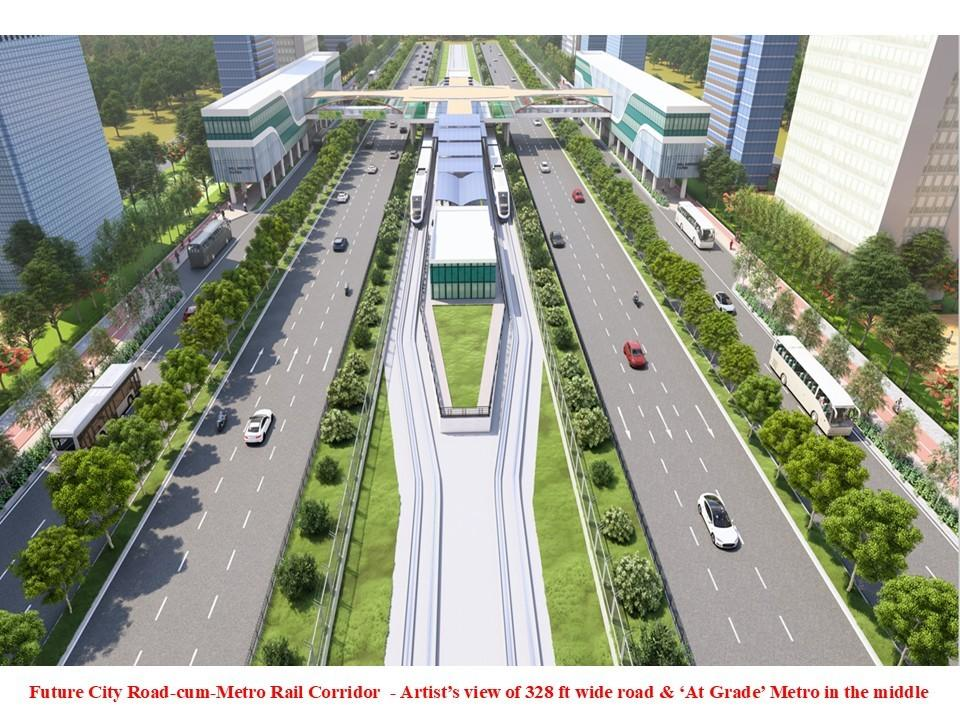
The 330-foot greenfield expressway currently under construction will provide direct connectivity from the Outer Ring Road (ORR) to the Regional Ring Road (RRR). Rithwik Projects has been awarded the ₹1,665 crore contract for Phase I (19.20 km from ORR to Raviryal), while Larsen & Toubro secured the ₹2,365 crore Phase II contract (22 km from Meerkhanpet to RRR at Amangal)
Metro Rail Connectivity Revolution
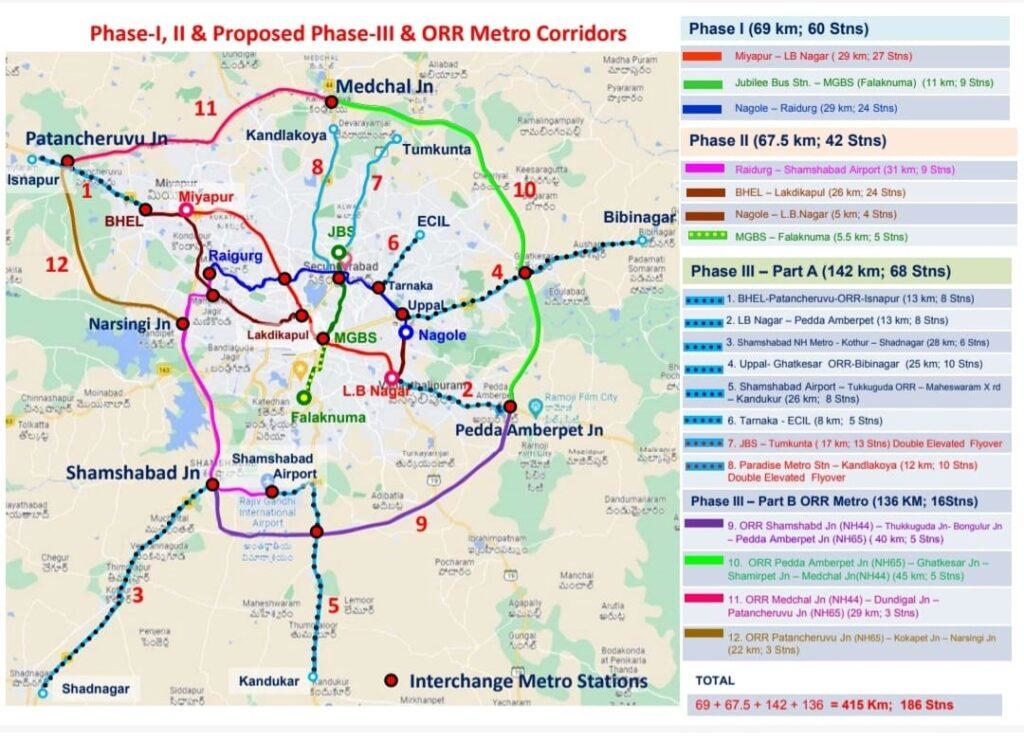
The Green Corridor Metro Rail project represents a game-changing infrastructure development. Hyderabad Airport Metro Ltd (HAML) is preparing a Detailed Project Report for the 40-kilometer metro corridor connecting Shamshabad Airport to Future City via Raviryal. This system will reduce travel time to just 40 minutes, featuring modern stations at Bahadurguda and Pedda Golconda, and extending as an elevated line along the ORR before transitioning to an at-grade system near the Skill University at Meerkhanpet.

Eco-Friendly and Sustainable Urban Planning
One of the most remarkable features of Future City Hyderabad is its focus on environmental conservation and green infrastructure.
Key Sustainability Features
- Sponge Parks for rainwater harvesting and flood prevention.
- Zero Liquid Discharge (ZLD) systems to recycle water and minimize dependency on external supply.
- High-capacity power substations to ensure uninterrupted electricity.
- Green Corridors acting as buffers between industrial and residential clusters.
- City Forests and Pocket Parks for a cleaner and healthier urban ecosystem.
- Eco-tourism and biodiversity conservation zones to balance development with environmental preservation.
This eco-first approach will make Future City India’s first net-zero smart industrial city.
Walk-to-Work Lifestyle: A Human-Centered Design
The master plan emphasizes “Live, Learn, Work, Play”, creating a city where:
- Residential areas are within walking distance of schools, healthcare, offices, and entertainment hubs.
- Employment clusters are integrated with housing, reducing commuting time.
- Reserved forest areas and eco-parks ensure access to green living.
- Tourism and hospitality infrastructure, including hotels and resorts, attract both business and leisure visitors.
This innovative design promotes a self-sufficient and human-centered lifestyle, improving quality of life for residents.
Comprehensive Area Coverage and Village Integration
The FCDA jurisdiction encompasses 56 revenue villages across seven mandals, creating a unified administrative framework for this massive development. This consolidation replaces the previous fragmented approach where HMDA and local bodies managed approvals, often leading to delays and inconsistent development policies
Mandal-wise Breakdown of Coverage
Kandukur Mandal forms the largest component with 18 villages, including key locations like Mucherla, Meerkhanpet, and Kothur. These villages are central to the AI City and Skill University developments. Yacharam Mandal contributes 17 villages, while Ibrahimpatnam adds 7 strategic villages near the airport corridor.

Advanced Industrial and Innovation Ecosystem
Future City Hyderabad is envisioned as a global hub for advanced industries and innovation-driven sectors.
Key Focus Sectors
- Artificial Intelligence and Biotechnology
- Electronics Manufacturing
- Electric Vehicles and Power Storage
- Tourism, Entertainment, and Film Production
- Healthcare and Knowledge Infrastructure
These clusters will drive economic growth, employment, and global investments. With the involvement of international consulting firms and global development banks like JICA, World Bank, and AIIB, Future City is being positioned as a benchmark for industrial and urban growth in India.
Infrastructure Development and Road Network
A strong urban ecosystem requires seamless connectivity. The government has prioritized transit-oriented development and logistics hubs.
Sectoral Development and Economic Impact
Industrial and Technology Hubs
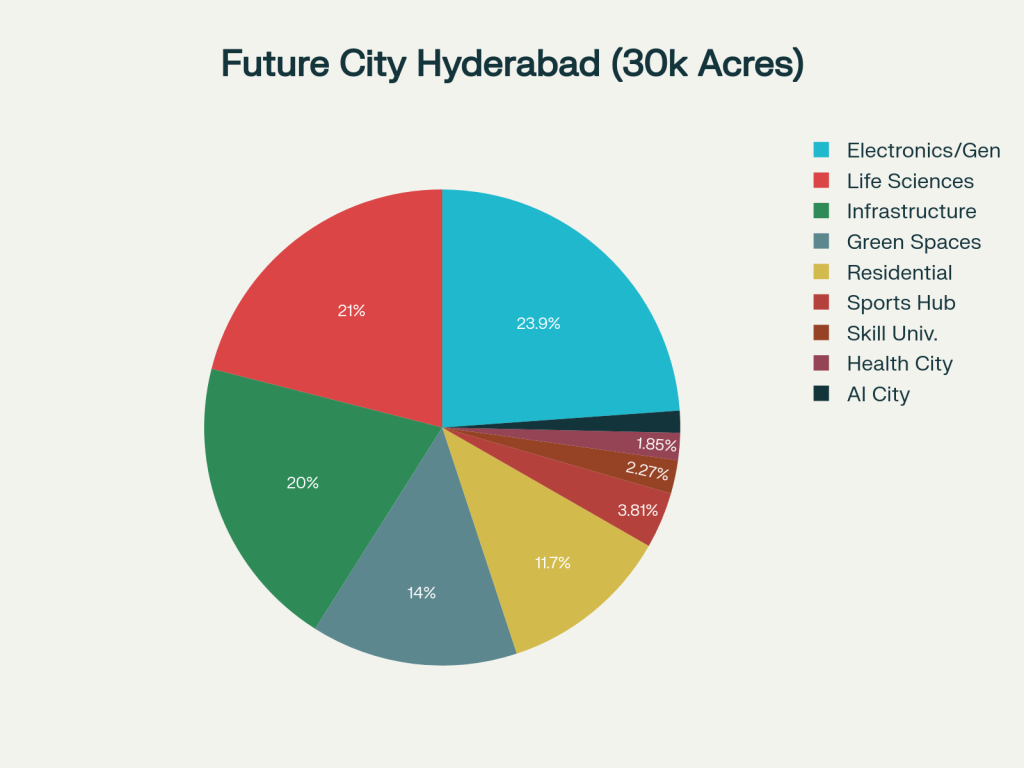
The Electronics & General Industries zone covering 4,774 acres will host advanced manufacturing facilities with plug-and-play infrastructure, testing facilities, and e-waste disposal systems. The Life Science Hub spanning 4,207 acres provides companies with environmental management utilities, shared infrastructure, and district cooling systems aligned with green building standards.
The AI City, though compact at 297 acres, is designed to attract global technology giants including ongoing discussions with Microsoft and Google. This zone will serve as India’s premier artificial intelligence research and development cluster.
Greenfield Radial Road (Radial Road No. 1)
- Total Length: 41.5 km
- Phase 1: ORR at Raviryal (Tata Interchange) to Mirkhanpet – 19.2 km
- Phase 2: Mirkhanpet to Regional Ring Road (RRR) at Amangal – 22.3 km
This corridor will link Future City’s industrial zones with regional highways, easing traffic on NH-765 and SH-19 while providing an alternate, high-speed route.
Digital-First Smart City Framework
Future City is planned as a digital-first urban hub powered by advanced technologies:
- GIS-based planning for precision infrastructure development.
- Real-time dashboards for monitoring and governance.
- BuildNow systems for transparent, fast-paced approvals.
- Smart utilities including e-waste management, solid waste processing, and sewage treatment plants.
This integration of smart governance and digital infrastructure ensures efficiency, accountability, and speed in urban development.
Global Alignment and Investment Magnet
Future City Hyderabad is designed to attract global investors by aligning with international sustainability and industrial standards.
- Eligible for World Bank, JICA, and AIIB funding.
- Focus on long-term private investments and global partnerships.
- Developed by Telangana State Industrial Infrastructure Corporation (TSIIC) with global consultancy support.
This ensures Future City will not only serve India’s urban needs but also emerge as a global economic destination.
Tourism, Culture, and Lifestyle Integration
Beyond its industrial and residential planning, Future City Hyderabad will also emerge as a cultural and tourism hub:
- Eco-tourism zones to preserve biodiversity.
- Hotels, resorts, and entertainment parks along the city’s border.
- Integration of film and media production hubs to attract the creative economy.
- Promotion of business tourism and global conventions.
This will strengthen Hyderabad’s position as an international tourism and business destination.
Future City Hyderabad: A National Model
The project is being promoted as a National Demonstration Project — a living example of how India’s future cities should evolve.
Key Highlights
- India’s first Net-Zero Smart Industrial City with renewable energy and water reuse systems.
- Cluster-based growth model integrating industry, housing, healthcare, and education.
- Sustainable infrastructure including eco-parks, forests, and walk-to-work clusters.
- Digital-first governance for transparent and efficient urban management.
- Economic growth engine for Telangana and India at large.
Conclusion: Building Tomorrow’s Hyderabad Today
Future City Hyderabad is not just an urban project; it is a vision for India’s future. With its focus on sustainability, smart technology, industrial growth, and human-centered design, it is set to become a global benchmark in urban development.
By combining eco-friendly planning, global investment strategies, and cutting-edge infrastructure, the city will reduce Hyderabad’s urban pressure while creating an innovative, sustainable, and globally competitive metropolis.
This is more than a city—it is India’s Future, being built today in the heart of Telangana.