


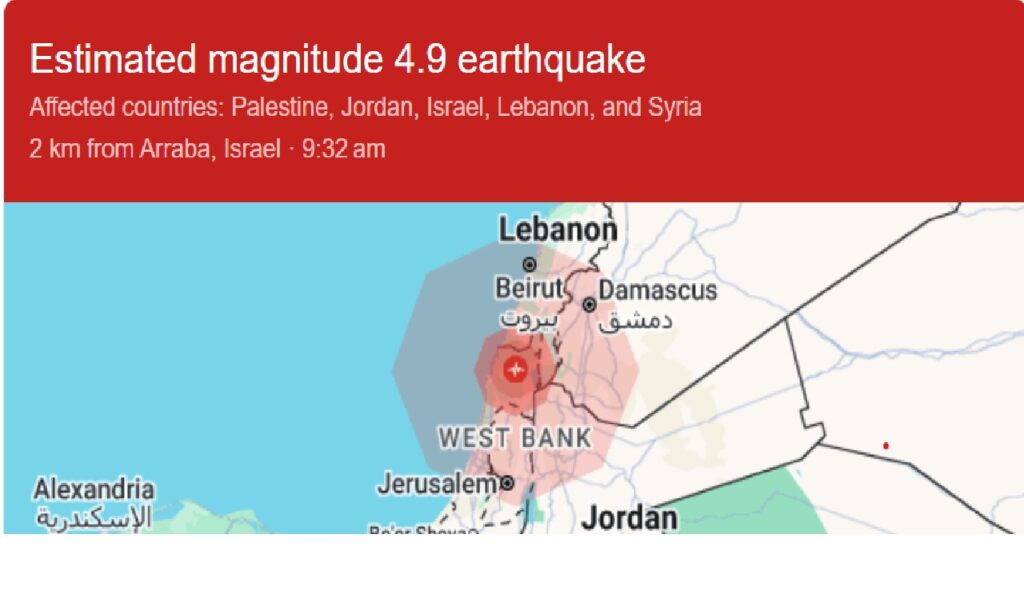
Overview of the Earthquake Event
At approximately 9:32 a.m. 26 October 2024, a magnitude 4.9 earthquake struck near Arraba, Israel, impacting several Middle Eastern countries, including Palestine, Jordan, Israel, Lebanon, and Syria. This seismic event, occurring just 2 kilometers from Arraba, caused tremors that were felt across these nations, raising concerns for public safety and potential infrastructure damage.
Details of the Earthquake’s Impact
Location and Magnitude
The earthquake, with a reported magnitude of 4.9, centered close to Arraba, Israel, and was strong enough to send ripples through neighboring countries. Such a magnitude can create noticeable shaking and mild structural impacts, especially close to the epicenter. However, in regions farther from the center, people typically experience minor shaking.
Affected Areas and Initial Reports
Communities within Palestine, Jordan, Israel, Lebanon, and Syria experienced the tremors. Initial reports indicate that people felt shaking in various regions, causing residents to take precautions and evacuate buildings temporarily. Although early assessments show limited infrastructure damage, thorough inspections are underway to assess potential risks to buildings and facilities.
Seismic Activity in the Middle East
Understanding the Regional Seismic Zone
The Middle East, sitting at the convergence of several tectonic plates, is historically susceptible to seismic activity. The intersection of the African and Arabian plates contributes to frequent minor to moderate earthquakes in the region, although larger quakes are less common.
Historical Earthquakes in the Region
Historically, the Middle East has experienced significant earthquakes, some of which caused widespread devastation. The 4.9 magnitude recorded today aligns with the region’s typical seismic activity, though it serves as a reminder of the area’s vulnerability to natural disasters.
Safety Measures and Preparedness
Public Response and Safety Protocols
In response to the earthquake, emergency services in affected areas advised residents to follow safety protocols. This includes taking shelter in safe locations and staying alert to potential aftershocks. Local authorities also urged citizens to stay informed through official channels for updates.
Importance of Earthquake Preparedness
Earthquakes highlight the importance of preparedness for residents and infrastructure. Implementing building standards to withstand seismic activity, conducting regular emergency drills, and educating the public on response protocols can significantly reduce casualties and property damage.
Conclusion
The recent 4.9 magnitude earthquake near Arraba, Israel, is a reminder of the region’s susceptibility to seismic events. While no severe damage has been reported, authorities are actively monitoring the situation, emphasizing the importance of awareness and preparedness in seismic-prone areas.