


The Delhi Metro Rail Corporation (DMRC) has announced a transformative initiative that will redefine urban mobility in India’s national capital. The upcoming Phase-IV corridors of the Delhi Metro network will feature state-of-the-art driverless trains, utilizing Unattended Train Operation (UTO) technology to enhance operational efficiency, improve passenger safety, and reduce human intervention in train operations. This ambitious expansion represents a significant milestone in India’s journey toward smart, sustainable, and automated public transportation systems.
India’s first driverless metro train was inaugurated by Prime Minister Narendra Modi on December 28, 2020, on the Magenta Line connecting Janakpuri West to Botanical Garden. Since this historic launch, DMRC has steadily expanded its automated fleet, with 69 driverless trains currently operational across the Pink Line and Magenta Line corridors. The introduction of driverless operations on Phase-IV corridors marks the next chapter in Delhi Metro’s technological evolution, positioning it to become the world’s second-largest driverless metro network with approximately 160 kilometers of fully automated corridors upon completion.

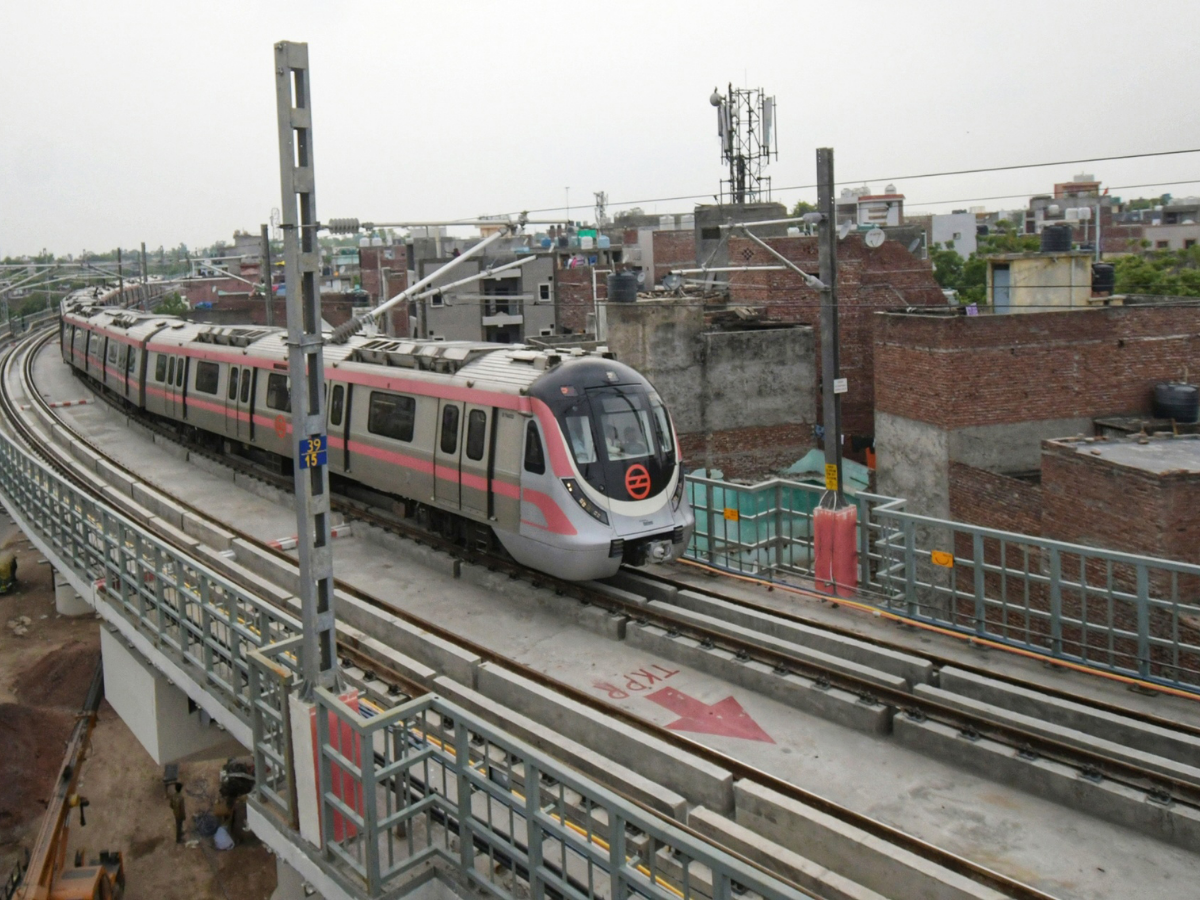
Driverless Delhi Metro train operating on elevated tracks of the Pink Line amid urban surroundings economictimes
Understanding Unattended Train Operation Technology
Advanced Communication-Based Train Control Systems
Driverless metro trains operate using sophisticated Unattended Train Operation (UTO) technology, which represents the highest level of automation in rail transportation. This system is classified as Grade of Automation 4 (GoA4) according to international standards defined in IEC 62290-1:2014. At this level of automation, trains can perform all operational functions without any onboard personnel, including starting, accelerating, decelerating, stopping at stations, and conducting safety diagnostics.
The technological foundation of driverless operations rests on Communication-Based Train Control (CBTC) systems, which utilize wireless communication technology to transmit real-time data between trains and track equipment. Unlike traditional fixed signal systems that rely on physical signals along railway tracks, CBTC employs continuous bidirectional communication between trains and wayside control centers. This advanced signaling architecture enables precise train location determination with high resolution, independent of traditional track circuits.
The CBTC system architecture comprises several critical components working in seamless coordination. Transponders installed at fixed intervals along the tracks wirelessly transmit location information to onboard receivers as trains pass over them. Combined with speed sensors and automated controllers, trains can determine their exact position and automatically calculate optimal movement parameters. This vehicle-centric approach eliminates artificial train separation constraints and allows for minimal safe distances between consecutive trains, significantly increasing line capacity.
Operations Control Centre Monitoring
All driverless train operations are continuously monitored 24/7 by professionals stationed at the Operations Control Centre (OCC). The OCC provides comprehensive remote visibility and control over the entire metro system, including rolling stock, stations, signals, and tracks, with concourse and platform-level monitoring capabilities. This centralized command hub ensures that automated trains operate safely and efficiently while maintaining the ability to intervene remotely if necessary.
DMRC commissioned a state-of-the-art integrated OCC at Metro Bhawan in February 2024 specifically to support Phase-IV operations. This advanced control center will manage operations across the entire DMRC network of approximately 415 kilometers of track, 388 trains, and over 300 stations from one unified location. The facility utilizes advanced CCTV monitoring systems that automatically stream relevant camera feeds to the OCC when passenger emergency alarm devices are activated, ensuring rapid response to any incidents.
The fail-safe technology integrated into driverless trains automatically brings trains to a complete stop if any technical anomaly is detected, prioritizing passenger safety above all else. This multi-layered safety architecture, combining automated systems with human oversight from the OCC, has proven highly effective in maintaining Delhi Metro’s exemplary safety record on existing driverless corridors.
Delhi Metro Phase-IV Project Overview
Priority Corridors Under Construction
The Delhi Metro Phase-IV project represents one of the most ambitious urban infrastructure undertakings in India, designed to significantly expand connectivity and reduce traffic congestion across the National Capital Region. The comprehensive expansion plan encompasses six corridors spanning approximately 112.32 kilometers with 44 new metro stations scheduled for completion in phases extending through 2029.
Three priority corridors are currently under active construction with an expected completion timeline of March 2026, though realistic estimates suggest operational readiness may extend to 2028. These priority corridors include the Majlis Park to Maujpur extension of the Pink Line covering 12.318 kilometers with eight stations, the Janakpuri West to RK Ashram Marg extension of the Magenta Line spanning 28.92 kilometers with 21 stations, and the entirely new Aerocity to Tughlakabad corridor known as the Golden Line, stretching 23.622 kilometers with 15 stations.
The Janakpuri West to Krishna Park Extension section, measuring 2.8 kilometers, became the first Phase-IV segment to become operational in January 2025, marking a significant milestone for the expansion project. Construction has achieved substantial progress on the Majlis Park to Jagatpur Village stretch of 4.6 kilometers, which includes three new stations at Burari, Jharoda Majra, and Jagatpur Village, with trial runs having commenced in December 2024.
Additional Approved Corridors
Beyond the three priority corridors, Delhi Metro has received government approval for three additional corridors that will further extend the network. The Inderlok to Indraprastha corridor will extend the Green Line by 12.377 kilometers, the Lajpat Nagar to Saket G Block corridor will add 8.385 kilometers to the Golden Line network, and the Rithala to Narela to Nathupur (Kundli) corridor will extend the Red Line by 26.463 kilometers into neighboring Haryana.
In March 2025, DMRC achieved financial closure for these three remaining corridors through a loan agreement with the Japan International Cooperation Agency (JICA) worth 79,726 million Japanese Yen, approximately ₹4,309.53 crores. This funding will enable tendering work to accelerate, with construction activities scheduled to commence subsequently. The foundation stone for the Rithala-Kundli corridor was laid by Prime Minister Narendra Modi in January 2025, signaling the government’s commitment to expanding metro connectivity beyond Delhi’s administrative boundaries.

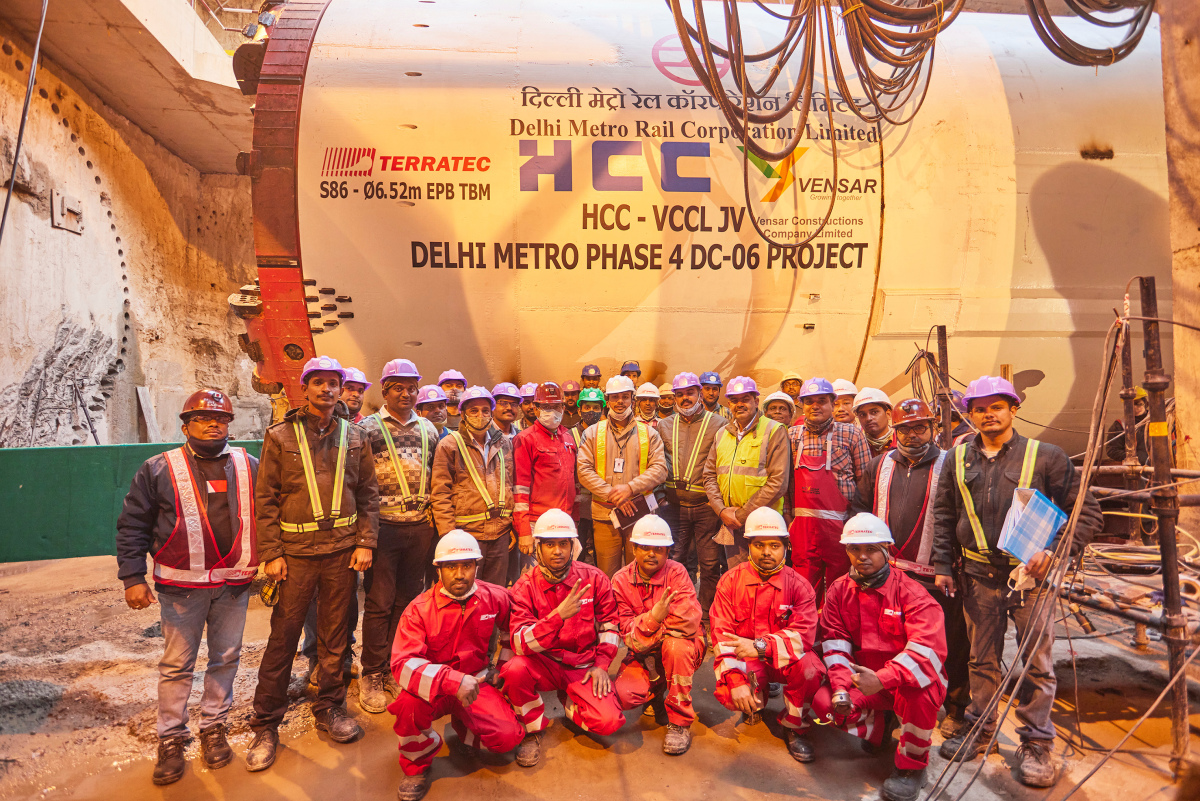
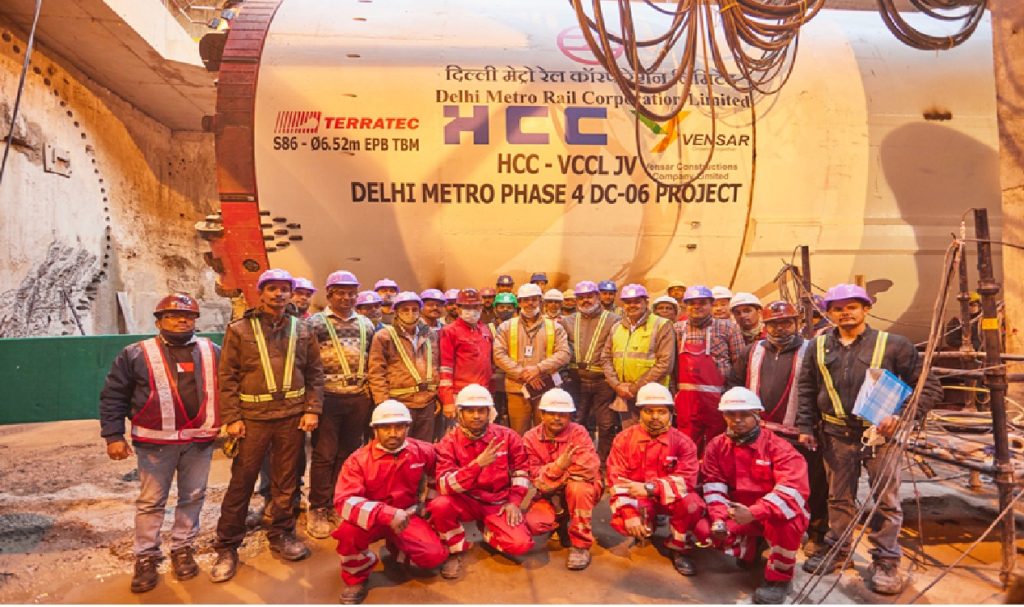
Workers and tunnel boring machine at the Delhi Metro Phase 4 underground construction site tunnel-online
Project Financing and Rolling Stock Procurement
The total estimated cost for Delhi Metro Phase-IV stands at approximately ₹24,948.65 crores, with funding arranged through multiple sources. The Japan International Cooperation Agency (JICA) has extended substantial financial support through Official Development Assistance (ODA) loans totaling approximately ₹12,930.914 crores for the priority corridors. The remaining project costs are being shared between the Central Government contributing ₹4,643.638 crores, the Delhi Government and other sources providing ₹7,374.098 crores.
In October 2022, DMRC awarded a significant contract worth ₹2,631.36 crores to Alstom Transport India for the supply of 312 standard gauge metro coaches comprising 52 six-coach train sets for Phase-IV priority corridors. These trains are being manufactured at Alstom’s state-of-the-art facility in Sri City, Andhra Pradesh, supporting India’s Make in India initiative. The first driverless train set for Phase-IV arrived at the Mukundpur depot in November 2024, where it underwent statutory certification tests before deployment.
The 312 coaches are distributed across the three priority corridors as follows: 144 coaches (24 trains) for the Janakpuri West to RK Ashram Marg Magenta Line extension, 90 coaches (15 trains) for the Majlis Park to Maujpur Pink Line extension, and 78 coaches (13 trains) for the new Aerocity to Tughlakabad Golden Line corridor. The Golden Line contract includes comprehensive maintenance services for a period of 15 years, ensuring long-term operational reliability.
Advanced Features of Phase-IV Driverless Trains
Technical Specifications and Design
The new Alstom Metropolis train sets for Delhi Metro Phase-IV incorporate cutting-edge technology and passenger-centric design features. These lightweight trains are constructed from stainless steel with a width of 3.2 meters, optimized for standard gauge track systems. Each six-coach train configuration consists of two Driving Motor Cars (DMC) at both ends and four Trailer Cars (TC) in between, providing a balanced distribution of propulsion power and passenger capacity.
The trains are designed with a maximum speed capability of 95 kilometers per hour and an operational speed of 85 kilometers per hour, ensuring rapid transit across the network while maintaining safety margins. The design essentially mirrors the successful Alstom trains currently operating on Mumbai Metro’s Aqua Line, demonstrating proven reliability and performance in Indian operating conditions.
All Phase-IV trains are equipped with Alstom’s advanced CBTC signaling and train control solutions, enabling GoA4 grade automation for fully Unattended Train Operations. This technology allows trains to operate autonomously from depot to passenger service and back, with all critical functions managed by onboard computers communicating continuously with wayside equipment and the central OCC.
Enhanced Safety Features
Platform Screen Doors (PSDs) represent a critical safety innovation being implemented across all Phase-IV stations. These automated barriers create a physical separation between platform areas and train tracks, opening only when trains are properly positioned at stations. Underground stations will feature full-height PSDs measuring 2.15 meters, while elevated stations will be equipped with half-height PSDs similar to those on existing Pink and Magenta Line stations.

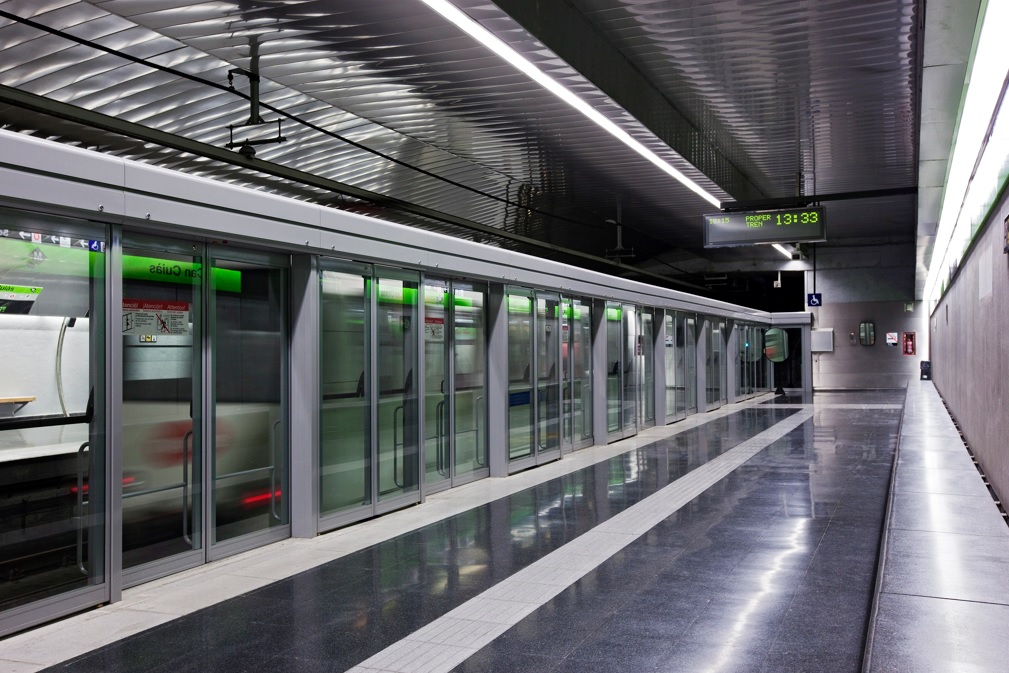
Metro platform with automatic platform screen doors enhancing passenger safety manusa
The implementation of PSDs serves multiple safety objectives beyond preventing accidental falls or suicide attempts. These systems improve climate control within stations by physically isolating platforms from tunnel areas, enhance security by restricting unauthorized access to tracks, reduce littering on track areas, and improve sound quality of platform announcements by minimizing background noise from tunnels. The synchronization of PSDs with train doors ensures smooth boarding and alighting operations while maintaining operational efficiency
Emergency Escape Doors integrated into the PSD system provide critical safety redundancy. These single-leaf hinged doors open toward the platform side and can be manually operated from the track side if a train fails to stop at the correct position, ensuring passenger safety even during system anomalies. The comprehensive safety architecture combining automated train operations, platform screen doors, and emergency protocols establishes multiple layers of protection for passengers.
Energy Efficiency and Sustainability
Driverless metro operations contribute significantly to environmental sustainability through multiple mechanisms. The automated systems optimize energy consumption by precisely controlling acceleration and braking profiles, eliminating the variability inherent in human operation. Artificial Intelligence algorithms calculate optimal deceleration and acceleration times, allowing trains to start and stop with pinpoint accuracy while minimizing energy expenditure.
Delhi Metro has earned international recognition for its environmental initiatives, becoming the first railway project in the world certified by the United Nations to receive carbon credits for reducing Greenhouse Gas (GHG) emissions. Through its innovative regenerative braking process, whenever trains apply brakes, three-phase traction motors act as generators producing electrical energy that returns to overhead electricity lines for use by other accelerating trains in the same service line. This system reduces overall electricity requirements by approximately 30 percent.wingify+3
The modal shift from private vehicles to metro transportation has resulted in Delhi Metro helping reduce pollution levels in the city by an estimated 630,000 tonnes annually. DMRC currently meets about 35 percent of its total energy needs from renewable sources, primarily solar energy, with an ambitious target to increase this proportion to 50 percent by 2031. The combination of automated operations, regenerative braking, renewable energy utilization, and reduced vehicular emissions positions Delhi Metro as a model for sustainable urban transportation.cleanmobilityshift+2
Current Driverless Operations and Future Expansion
Magenta and Pink Line Success Stories
The Delhi Metro’s existing driverless operations on the Magenta and Pink Lines have demonstrated exceptional performance and reliability since their implementation. The Magenta Line achieved full GoA4 unattended operations in May 2025, with all train operators completely removed from the system. This milestone was reached through a carefully phased implementation strategy spanning several years, beginning with the removal of cab partition doors and driving consoles while retaining train operators, progressing to allowing operators anywhere within trains, then reducing operator presence to alternate trains only, and finally eliminating operators entirely.timesofindia.indiatimes+2
The Pink Line commenced its automation journey in March 2025 and reached Stage II by June 2025, with full driverless operations expected within a few months thereafter. Once both lines achieve complete automation, Delhi Metro will operate 97 kilometers of fully driverless corridors out of its total 395-kilometer network in the Delhi-NCR region, positioning it among the world’s largest driverless metro systems.indiatvnews+2
Currently, 43 driverless trains operate on the Pink Line and 26 on the Magenta Line under the UTO system. According to DMRC officials, the implementation of driverless operations has significantly enhanced operational efficiency by improving coach availability for service and eliminating manual pre-induction inspection processes, thereby reducing the workload on train operators while ensuring smoother service delivery.indianexpress+2
Record-Breaking Ridership Performance
The Delhi Metro’s reliability and efficiency have driven consistently increasing passenger numbers, demonstrating strong public confidence in the system. On August 8, 2025, DMRC achieved its highest-ever single-day ridership with 8,187,674 passenger journeys recorded across all operational corridors. This milestone surpassed the previous record of 7.87 million journeys set in November 2024. To accommodate the surge in travel demand ahead of the Rakshabandhan festival, DMRC operated 92 additional train trips on August 8 and scheduled 455 extra trips for August 9.hindustantimes+3
These impressive ridership figures reflect passengers’ growing trust in Delhi Metro’s reliability, punctuality, and seamless connectivity across the Delhi-NCR region. The automated operations on driverless corridors have contributed to this success by enabling higher service frequencies, reducing delays caused by human factors, and maintaining consistent schedule adherence. The flexibility of driverless operations allows DMRC to quickly adjust service levels in response to real-time demand, optimizing resource utilization during peak and off-peak periods.wsp+7
Path to World’s Second-Largest Driverless Network
Upon completion of Phase-IV, Delhi Metro will operate driverless trains across extended sections of the Pink and Magenta Lines, as well as the entirely new Golden Line corridor from Aerocity to Tughlakabad. This expansion will result in approximately 160 kilometers of fully automated metro corridors operating under GoA4 standards, establishing Delhi Metro as the world’s second-largest driverless metro network after Singapore.thefinancialworld+3
This remarkable achievement positions Delhi Metro at the forefront of global urban rail automation. Among the elite 7 percent of metro networks worldwide capable of operating trains autonomously, Delhi Metro’s extensive driverless infrastructure demonstrates India’s technological capabilities and commitment to modernizing public transportation. The success of Delhi Metro’s automation initiatives has inspired other Indian cities including Mumbai, Bangalore, and Kolkata to pursue similar driverless technologies for their metro systems.news18+3
Advantages of Driverless Metro Operations
Operational Efficiency and Flexibility
Driverless train operations deliver substantial improvements in operational efficiency across multiple dimensions. Automated systems eliminate response time variabilities inherent in human control, optimizing running times by increasing average speeds and reducing station dwell times. This enhanced precision enables trains to operate at minimum safe separations, dramatically increasing line capacity without requiring additional infrastructure investments.wsp+4
The predictability of automated operations creates unprecedented operational flexibility. Operators can automatically park trains and maintain them in idle mode indefinitely, quickly respond to service changes without requiring human drivers to be constantly present, and seamlessly adjust service frequencies based on real-time demand patterns. During periods of high passenger volume, train lengths can be doubled through automatic coupling controlled remotely from the control center, maximizing capacity utilization.safe-intelligence.fraunhofer+2
Train regulation systems optimize energy consumption and reduce maintenance costs through smoother driving standards and optimal acceleration and braking profiles. The elimination of manual driving variability results in more consistent wear patterns on rolling stock and infrastructure components, extending equipment lifespan and reducing maintenance requirements. These efficiency gains translate directly into lower operational costs, making driverless systems economically attractive despite higher initial capital investments.hitachi+4
Enhanced Safety and Reliability
Automated train operations significantly enhance passenger safety through multiple mechanisms. Advanced monitoring systems equipped with sophisticated sensors and algorithms continuously monitor train operations in real-time, making autonomous decisions faster than human operators to minimize errors and prevent accidents. The elimination of human factors such as fatigue, distraction, or misjudgment removes major sources of operational risk that have historically contributed to railway accidents.techbullion+2
The fail-safe design philosophy embedded in driverless systems ensures that any detected anomaly automatically triggers protective responses, bringing trains to controlled stops before potentially hazardous situations can develop. Sensor data combined with predictive analytics enables optimized maintenance scheduling, identifying potential equipment failures before they occur and further improving system reliability. The continuous monitoring from the OCC provides an additional safety layer, with human experts able to intervene remotely if automated systems encounter unexpected scenarios.economictimes.indiatimes+4
The safety record of Delhi Metro’s existing driverless operations validates these technological advantages. Since the introduction of UTO services on the Magenta and Pink Lines, these corridors have maintained exemplary safety standards while handling millions of passenger journeys. The integration of platform screen doors with automated train operations creates a comprehensive safety ecosystem that effectively prevents platform accidents, a leading cause of casualties on metro systems worldwide.indianexpress+4youtube
Environmental and Economic Benefits
The environmental advantages of driverless metro operations align closely with India’s commitment to achieving net-zero emissions by 2070. Automated trains reduce energy consumption through precise speed control and optimized acceleration/braking profiles, lowering overall carbon footprints by reducing congestion and improving throughput. The regenerative braking systems employed by Delhi Metro recover kinetic energy during deceleration, feeding it back into the electrical grid for use by other trains, resulting in approximately 30 percent energy savings.wingify+5
Delhi Metro’s modal shift impact demonstrates the broader environmental benefits of efficient public transportation. Every passenger choosing metro over private vehicles contributes to reducing roughly 100 milligrams of carbon dioxide emissions per 10-kilometer trip. The TERI study found that metro rail passengers save about 32.38 grams of CO₂ per kilometer compared to road vehicle travel. With over 8 million daily passenger journeys, the cumulative emission reductions are substantial, contributing meaningfully to air quality improvement in the National Capital Region.cleanmobilityshift+4
From an economic perspective, driverless operations reduce long-term operational expenditures through lower staffing requirements, reduced energy costs, optimized maintenance scheduling, and improved asset utilization. While initial capital investments for automation technology are significant, the lifecycle cost advantages become apparent over the 30-40 year operational lifespan of metro systems. The ability to increase service frequencies without proportional cost increases makes driverless systems particularly attractive for high-density urban corridors experiencing growing demand.railsystem+5
Construction Progress and Engineering Achievements
Tunneling Breakthroughs and Innovations
Delhi Metro Phase-IV construction has achieved multiple significant tunneling milestones utilizing advanced Tunnel Boring Machine (TBM) technology. In July 2025, DMRC completed a 792-meter underground tunnel between Tughlakabad and Tughlakabad Railway Colony on the Golden Line corridor using a 91-meter-long TBM operating at an average depth of 18 meters. This achievement marked one of several parallel tunnel segments being constructed simultaneously across Phase-IV corridors.indianexpress+2
In June 2025, another major breakthrough occurred at Vasant Kunj Metro Station with the completion of a 1,550-meter tunnel between Kishangarh and Vasant Kunj on the Aerocity-Tughlakabad corridor. This tunnel was excavated at an average depth of 22.86 meters, ranging between 15.48 and 30.25 meters, requiring the installation of 1,105 precast concrete rings with an inner diameter of 5.8 meters. The parallel tunnel on this stretch had been completed in March 2025, demonstrating the coordinated progress across multiple construction packages.railanalysis+1
The longest tunneling drive of Phase-IV was completed by Afcons Infrastructure in late 2024, boring a 2.65-kilometer stretch between Tughlakabad Airforce and Maa Anandmayee Marg station using a 105-meter-long TBM at a depth of 16 meters. This challenging drive required frequent cutter replacements to penetrate hard rock formations, with the tunnel alignment carefully planned to avoid passing beneath heritage structures. The tunnel utilized approximately 1,894 precast tunnel rings manufactured at a mechanized casting yard using steam curing systems to achieve early concrete strength.enr
All underground tunneling for Phase-IV employs the Earth Pressure Balancing Method (EPBM), a proven technology that allows controlled excavation through varied soil and rock layers while maintaining ground stability. This technique is particularly valuable for underground construction in densely populated urban areas where minimizing surface disturbance and preventing ground subsidence are critical priorities. Continuous monitoring of ground movement during excavation ensures structural stability and public safety throughout the construction process.x+3
Overall Project Status
As of mid-2025, Delhi Metro Phase-IV construction has achieved approximately 70 percent completion on several critical corridors. The 4.6-kilometer stretch between Majlis Park and Jagatpur Village on the Pink Line extension is approaching completion, with three stations at Burari, Jharoda Majra, and Jagatpur Village nearing readiness. Trial runs on this segment commenced in December 2024, and the section awaits final statutory approvals and safety certifications before opening to passengers.metrorailtoday+1
Significant progress has been recorded on the Aerocity-Tughlakabad Golden Line corridor, with three major tunnel breakthroughs completed within a two-month period during early 2025. Of the total 65.2 kilometers approved for the priority corridors, approximately 40.1 kilometers comprise underground sections, with the Aerocity-Tughlakabad corridor accounting for 19.34 kilometers of subterranean construction. The remaining portions utilize elevated structures, which generally progress faster than underground segments due to fewer geological constraints.metrorailtoday+2
While the original deadline for Phase-IV priority corridors was December 31, 2024, DMRC has revised its completion target to March 2026. However, realistic assessments by industry observers suggest that full operational readiness may extend to 2028 due to the complexity and scale of remaining work. The COVID-19 pandemic and subsequent labor shortages significantly impacted construction timelines during 2020-2021, creating delays that continue to influence the project schedule.themetrorailguy+4
Transforming Urban Mobility in Delhi-NCR
Connectivity and Accessibility Improvements
Delhi Metro Phase-IV will fundamentally transform urban mobility across the National Capital Region by providing last-mile connectivity to emerging residential and employment hubs. The expansion will add 44 new metro stations across the priority corridors, significantly enhancing accessibility for communities in North, West, South, and East Delhi. Areas such as Burari, Sonia Vihar, Bhajanpura, Vasant Kunj, Chhatarpur, and Tughlakabad will gain direct metro access for the first time.travel.economictimes.indiatimes+4
The strategic routing of Phase-IV corridors addresses critical connectivity gaps in Delhi’s existing metro network. The Golden Line creates a vital north-south link connecting the Violet and Airport Express Lines at their termini, providing seamless access to Indira Gandhi International Airport from southern residential areas. The extended Magenta Line will connect central Delhi’s RK Ashram Marg area with western suburbs, improving accessibility for commuters traveling between these regions.metrorailtoday+3
The 29 existing interchange stations within Delhi Metro’s network enable passengers to transfer between lines seamlessly, creating a highly connected transportation web. Phase-IV will further enhance this interconnectivity, allowing commuters to reach virtually any corner of Delhi-NCR through convenient metro connections. This comprehensive coverage encourages modal shift from private vehicles to public transportation, reducing road congestion and improving overall urban mobility.timesofindia.indiatimes+5
Socioeconomic Impact
The expansion of Delhi Metro generates substantial socioeconomic benefits extending beyond transportation convenience. Improved connectivity reduces travel times significantly, with Delhi Metro saving an estimated 269 million hours of travel time for passengers annually. This time savings translates directly into enhanced productivity, better quality of life, and increased economic opportunities for residents across the metropolitan region.wingify+1
Property values in areas gaining metro connectivity typically experience appreciation as accessibility improves, benefiting homeowners and stimulating real estate development. Commercial activity around metro stations flourishes through increased foot traffic and improved accessibility for customers and employees. The construction phase itself generates significant employment across skill levels, from engineering and technical roles to construction labor, contributing to economic growth.housing+4
The environmental benefits of increased metro ridership extend to public health improvements through better air quality. Delhi’s chronic air pollution problems are significantly exacerbated by vehicular emissions, with private vehicles contributing 40-50 percent of the city’s air pollution. By encouraging modal shift to metro transportation, Phase-IV will help reduce vehicular emissions, contributing to cleaner air and better health outcomes for Delhi’s residents.cleanmobilityshift+2
Challenges and Future Outlook
Technical and Operational Considerations
The implementation of driverless operations on Phase-IV corridors presents technical challenges requiring careful management. The integration of new driverless trains with existing infrastructure and signaling systems demands meticulous planning and extensive testing to ensure seamless operations. The commissioning phase for CBTC systems typically involves substantial work scopes, significant equipment quantities, multiple stakeholders, and complex coordination requirements.psa+3
Cybersecurity emerges as a critical concern for automated metro systems reliant on wireless communications and computer control. The CBTC architecture’s dependence on continuous data exchange between trains and wayside equipment creates potential vulnerabilities requiring robust security protocols. DMRC must implement comprehensive cybersecurity measures to protect against potential threats while maintaining system reliability and performance.txone+1
Public acceptance of driverless technology represents another important consideration. While Delhi Metro’s existing driverless operations on the Magenta and Pink Lines have built public confidence, some passengers may initially feel uncomfortable boarding trains without visible operators. Clear communication about safety features, continuous OCC monitoring, and the proven track record of existing driverless services will be essential for building public trust.economictimes.indiatimes+4
Integration with Broader Transportation Ecosystem
Delhi Metro Phase-IV must integrate effectively with other transportation modes to maximize its impact on urban mobility. Seamless connections with bus services, auto-rickshaws, cycle-sharing systems, and pedestrian infrastructure are essential for providing true last-mile connectivity. The development of multimodal transportation hubs at major metro stations can facilitate smooth transfers between different transportation modes, encouraging comprehensive public transit adoption.housing+4
The integration of Delhi Metro with regional rail systems serving neighboring states represents a strategic priority for the National Capital Region. Coordinated timetabling, integrated ticketing systems, and physical connectivity between Delhi Metro and rail networks serving Uttar Pradesh, Haryana, and Rajasthan would create a comprehensive regional transportation system. Phase-V planning efforts already envision extending metro connectivity to cities in neighboring states, building on the foundation established by Phase-IV.metrorailtoday+1
Smart city initiatives provide opportunities for deeper integration of metro operations with urban management systems. Real-time passenger information systems, mobile ticketing applications, and integration with navigation platforms enhance user experience and convenience. Data analytics from automated metro operations can inform urban planning decisions, helping authorities understand travel patterns and optimize transportation infrastructure investments.hitachi+2
Conclusion
The introduction of driverless trains on Delhi Metro Phase-IV corridors represents a transformative advancement in India’s urban transportation infrastructure. By implementing cutting-edge Unattended Train Operation technology featuring Communication-Based Train Control systems, platform screen doors, and comprehensive safety protocols, DMRC is establishing new benchmarks for metro operations in India and globally.indianexpress+4
The expansion will add approximately 112 kilometers of new metro lines with 44 stations, significantly enhancing connectivity across Delhi-NCR while positioning Delhi Metro as the world’s second-largest driverless metro network with 160 kilometers of fully automated corridors. The operational advantages of driverless systems—including enhanced safety, improved efficiency, greater flexibility, reduced energy consumption, and environmental sustainability—demonstrate the compelling benefits of automation technology.thefinancialworld+8
With construction progressing steadily toward the revised March 2026 completion target for priority corridors, Delhi Metro Phase-IV promises to revolutionize urban mobility for millions of residents. The successful implementation of driverless operations will serve as a model for other Indian cities pursuing metro automation, contributing to India’s broader vision of sustainable, technology-driven urban development.news18+6
As Delhi Metro continues its journey toward becoming a world-class automated metro network, the Phase-IV expansion exemplifies the transformative potential of investing in modern, sustainable public transportation infrastructure. The driverless trains soon to operate across these new corridors will not merely transport passengers—they will carry Delhi-NCR toward a cleaner, more connected, and more efficient urban future.