


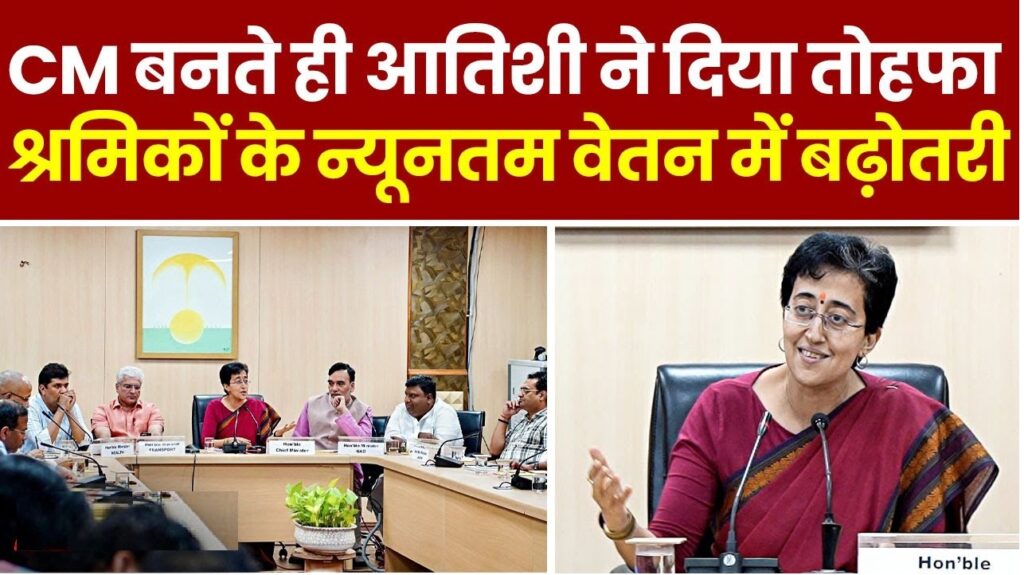
The Delhi CM Atishi Increases Minimum Wages for Workers has taken a significant step to improve the livelihood of its workers by announcing an increase in the minimum wage. This new policy has been a part of the Aam Aadmi Party’s (AAP) ongoing efforts to uplift the working class, a key segment of the city’s population. Delhi’s Chief Minister Atishi, along with Labour Minister Arvind Kejriwal, has been at the forefront of this initiative. Let’s explore the key highlights of this important decision and what it means for laborers across the city.
The Context Behind the Minimum Wage Hike
In India, the working class has long struggled with low wages, especially in metropolitan areas like Delhi. The recent announcement from the Delhi government comes as a relief to thousands of workers who rely on their daily wages to support their families. Atishi, in her first press conference after assuming the role of Chief Minister, highlighted the key measures taken by her government to ensure fair compensation for laborers.
AAP’s government, led by Arvind Kejriwal, has introduced one of the highest minimum wages for urban laborers in the country. This move is aimed at reducing income inequality and providing workers with a better standard of living. The policy reflects the AAP’s commitment to the welfare of the poor, in contrast to opposition parties that, according to Atishi, have historically ignored the plight of laborers.
Key Details of the Wage Increase
The Delhi government’s new policy establishes a structured minimum wage system for different categories of workers. Here’s a breakdown of the new wage structure:
- Unskilled Labor: Minimum wages have been increased to ₹666 per day.
- Semi-skilled Labor: Workers in this category will now earn ₹929 per day.
- Skilled Labor: The wages for skilled laborers have been set at ₹917 per day.
This wage increase is expected to have a direct impact on the standard of living for thousands of laborers across Delhi. The new policy not only sets a higher wage benchmark but also addresses the discrepancies between the compensation provided in different states.
How the Minimum Wage Increase Benefits Delhi’s Workers
The wage hike is a direct effort to bridge the economic gap between laborers and other working professionals in the city. The increased wages will provide workers with more financial stability, enabling them to meet rising living costs, including food, housing, and healthcare.
Moreover, this move is expected to have a ripple effect on the local economy. With more disposable income, workers are likely to spend more on goods and services, thus boosting demand in various sectors. This, in turn, could lead to job creation and further economic growth in Delhi.
Comparison with Other States
Atishi pointed out that the minimum wages in Delhi are now among the highest in the country. She criticized the BJP, accusing them of being anti-poor, and compared the wages in BJP-ruled states to those in Delhi. According to Atishi, workers in BJP-led states earn almost half of what laborers in Delhi will now receive.
This disparity highlights the importance of strong labor policies at the state level. The wage gap between Delhi and other states also underscores the need for national reforms to ensure fair wages across the country, regardless of the state or region.
The Role of Courts and Legal Battles
One of the most striking aspects of this wage increase is the role played by the courts in its implementation. Atishi emphasized that the AAP government did not just propose a wage hike but fought for it in court to ensure it was implemented, despite opposition from the BJP.
The legal challenges faced by the AAP government in raising the minimum wage underscore the broader political struggle over labor rights in India. By navigating through these legal hurdles, the Delhi government has demonstrated its dedication to protecting the rights of its workers.
AAP’s Vision for Labor Welfare
The recent wage hike is part of a larger vision by the AAP government to ensure the well-being of workers in Delhi. Atishi credited the leadership of Arvind Kejriwal for making labor welfare a priority in their governance.
In addition to wage increases, the AAP government has been instrumental in providing other benefits to laborers, such as better working conditions, access to healthcare, and educational opportunities for their children. The AAP’s approach to labor rights is centered around the idea that improving the lives of workers will, in turn, contribute to the overall development of the state.
Criticism and Challenges Ahead
While the wage hike has been widely welcomed by workers, it has not been without its critics. Some business owners and industry leaders have expressed concerns over the potential increase in labor costs. They argue that higher wages could lead to increased operational expenses, which might negatively impact the competitiveness of businesses in Delhi.
However, the Delhi government has maintained that the wage hike is essential for addressing economic inequality and that businesses must adapt to these changes for the greater good of society.
Moving forward, the government will need to carefully monitor the impact of this wage increase to ensure that it benefits workers without causing undue strain on businesses.
Conclusion: A Step Forward for Delhi’s Laborers
The increase in minimum wages in Delhi is a landmark decision that reflects the AAP government’s commitment to the welfare of the working class. By setting one of the highest wage benchmarks in the country, the Delhi government has provided a model for other states to follow. This bold move is expected to improve the lives of thousands of laborers, reduce income inequality, and contribute to the city’s economic growth.
As Delhi continues to grow and develop, ensuring that its workers are fairly compensated will remain a key priority for the AAP government. The recent wage hike is a significant step in the right direction, and it will be interesting to see how other states respond to this progressive labor policy.