


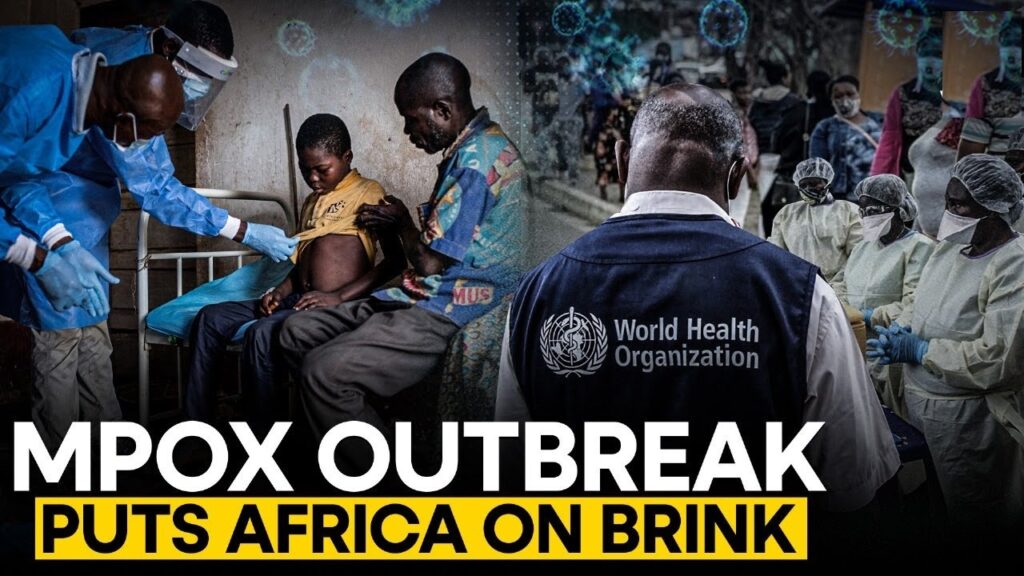
The Africa Centres for Disease Control and Prevention (Africa CDC) is poised to take an unprecedented step by declaring mpox a public health emergency of continental concern. This will be the first time in the agency’s history that such a declaration is made, underscoring the gravity of the situation as mpox cases surge across Africa.
Mpox Cases Skyrocket: A Growing Health Threat
In 2024, the mpox virus has seen an alarming resurgence across the African continent. This year alone, the number of cases reported in just six months has equaled the total from 2023. Since January 2022, more than 38,000 cases have been documented, with 1,456 deaths reported. The year 2024 has been particularly devastating, with 10 African Union states reporting over 14,000 cases and 450 deaths, including 2,750 confirmed cases, which represents a 160% increase compared to the same period in 2023.
This sharp increase in mpox cases is not limited to a few regions. Recent outbreaks have been reported in countries such as Ivory Coast, Kenya, and Uganda, indicating that the virus’s reach is expanding rapidly. Notably, Burundi, Kenya, Rwanda, and Uganda have recorded their first-ever mpox infections, highlighting the virus’s encroachment into new territories.
Clade 1b: The New Variant Driving the Outbreak
A new variant of the mpox virus, identified as clade 1b, is at the forefront of the current outbreak, particularly in the eastern Democratic Republic of Congo (DRC). The DRC, where mpox was first detected in 1970 and where it remains endemic, is bearing the brunt of this outbreak. The country accounts for more than 96% of both the reported cases and deaths, making it the epicenter of the crisis.
This variant’s rapid spread is not only concerning for the DRC but also for its neighboring countries, which are now grappling with the virus’s arrival. The situation is exacerbated by the lack of sufficient medical resources and the challenges in controlling the virus’s transmission.
Africa CDC’s Response: A Historic Declaration
Jean Kaseya, the director of Africa CDC, announced that the agency would soon declare a public health emergency of continental concern. This move is expected to be a critical step in controlling the outbreak and mobilizing the necessary resources. Kaseya emphasized that the declaration would increase coordination between Africa CDC and member states, accelerate research and development of diagnostics and vaccines, and boost the continent’s production of diagnostic tools. It will also facilitate the easing of import restrictions on medical supplies, which are desperately needed to combat the virus.
“This declaration will increase coordination between Africa CDC and member states,” Kaseya said, adding that it would accelerate research and development of diagnostics and vaccines.
Global Implications: WHO’s Consideration of a Similar Declaration
The Africa CDC’s declaration comes at a time when the World Health Organization (WHO) is also considering a similar global declaration. WHO Director-General Tedros Adhanom Ghebreyesus recently announced plans to convene an emergency committee to determine whether the mpox outbreak should be declared a public health emergency of international concern. This would mirror the declaration made during the mpox outbreak that began in Europe in May 2022, which ended in May 2023.
The global health community is closely monitoring the situation in Africa, as the spread of mpox outside the DRC and the potential for further international transmission poses a significant threat. The WHO’s emergency committee is expected to convene soon to assess the situation and provide recommendations.
The Role of Sexual Transmission and Vulnerable Populations
One of the most concerning aspects of the current mpox outbreak is the role of sexual transmission in its spread, particularly in the DRC. For the first time, sexual transmission has emerged as a major driver of the disease, with children accounting for 60% of the cases in the DRC. This alarming trend has raised concerns about the virus’s potential to spread even more widely, especially in vulnerable populations.
The mpox virus is also spreading rapidly among people living with HIV, which has contributed to a higher case fatality rate in recent outbreaks. In South Africa, where many newly infected individuals are also living with HIV, the case fatality rate has jumped to 10%, compared to the overall rate of 3% in Africa. This highlights the need for targeted vaccination programs that prioritize vulnerable groups, including those with HIV, front-line health care workers, and close contacts of mpox patients.
The Urgent Need for Mpox Vaccines
Africa CDC estimates that the continent needs 10 million doses of mpox vaccine to combat the current outbreak. However, vaccine availability remains a significant challenge. Although the World Health Organization announced in April that the U.S. government had pledged to donate 50,000 doses of the Bavarian Nordic (BN) mpox vaccine to the DRC and another 10,000 doses to Nigeria, none of these doses have arrived. Regulatory hurdles and logistical challenges have delayed the delivery of these vaccines, further complicating the continent’s response to the outbreak.
Paul Chaplin, CEO of Bavarian Nordic, noted that African countries need to develop strategies to store and distribute the vaccines before they can be shipped. The U.S. Agency for International Development, which oversees the donation, has cited pending “contractual requirements” as another factor contributing to the delay.
A Call for Local Manufacturing and Increased Testing
The current mpox outbreak has highlighted the need for increased local manufacturing of vaccines and medical supplies in Africa. Jean Kaseya has called for a ramp-up in local production, noting that the continent cannot continue to rely on external sources for critical supplies. He also emphasized the importance of increasing testing for the mpox virus, both in affected countries and at all border crossings, to prevent further spread.
Africa CDC is now negotiating with Bavarian Nordic to secure 200,000 doses of the mpox vaccine for the DRC. In the long run, Kaseya hopes that BioNTech, which is currently developing a messenger RNA (mRNA) vaccine for mpox, will supply many of the needed doses at an affordable price. BioNTech has recently built an mRNA vaccine manufacturing plant in Rwanda, one of the countries that has recently reported its first cases of mpox.
Conclusion: A Critical Moment for Africa and the World
As Africa CDC prepares to declare its first-ever public health emergency of continental concern, the world is watching closely. The outcome of this declaration and the subsequent response will have far-reaching implications, not only for Africa but for global health. The urgent need for vaccines, increased testing, and local manufacturing capabilities has never been more apparent. Africa CDC’s historic move could be a turning point in the fight against mpox, but it will require swift and coordinated action from both African countries and the international community.