



Cochin Shipyard Limited (CSL) delivered a robust financial performance in the first quarter of FY2026, showcasing significant revenue expansion that exceeded market expectations while simultaneously highlighting operational challenges through margin compression. The company’s Q1 results reveal revenue growth of 38.5% year-over-year to ₹1,068.59 crore, substantially outpacing analyst estimates of ₹850 crore, while net profit increased 7.9% to ₹187.83 crore, surpassing projections of ₹140 crore. This performance underscores CSL’s position as India’s premier shipbuilding enterprise amid an increasingly dynamic defense procurement environment and evolving global maritime industry landscape.

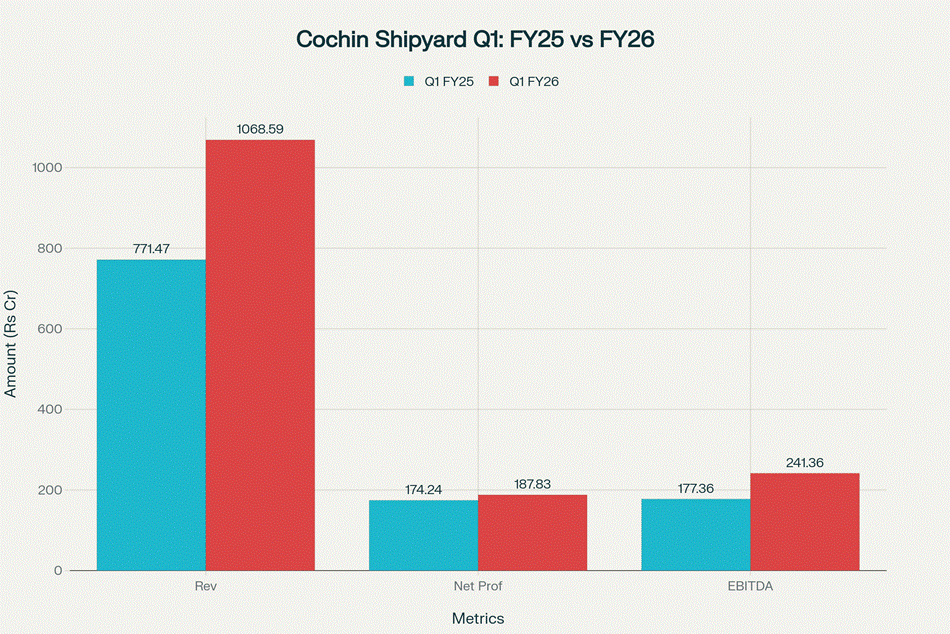
Cochin Shipyard Q1 FY26 financial performance compared to Q1 FY25, showing strong revenue and EBITDA growth
Financial Performance Deep Dive: Revenue Momentum vs. Profitability Pressures
Revenue and Growth Metrics
Cochin Shipyard’s Q1 FY26 consolidated revenue of ₹1,068.59 crore represents a substantial acceleration from the ₹771.47 crore recorded in Q1 FY25, marking the company’s strongest quarterly revenue performance in recent periods. This 38.5% year-over-year growth significantly exceeded market consensus, demonstrating the company’s ability to execute on its substantial order book despite industry-wide challenges. The revenue performance was particularly noteworthy given the cyclical nature of shipbuilding operations and the complex project timelines inherent in naval construction.
The company’s revenue composition reflects a diversified portfolio spanning defense and commercial segments. Shipbuilding activities contributed the majority of revenues, with ongoing projects including Anti-Submarine Warfare Shallow Water Craft (ASW SWC) corvettes for the Indian Navy, multipurpose vessels for European clients, and specialized Service Operation Vessels (SOVs) for the offshore wind industry. This diversification strategy has enabled CSL to maintain revenue momentum despite varying project completion schedules.
Profitability Analysis and Margin Dynamics
While revenue growth was impressive, CSL faced significant margin compression during Q1 FY26. Net profit increased modestly by 7.9% to ₹187.83 crore, resulting in a net profit margin of approximately 17.6%, down from 22.6% in the corresponding quarter of the previous year. This margin compression of approximately 500 basis points represents one of the most significant profitability challenges faced by the company in recent quarters.
EBITDA performance showed mixed results, with absolute EBITDA growing 36% to ₹241.36 crore, but EBITDA margins declining 40 basis points to 22.6% from 23.0% in Q1 FY25. This divergence between strong revenue growth and margin compression indicates increased cost pressures, potentially driven by higher material costs, increased subcontracting expenses, and inflationary pressures on key inputs.
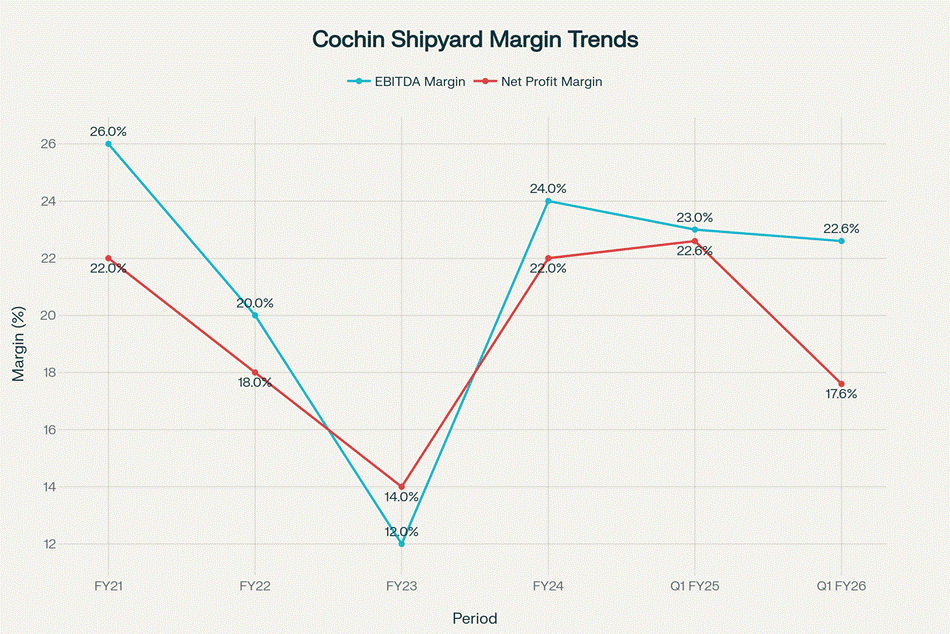
Cochin Shipyard’s EBITDA and Net Profit margin trends showing cyclical performance with recent margin compression
Cost Structure Analysis
The margin compression can be attributed to several operational factors identified in the company’s financial disclosures. Subcontracting costs doubled to ₹261 crore from ₹113 crore in the previous year, reflecting the company’s strategy to scale operations through external partnerships while managing capacity constraints. Additionally, provisions increased significantly to ₹33 crore from ₹2.5 crore in Q1 FY25, similar to challenges faced by other defense shipbuilders like Mazagon Dock Shipbuilders, indicating industry-wide cost management pressures.
These cost increases partially offset the benefits of higher revenue recognition, highlighting the capital-intensive nature of shipbuilding operations and the challenges inherent in managing large-scale, multi-year defense contracts with fixed-price structures.
Business Operations and Strategic Positioning
Comprehensive Business Model and Capabilities
Cochin Shipyard operates as India’s largest shipbuilding and maintenance facility, with unique capabilities spanning both naval and commercial vessel construction. The company can build vessels up to 110,000 deadweight tonnage (DWT) and repair ships up to 125,000 DWT, making it the most capable shipyard in India by scale. This technical capability positions CSL as the sole Indian shipyard capable of handling the largest vessels, including aircraft carriers, large tankers, and offshore drilling platforms.
The company’s operations encompass multiple segments: defense shipbuilding (70% of order book), commercial domestic projects (6%), commercial export projects (15%), and ship repair services. This diversified approach provides revenue stability while allowing the company to capitalize on growth opportunities across different maritime sectors.

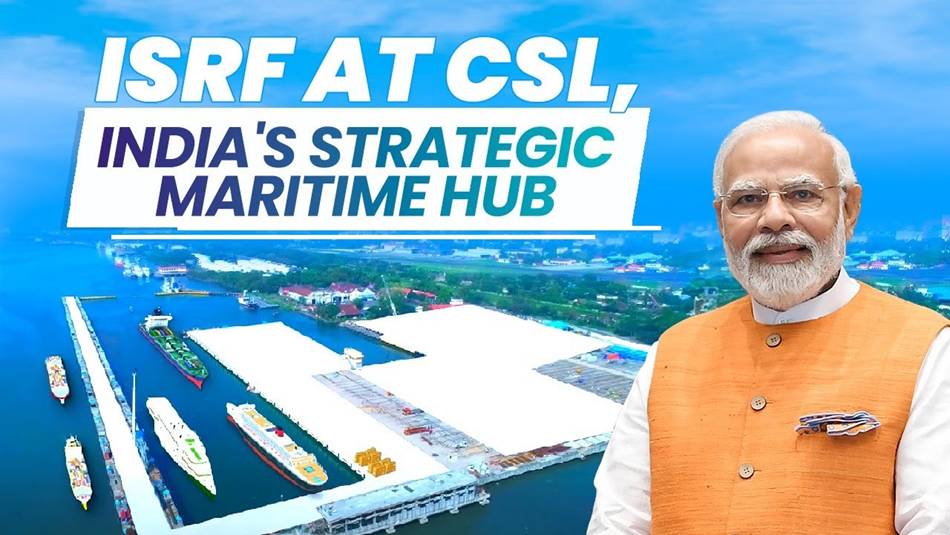
Aerial view of ISRF at Cochin Shipyard, highlighting India’s strategic maritime hub.
Flagship Projects and Technical Achievements
CSL’s most notable achievement remains the successful delivery of INS Vikrant, India’s first indigenous aircraft carrier, commissioned in September 2022 after a 15-year construction process. The 45,000-metric-ton vessel, built at an estimated cost of ₹20,000 crore, represents approximately one-fifth the cost of comparable international aircraft carriers while achieving 76% indigenous content. This project established CSL’s credentials as one of only five nations globally capable of indigenous aircraft carrier construction, joining the United States, United Kingdom, France, Russia, and China.
The successful delivery of INS Vikrant has positioned CSL for potential future aircraft carrier projects, with company management expressing confidence in their ability to complete similar platforms within 7-8 years based on accumulated expertise and enhanced infrastructure capabilities.
INS Vikrant aircraft carrier under construction at Cochin Shipyard, showcasing India’s indigenous naval engineering capabilities.
Infrastructure Development and Capacity Expansion
CSL has invested approximately ₹2,800 crore in infrastructure development, including two major projects that significantly enhance its operational capabilities. The New Dry Dock Project, completed at a cost of ₹1,799 crore, features India’s largest dry dock with dimensions of 310m x 75/60m x 13m, capable of handling LNG vessels, aircraft carriers, jack-up rigs, and large merchant vessels. This stepped dry dock design represents a 100-year service life investment that establishes CSL as the premier facility for large vessel construction and repair in the Indian Ocean region.
The International Ship Repair Facility (ISRF), built for ₹970 crore, incorporates advanced shiplift technology with 6,000-ton capacity, six work stations, and 1.25 km of berth facilities. Both facilities were inaugurated by Prime Minister Narendra Modi in January 2024, marking a significant milestone in India’s maritime infrastructure development.
An aerial view of Cochin Shipyard’s busy port facility with cargo ships, container cranes, and stacked containers illustrating the scale of maritime operations in Kochi.
Order Book Analysis and Future Revenue Visibility
Current Order Book Composition and Scale
Cochin Shipyard maintains a robust order book valued at approximately ₹22,500 crore, providing substantial revenue visibility for the next 4-5 years. The order book composition reflects the company’s strategic focus on high-value defense contracts, with defense projects accounting for ₹15,225 crore (73%) of total orders. Commercial projects contribute ₹3,480 crore (17%) from export orders and ₹1,258 crore (6%) from domestic commercial projects, while subsidiaries add ₹959 crore (4%).
Major defense projects in the order book include eight Anti-Submarine Warfare Shallow Water Craft (ASW SWC) corvettes valued at ₹5,542 crore, six Next Generation Maritime Vessels (NGMV) worth ₹9,803 crore, and post-commissioning works for INS Vikrant valued at ₹1,340 crore. These projects represent multi-year revenue streams with fixed-price contracts that provide earnings predictability despite potential cost inflation challenges.
Commercial and Export Diversification
The commercial segment of CSL’s order book demonstrates significant diversification into emerging maritime technologies. Green and hybrid vessels comprise 60% of the commercial order book, including Hybrid Service Operation Vessels (SOVs) for European offshore wind operations, zero-emission feeder container vessels, and electric catamaran passenger ferries. This strategic positioning in sustainable maritime technologies aligns with global decarbonization trends and European Union regulatory requirements for green shipping solutions.
Recent international contracts include multiple SOV orders from North Star Shipping for deployment at Scottish Power Renewables’ East Anglia THREE offshore wind farm, demonstrating CSL’s competitiveness in the high-value, technologically sophisticated renewable energy support vessel market
Industry Context and Competitive Landscape
Indian Shipbuilding Sector Dynamics
India’s shipbuilding industry is experiencing unprecedented growth momentum, with the sector valued at $1.12 billion in 2024 and projected to reach $8 billion by 2033, representing a compound annual growth rate of approximately 60%. Despite this growth trajectory, India currently holds less than 1% of global shipbuilding market share, ranking 20th globally behind traditional leaders China, South Korea, and Japan who collectively control 85% of the market.
The Union Budget 2025-26 allocated ₹18,090 crore under the Shipbuilding Financial Assistance Policy (SBFAP) 2.0 and established a ₹25,000 crore Maritime Development Fund to support domestic shipbuilding capabilities. These policy initiatives, combined with the Maritime India Vision 2030 targeting top-10 global ranking by 2030 and Amrit Kaal Vision 2047 aiming for top-5 status by 2047, provide substantial government backing for sector expansion.
Competitive Analysis: Defense Shipbuilding Triumvirate
CSL operates alongside Mazagon Dock Shipbuilders (MDL) and Garden Reach Shipbuilders & Engineers (GRSE) as India’s three primary defense shipbuilding enterprises. MDL maintains the largest order book at ₹32,260 crore, with significant submarine and destroyer programs, while GRSE holds ₹22,680 crore in orders focused on frigates and patrol vessels. CSL’s ₹22,500 crore order book positions the company competitively, with unique advantages in aircraft carrier construction and large vessel capabilities.
Antique Stock Broking projects a potential 3x increase in combined order books for all three companies by FY2027, driven by anticipated defense contracts worth ₹2.12 lakh crore including Kalvari-class submarine orders (₹36,000 crore), P75I submarine programs (₹70,000 crore), next-generation corvettes (₹36,000 crore), and P-17B frigate programs (₹70,000 crore). This pipeline provides substantial growth visibility for the sector, though execution timelines and cost management will be critical success factors.

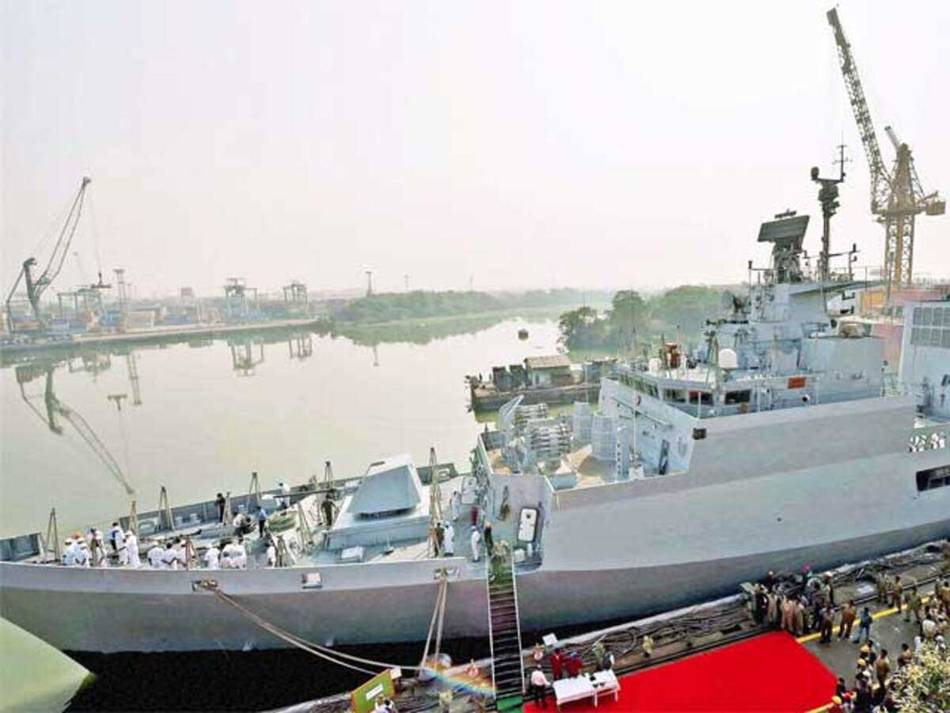
Indian Navy warship at a shipyard during an official event showcasing indigenous naval shipbuilding capabilities.
Strategic Initiatives and Innovation Programs
Green Technology and Sustainability Leadership
CSL has positioned itself at the forefront of maritime sustainability through comprehensive green technology initiatives. The company successfully delivered India’s first hydrogen fuel cell vessel, a 100-passenger ferry with indigenously developed technology featuring 2×25 kWh H2 fuel cells and 6 kWh solar plant integration. This pilot project, which sailed from CSL to Varanasi in May 2024, demonstrates the company’s capabilities in next-generation marine propulsion systems.
The ₹50 crore “USHUS” Maritime Startup Engagement Programme provides funding support through seed funding (up to ₹50 lakh per startup), pilot grants (up to ₹100 lakh per startup), and equity investment options. This initiative aims to foster innovation in maritime technologies while building an ecosystem of supporting enterprises around CSL’s core operations.
International Partnerships and Technology Transfer
CSL has established strategic partnerships to enhance technical capabilities and market access. The Memorandum of Understanding with HD Korea Shipbuilding and Offshore Engineering Ltd (KSOE), signed in July 2025, enables joint exploration of large merchant vessel construction opportunities while providing access to advanced Korean shipbuilding technologies. KSOE oversees some of the world’s largest shipyards, including Hyundai Heavy Industries, providing CSL with potential technology transfer opportunities in high-capacity commercial shipbuilding.
The Master Ship Repair Agreement (MSRA) with the United States Navy facilitates repair of US Naval vessels under Military Sealift Command at CSL facilities. While no projects have yet been executed under this agreement, it represents significant potential for high-value international defense contracts and establishes CSL as a recognized partner for allied naval operations in the Indian Ocean region.
Financial Outlook and Investment Considerations
Revenue Trajectory and Growth Projections
CSL’s substantial order book provides clear revenue visibility extending through FY2028-29, with defense contracts offering relatively predictable cash flows despite potential cost inflation challenges. The company’s revenue grew at a 3-year CAGR of approximately 25% between FY2022-25, significantly outpacing the broader Indian industrial sector. However, the cyclical nature of shipbuilding operations means quarterly results may exhibit volatility based on project completion schedules and milestone achievement.
Management guidance suggests sustainable revenue growth supported by infrastructure investments and expanding capabilities. The completion of the New Dry Dock and ISRF facilities enables CSL to handle larger projects simultaneously while reducing construction timelines. The company’s enhanced capacity could support annual revenue targets exceeding ₹5,000 crore by FY2027, assuming successful execution of the current order book and additional contract wins.
Margin Recovery and Profitability Outlook
The Q1 FY26 margin compression represents a near-term challenge that requires active management attention. Historical EBITDA margins have ranged from 12% to 32% over the past decade, indicating significant cyclical variation based on project mix, execution efficiency, and cost management. The current 22.6% EBITDA margin remains within the historical range but below the company’s peak performance periods.
Key margin recovery drivers include: improved project execution efficiency through enhanced infrastructure, better cost management through supply chain optimization, and favorable project mix as high-margin defense contracts progress through completion phases. The company’s focus on fixed-price defense contracts provides some protection against cost inflation, though contract renegotiation may be necessary for extreme cost escalations.
Capital Allocation and Return Metrics
CSL maintains a strong balance sheet with minimal debt (₹23.02 crore net debt as of FY2024) and substantial cash generation capabilities. The company’s Return on Equity of 16% in FY2024 compares favorably to industry averages, while the dividend yield of 0.58% reflects a conservative payout policy focused on reinvestment for growth.
The company’s ₹2,800 crore infrastructure investment program represents a significant capital commitment that should drive long-term revenue growth and operational efficiency improvements. These investments, combined with the substantial order book, position CSL for sustained profitability expansion as utilization rates increase and project execution capabilities improve.
Risk Factors and Challenges
Operational and Execution Risks
Shipbuilding operations face inherent risks including project delays, cost overruns, and technical challenges. CSL’s historical experience with INS Vikrant, which required 15 years from design to delivery, highlights the complexity of large naval projects. While the company has gained significant expertise, future projects could face similar timeline extensions or cost escalations that impact profitability.
Supply chain dependencies, particularly for specialized marine equipment and propulsion systems, create vulnerability to international market disruptions. The company’s import dependency for key components could affect project timelines and costs, especially given ongoing global supply chain pressures and geopolitical tensions.
Market and Policy Risks
Government defense spending priorities directly impact CSL’s largest revenue segment. While current policy support for indigenous defense manufacturing is strong, changes in government strategic priorities or budget allocations could affect future order flows. The uncertain timeline for the second Indigenous Aircraft Carrier (IAC-II) represents a key overhang, as this potential ₹50,000+ crore project could significantly impact CSL’s long-term revenue trajectory.[3]
International competition in commercial shipbuilding remains intense, with established players in China, South Korea, and Japan offering significant cost and scale advantages. CSL’s commercial export strategy faces pricing pressure from these competitors, requiring continued focus on technological differentiation and niche market positioning.
Conclusion and Investment Implications
Cochin Shipyard’s Q1 FY26 results demonstrate the company’s ability to deliver strong revenue growth while highlighting the operational challenges inherent in large-scale shipbuilding operations. The 38.5% revenue increase reflects successful project execution and validates the company’s substantial order book, while margin compression indicates the need for enhanced cost management in an inflationary environment.
The company’s strategic positioning remains compelling given India’s ambitions for maritime self-reliance, substantial government support through policy initiatives, and CSL’s unique capabilities in large vessel construction. The ₹22,500 crore order book provides exceptional revenue visibility, while recent infrastructure investments enhance the company’s competitive advantages.
Key investment considerations include: the company’s monopolistic position in large vessel construction in India, strong government support for indigenous defense manufacturing, substantial order book providing multi-year revenue visibility, and operational leverage potential as new facilities reach full utilization. However, investors must consider execution risks, margin volatility, and the cyclical nature of defense procurement processes.
For long-term investors, CSL represents exposure to India’s maritime infrastructure development and defense modernization themes, with potential for significant value creation as the company executes its substantial order book and leverages enhanced operational capabilities. The current market valuation reflects these opportunities while incorporating execution risks and margin challenges, suggesting that successful project delivery and cost management will be critical drivers of future returns.