


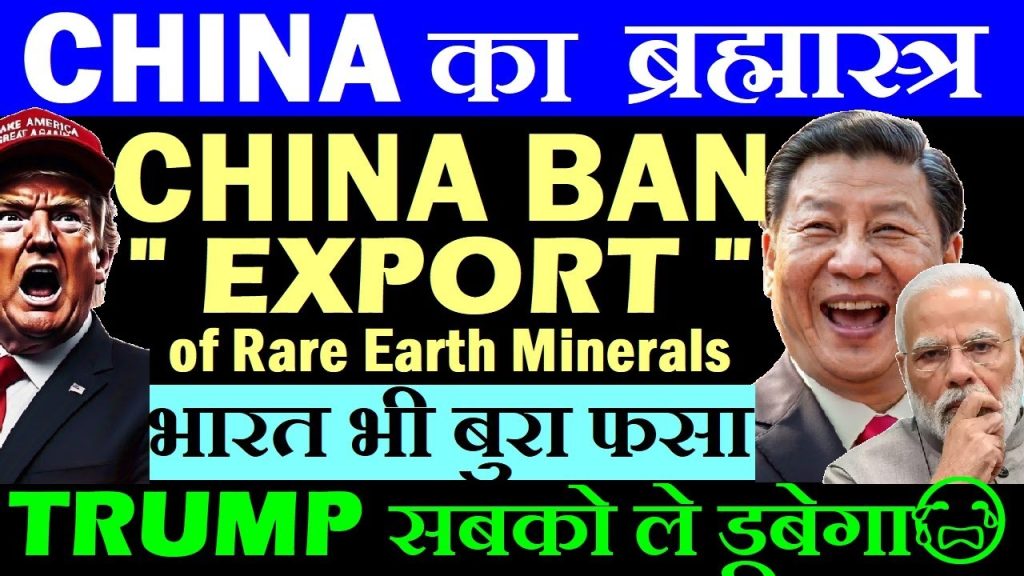
In a seismic shift that has sent shockwaves through global markets, China’s recent decision to impose a ban on rare earth mineral exports has disrupted industries worldwide, with significant repercussions for India’s automotive sector. This strategic move, largely seen as a response to escalating trade tensions with the United States under President Donald Trump, has spotlighted China’s near-monopoly on these critical resources. From electric vehicles to renewable energy and defense, rare earth minerals are indispensable, and their restricted supply is causing chaos across multiple sectors. This article delves into the implications of China’s export ban, its impact on India’s auto industry, and the broader global consequences, while exploring potential solutions and alternatives.
What Are Rare Earth Minerals and Why Are They Critical?
Rare earth minerals, comprising 17 elements in the periodic table, including the 15 lanthanides plus scandium and yttrium, are vital to modern technology. These elements, such as neodymium, dysprosium, and cerium, possess unique magnetic, luminescent, and catalytic properties that make them essential for a wide range of applications. Their significance spans multiple industries:
- Automotive Sector: Rare earths are used to manufacture high-performance magnets critical for electric vehicle (EV) motors and hybrid vehicle components.
- Electronics and Semiconductors: These minerals are integral to producing semiconductors, displays, and other electronic components.
- Renewable Energy: Wind turbines and solar panels rely on rare earth magnets for efficient energy generation.
- Defense and Aerospace: Advanced radar systems, missile guidance, and satellite technology depend on these materials.
- Telecommunications: Rare earths enhance the performance of fiber optics and communication devices.
The global dependency on these minerals underscores the severity of China’s export restrictions, as industries face supply chain disruptions and potential production halts.
China’s Rare Earth Monopoly: A Strategic Power Play
China dominates the global rare earth market, accounting for approximately 70% of production and 90% of refining capacity, according to 2022 data. This near-monopoly gives China unparalleled control over the supply chain, as even minerals mined in other countries often require Chinese refining to be usable. For comparison, the United States contributes about 14% to global production, Australia 6%, and India a mere 1%. This imbalance highlights the world’s reliance on China and the vulnerability exposed by the export ban.
The ban, described as a response to U.S. tariffs imposed under Trump’s administration, is not a complete cessation but a severe restriction accompanied by a tracking system. China now requires detailed documentation on the end-use and end-users of rare earths, particularly scrutinizing applications in defense sectors. This move has created bureaucratic hurdles, with license approvals potentially taking up to 60 days—if approved at all. The uncertainty has triggered widespread concern, as industries brace for prolonged disruptions.
Impact on India’s Automotive Industry: Maruti Suzuki and Beyond
India’s automotive sector, a cornerstone of its economy, is among the hardest hit by China’s export restrictions. Maruti Suzuki, India’s largest car manufacturer, has suspended production of its popular Swift model due to shortages of rare earth magnets critical for its components. This temporary halt, announced as a precautionary measure, underscores the severity of the crisis. The company has indicated that production will remain on hold until supply chain issues are resolved, leaving consumers facing delays in vehicle deliveries.
Other major players, such as Bajaj Auto and TVS Motor, have also raised alarms. Bajaj Auto’s executive director has described the situation as “extremely challenging,” warning that production could face serious disruptions by July if the restrictions persist. TVS Motor has echoed these concerns, highlighting potential price increases due to supply shortages and rising demand. The ripple effects are already evident, with inventory buffers expected to last only about 30 days before the crisis deepens.
The Indian auto industry, which contributes significantly to GDP and employment, faces a dual threat: production slowdowns and cost increases. As rare earth supplies dwindle, manufacturers may pass on higher costs to consumers, potentially inflating vehicle prices and dampening demand in an already competitive market.
Global Repercussions: A Worldwide Industrial Crisis
The impact of China’s export ban extends far beyond India, affecting industries worldwide. In Europe, some automotive suppliers have shuttered plants due to the unavailability of critical components. The global electric vehicle market, heavily reliant on rare earth magnets for motors and batteries, faces significant challenges, potentially slowing the transition to sustainable transportation. Renewable energy projects, particularly wind energy, are also at risk, as turbines require rare earths for efficient operation.
The defense and aerospace sectors are equally vulnerable. Countries reliant on rare earths for advanced weaponry, radar systems, and satellite technology face strategic risks, as supply chain disruptions could compromise national security. The telecommunications industry, dependent on rare earths for high-performance components, may see delays in infrastructure development, including 5G networks.
Analysts warn that the global economy could face a prolonged period of uncertainty if the situation does not normalize. The lack of immediate alternatives exacerbates the crisis, as no other country can match China’s production and refining capabilities in the short term.
Why Did China Impose the Export Ban?
The roots of the current crisis lie in escalating trade tensions between the United States and China. President Trump’s administration has imposed tariffs as high as 250% on certain Chinese goods, prompting retaliatory measures from Beijing. The rare earth export ban is widely seen as China’s strategic countermeasure, leveraging its dominance in a critical resource to assert geopolitical influence.
China’s tracking system for rare earth exports adds another layer of complexity. By requiring detailed end-use information, China aims to control the flow of these materials, particularly to prevent their use in U.S. defense applications. This move has sparked debates about whether China’s actions are purely economic or part of a broader geopolitical strategy to counter U.S. influence.
Trump has claimed that negotiations with Chinese President Xi Jinping have yielded agreements to resume rare earth exports. However, analysts note that China has not publicly confirmed such commitments, casting doubt on the timeline for resolution. The ongoing uncertainty has fueled speculation about the long-term implications for global trade dynamics.
Challenges in Finding Alternatives
The global search for alternatives to Chinese rare earths faces significant hurdles. While countries like the United States, Australia, and Canada have rare earth deposits, their production and refining capacities are limited. Developing new mines and refining facilities is a time-consuming and capital-intensive process, often taking years to establish. Moreover, environmental regulations and high costs pose additional barriers to scaling up production outside China.
Recycling rare earths from electronic waste and developing synthetic substitutes are potential solutions, but these technologies are still in their infancy and cannot meet current demand. Some industries are exploring alternative materials, but these often compromise performance, making them less viable for high-tech applications.
India, with its minimal 1% share of global rare earth production, faces an uphill battle in reducing its dependency on China. While the government has initiated efforts to boost domestic production, such as exploring deposits in states like Odisha and Rajasthan, these projects are unlikely to yield significant results in the near term.
Potential Solutions and the Path Forward
Addressing the rare earth crisis requires a multifaceted approach involving international cooperation, technological innovation, and strategic planning. Here are some potential solutions:
1. Diversifying Supply Chains
Countries must invest in developing alternative sources of rare earths to reduce reliance on China. This includes funding exploration and mining projects in nations with untapped deposits, such as Australia, Canada, and Greenland. International partnerships can accelerate the development of refining facilities, ensuring a more resilient supply chain.
2. Advancing Recycling Technologies
Investing in rare earth recycling can mitigate supply shortages. By recovering minerals from discarded electronics, batteries, and industrial waste, countries can create a circular economy for these critical materials. Governments and private sectors should prioritize research and development in this area.
3. Promoting Substitution and Innovation
Research into alternative materials that can replicate the properties of rare earths is crucial. For example, developing magnets that use less or no rare earths could reduce dependency. Collaborative efforts between academia, industry, and governments can drive breakthroughs in material science.
4. Strengthening Diplomatic Efforts
Resolving the trade tensions between the U.S. and China is critical to restoring rare earth supplies. Diplomatic negotiations, potentially facilitated by neutral parties, could lead to agreements that ease export restrictions. Upcoming U.S.-China trade talks in London may offer a platform for progress, but tangible outcomes remain uncertain.
5. Building Strategic Reserves
Countries should establish strategic reserves of rare earths to buffer against future disruptions. Similar to oil reserves, these stockpiles can provide a safety net during supply chain crises, ensuring continuity for critical industries.
India’s Response: Navigating the Crisis
India’s government and industries must act swiftly to mitigate the impact of the rare earth ban. The Ministry of Mines has already signaled interest in boosting domestic production, but scaling up will require significant investment in infrastructure and technology. Public-private partnerships could accelerate the development of mining and refining capabilities.
In the short term, Indian automakers may need to explore alternative suppliers, even if they are costlier or less efficient. Collaborating with countries like Australia or Japan, which have modest rare earth production, could provide temporary relief. Additionally, manufacturers should communicate transparently with consumers about potential delays and price increases to manage expectations.
The Role of Consumers in the Crisis
For Indian consumers, the rare earth ban translates to longer wait times and higher costs for vehicles like the Maruti Suzuki Swift. Those awaiting deliveries may face delays, while prospective buyers should brace for potential price hikes. Staying informed about market developments and exploring alternative models or brands less affected by the crisis can help consumers make informed decisions.
The Broader Implications for Global Trade
China’s rare earth export ban underscores the fragility of global supply chains and the risks of over-reliance on a single supplier. It serves as a wake-up call for nations to diversify their sources of critical materials and invest in self-sufficiency. The crisis also highlights the interconnectedness of global industries, where a single policy decision in one country can disrupt economies worldwide.
As trade tensions between major powers like the U.S. and China continue, the risk of similar disruptions looms large. Countries must prioritize resilience in their supply chains, balancing economic interests with strategic security considerations.
Conclusion: A Call to Action
China’s rare earth export ban has exposed the vulnerabilities of global industries, with India’s automotive sector facing immediate challenges. The suspension of Maruti Suzuki’s Swift production, coupled with warnings from Bajaj Auto and TVS Motor, signals a turbulent period ahead. As the world grapples with supply shortages and rising costs, the need for alternative sources, innovative technologies, and diplomatic solutions has never been greater.
Governments, industries, and consumers must collaborate to navigate this crisis. By investing in diversification, recycling, and innovation, the global community can reduce its dependence on Chinese rare earths and build a more resilient future. For India, the path forward involves strengthening domestic capabilities and forging international partnerships to ensure the stability of its critical industries. As the situation evolves, staying proactive and adaptable will be key to overcoming the challenges posed by this unprecedented disruption.