


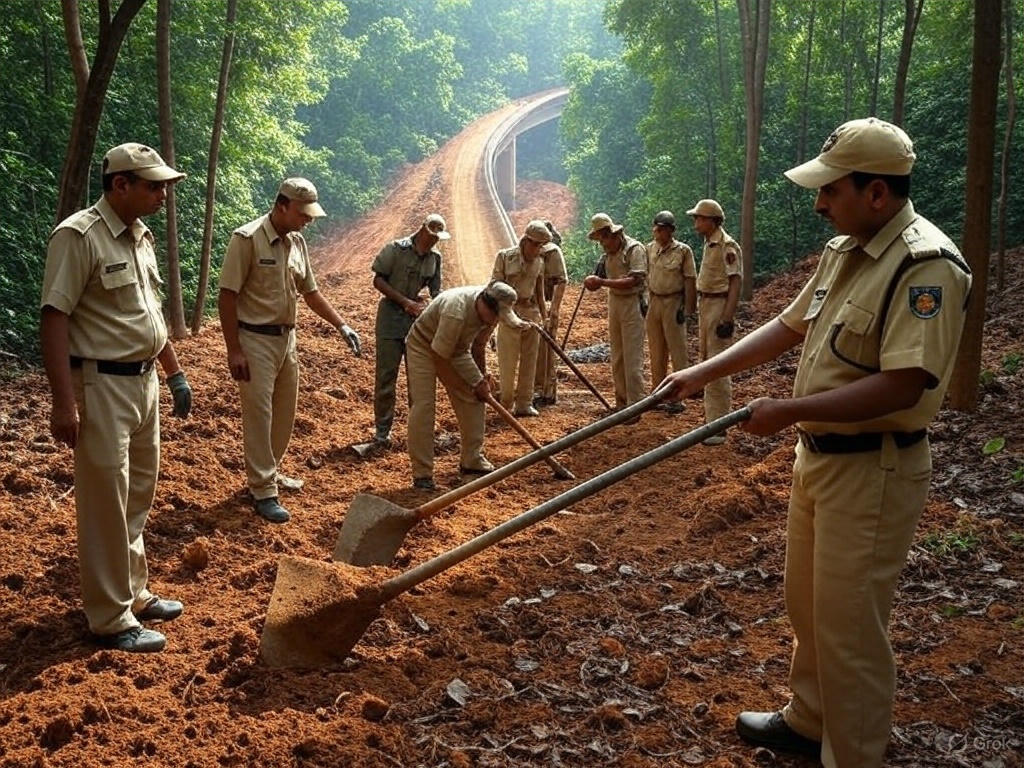
In a groundbreaking move, the Indo-Tibetan Border Police (ITBP) has established five strategic forward bases in Chhattisgarh’s Abujhmad region, setting the stage for unprecedented development. This initiative marks a pivotal step toward constructing National Highway 130D, a critical component of the Bharatmala project, connecting the historically Maoist-dominated Abujhmad to Maharashtra. Spanning 4,000 square kilometers of dense forests, Abujhmad has long been a stronghold for Naxal activities. The ITBP’s efforts signal a new era of security, infrastructure growth, and socio-economic transformation in one of India’s most challenging terrains.
This comprehensive article explores the significance of these bases, their impact on regional connectivity, and their role in curbing Left-Wing Extremism (LWE). From the strategic establishment of Company Operating Bases (COBs) to the broader implications for Chhattisgarh and Maharashtra, we delve into how this development reshapes India’s internal security and infrastructure landscape.
The Strategic Importance of Abujhmad in Chhattisgarh
Abujhmad, often referred to as the “unknown territory,” is a sprawling region in Chhattisgarh’s Narayanpur district, located just a kilometer from the Maharashtra border. Covering approximately 4,000 square kilometers, its dense forests and rugged terrain have historically made it a safe haven for cadres of the banned Communist Party of India (Maoist). Security agencies and the Chhattisgarh administration have long identified Abujhmad as a critical area due to its strategic location and its role as a hub for Naxal operations, including the West Bastar, North Bastar, and Maad Divisions.
For decades, Abujhmad’s inaccessibility has hindered development and security operations. The lack of road connectivity has limited the reach of government agencies, leaving the region under the grip of Naxal influence. The ITBP’s recent establishment of five forward bases in this region represents a bold step toward reclaiming this territory and fostering development.
ITBP’s Milestone: Establishing Five Forward Bases
The ITBP’s deployment of five Company Operating Bases (COBs) in Abujhmad is a remarkable achievement in India’s fight against Left-Wing Extremism. These bases, established in record time, include:
- Mohandi
- Kodliyar
- Kutul
- Bedmakoti
- Nelangur
The Nelangur base, set up in Narayanpur district in early 2025, marks the completion of this ambitious project. Located on the western edge of Chhattisgarh, Narayanpur’s proximity to Maharashtra makes it a critical junction for cross-state connectivity. The ITBP’s 41st and 45th battalions spearheaded this initiative, beginning in January 2025, and completed the establishment of all five bases within months—an unprecedented feat in Chhattisgarh’s core LWE-affected areas.
A senior security official emphasized the significance of this timeline, stating, “No force in Chhattisgarh has established so many COBs in such a short period in the heart of Naxal territory.” These bases not only enhance security but also lay the groundwork for infrastructure development, enabling contractors and laborers to work safely on the Bharatmala road project.
Paving the Way for National Highway 130D
The establishment of these bases directly supports the construction of National Highway 130D, a 40-kilometer stretch under the Bharatmala Pariyojana, India’s flagship road infrastructure initiative. This highway will connect Abujhmad to Maharashtra, bridging a long-standing gap in regional connectivity. Previously, the absence of security infrastructure in Abujhmad delayed this project, as contractors faced significant risks from Naxal activities.
The ITBP’s COBs now provide a secure environment for construction activities. By stationing personnel in these remote areas, the ITBP ensures the safety of workers and equipment, enabling the seamless execution of the highway project. Once completed, NH-130D will transform Abujhmad from an isolated region into a well-connected hub, facilitating trade, travel, and access to essential services.
Why NH-130D Matters
- Economic Growth: The highway will open new avenues for commerce, connecting rural communities to urban markets in Chhattisgarh and Maharashtra.
- Improved Access: Residents of Abujhmad will gain better access to healthcare, education, and government services.
- Security Enhancement: Enhanced road networks will allow security forces to respond swiftly to Naxal threats, reducing the region’s vulnerability.
Tackling Left-Wing Extremism in Abujhmad
Abujhmad’s dense forests have long served as a hideout for Naxal leaders and cadres, making it a focal point for anti-Naxal operations. The region has been a stronghold for multiple Naxal divisions, with a significant presence of armed groups disrupting development efforts. The ITBP’s strategic bases address this challenge by establishing a permanent security presence in the heart of Naxal territory.
How ITBP Bases Combat Naxalism
- Disrupting Naxal Operations: The COBs limit the mobility of Naxal cadres, making it harder for them to operate undetected.
- Enabling Intelligence Gathering: A sustained presence allows security forces to gather real-time intelligence, weakening Naxal networks.
- Supporting Development: By securing the region, the ITBP creates opportunities for development agencies to implement welfare programs, reducing local support for Naxal ideologies.
The ITBP’s efforts complement broader anti-Naxal strategies in Chhattisgarh, where the force has been active since 2009. Initially deployed in Rajnandgaon district, the ITBP expanded its operations to Narayanpur and Kondagaon in 2015, steadily building its capacity to tackle LWE.
BSF’s Role in Northern Narayanpur
While the ITBP focuses on Abujhmad, the Border Security Force (BSF) is making parallel efforts in northern Narayanpur to connect with Maharashtra’s Gadchiroli district. The BSF has established its own COBs to support road networks and communication infrastructure in this region. Together, the ITBP and BSF are creating a robust security framework that extends beyond Abujhmad, fostering connectivity across Chhattisgarh and Maharashtra.
This collaborative approach underscores the government’s commitment to addressing Naxalism through a combination of security and development. By securing multiple fronts, the ITBP and BSF are dismantling the geographical advantages that Naxals have exploited for decades.
The Broader Impact of ITBP Bases
The establishment of ITBP bases in Abujhmad goes beyond security and infrastructure. It represents a paradigm shift in how India addresses its most remote and volatile regions. The ripple effects of this initiative will be felt across multiple domains.
Socio-Economic Transformation
For the first time in=[‘s Chhattisgarh’s Abujhmad region, the ITBP’s bases signal hope for local communities. The highway will connect isolated villages to larger markets, enabling farmers and small businesses to thrive. Access to schools, hospitals, and government offices will improve, empowering residents to break free from the cycle of poverty and Naxal influence.
Regional Connectivity
The highway will integrate Abujhmad with neighboring districts like Kondagaon and Gadchiroli, fostering cross-state collaboration. This connectivity will boost tourism, trade, and cultural exchange, positioning Chhattisgarh as a key player in India’s economic growth.
Security and Stability
The ITBP’s presence ensures long-term stability in Abujhmad, reducing the risk of Naxal resurgence. By combining security with development, the government is addressing the root causes of extremism, creating a model for other LWE-affected regions.
Challenges and Future Prospects
While the ITBP’s achievements are monumental, challenges remain. Naxal groups may attempt to disrupt construction activities, necessitating sustained vigilance. Additionally, integrating Abujhmad’s tribal communities into mainstream development requires culturally sensitive policies to preserve their heritage while promoting progress.
Looking ahead, the completion of NH-130D will serve as a blueprint for similar projects in other Naxal-affected areas. The ITBP’s success in Abujhmad demonstrates the power of coordinated security and infrastructure efforts, offering a scalable solution to India’s internal security challenges.
Conclusion: A New Dawn for Abujhmad
The ITBP’s establishment of five forward bases in Chhattisgarh’s Abujhmad region marks a historic milestone in India’s journey toward security and development. By paving the way for National Highway 130D, the ITBP is transforming a once-inaccessible region into a hub of opportunity. This initiative not only weakens Naxal influence but also empowers local communities with the tools to build a brighter future.
As construction progresses, Abujhmad stands on the cusp of a new era. The highway will connect hearts, minds, and markets, proving that even the most challenging terrains can be reclaimed through vision and resolve. With the ITBP leading the charge, Abujhmad is no longer an “unknown territory”—it’s a land of promise, poised to shine on India’s development map.