


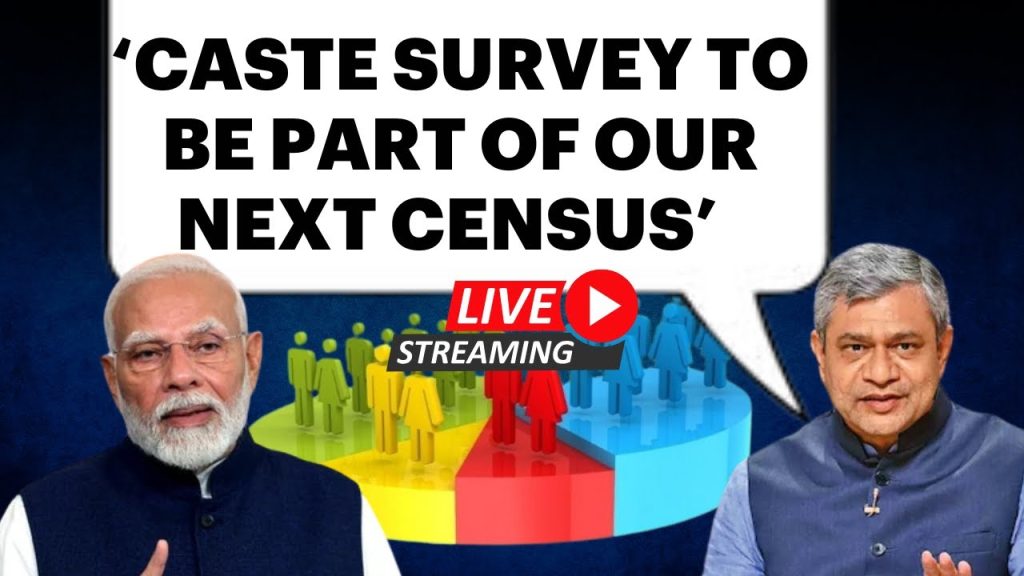
India stands at a pivotal moment in its socio-political history with the Modi government’s groundbreaking announcement to include caste enumeration in the forthcoming national census. This decision, made on April 30, 2025, by the Cabinet Committee on Political Affairs, marks a significant shift in how India approaches caste data collection. It promises to reshape the nation’s social and economic policies while addressing long-standing demands for transparency and inclusivity. This comprehensive article explores the implications, historical context, and potential impact of this landmark move, offering insights into why this decision matters for India’s future.
What Is the Caste Census, and Why Does It Matter?
A caste census involves collecting detailed data on the caste composition of India’s population as part of the national census, conducted every decade. Unlike general surveys, a caste census integrates caste-related information into the official census framework, ensuring standardized, transparent, and comprehensive data collection. This data is critical for understanding the socio-economic conditions of various caste groups, enabling targeted policy interventions to address inequalities.
The inclusion of caste enumeration in the national census is a response to decades of debate and demand from political parties, social activists, and marginalized communities. Accurate caste data can inform affirmative action policies, such as reservations in education and employment, and help bridge gaps in social equity. By embedding caste enumeration in the census, the Modi government aims to provide a robust foundation for evidence-based governance.
Historical Context: The Absence of Caste Data Post-Independence
Since India’s independence in 1947, the national census has excluded caste data, except for Scheduled Castes (SCs) and Scheduled Tribes (STs). This omission stemmed from concerns that caste enumeration could deepen social divisions. However, the lack of comprehensive caste data has hindered the ability to address systemic inequalities effectively.
In 2010, then-Prime Minister Dr. Manmohan Singh assured the Lok Sabha that the issue of caste census would be considered. A Group of Ministers was formed to evaluate the proposal, and many political parties supported the idea. Despite this, the Congress-led government opted for a Socio-Economic and Caste Census (SECC) in 2011 instead of a full caste census. The SECC, while a step forward, faced criticism for its limited scope, lack of transparency, and political motivations. Critics argued that it was used as a political tool rather than a genuine effort to collect actionable data.
The Modi government’s decision to include caste enumeration in the national census addresses these historical shortcomings. By aligning caste data collection with the constitutional framework, the government seeks to ensure credibility and transparency.
The Modi Government’s Announcement: A Game-Changer
On April 30, 2025, the Cabinet Committee on Political Affairs, under the leadership of Prime Minister Narendra Modi, announced that caste enumeration would be part of the upcoming national census. This decision reflects the government’s commitment to social justice and inclusive development. Union Minister Ashwini Vaishnaw emphasized that the move aims to strengthen India’s social and economic fabric without disrupting the nation’s unity.
Key Highlights of the Announcement
- Constitutional Backing: The census is a Union subject under Article 246 of the Indian Constitution, listed at entry 69 in the Seventh Schedule. This provides a clear legal framework for including caste enumeration in the national census.
- Transparency and Credibility: Unlike state-level surveys, which have often been criticized for political bias and lack of transparency, a national caste census will follow standardized protocols to ensure reliable data.
- Social Cohesion: The government has pledged to conduct the caste census in a manner that preserves India’s social harmony, drawing on past experiences like the introduction of 10% reservation for economically weaker sections (EWS) without causing societal stress.
- Policy Implications: Comprehensive caste data will enable the government to design targeted policies for education, employment, and social welfare, addressing disparities across caste groups.
Why Previous Surveys Fell Short
Several states have conducted their own caste surveys in recent years, with varying degrees of success. While some states, like Bihar, have produced valuable data, others have faced accusations of political manipulation and methodological flaws. These surveys often lacked the rigor and transparency of a national census, leading to doubts about their accuracy.
For instance, the SECC conducted in 2011 was criticized for its incomplete data and failure to integrate caste information into broader census operations. The Modi government’s decision to include caste enumeration in the national census addresses these gaps by ensuring a unified, transparent, and constitutionally backed process.
The Role of Caste Data in Shaping India’s Future
Caste remains a defining factor in India’s social and economic landscape. Despite progress in education and urbanization, caste-based disparities persist in access to opportunities, wealth distribution, and political representation. A caste census will provide critical insights into these dynamics, enabling policymakers to address inequalities systematically.
Economic Empowerment
Caste data can highlight disparities in income, employment, and asset ownership across caste groups. This information is essential for designing targeted economic policies, such as skill development programs, microfinance initiatives, and entrepreneurship support for marginalized communities.
Education and Affirmative Action
Accurate caste data will strengthen the implementation of reservation policies in education and government jobs. By identifying underrepresented caste groups, the government can ensure that affirmative action benefits reach those who need them most.
Political Representation
Caste plays a significant role in Indian politics, influencing voting patterns and party strategies. A caste census can provide a clearer picture of caste demographics, potentially leading to more equitable political representation and policy priorities.
Addressing Concerns: Balancing Transparency and Social Harmony
Critics of the caste census argue that it could exacerbate social divisions by reinforcing caste identities. The Modi government has acknowledged these concerns and emphasized that the caste census will be conducted transparently to avoid political misuse. By integrating caste enumeration into the national census, the government aims to depoliticize the process and focus on data-driven governance.
The government’s track record, such as the successful implementation of EWS reservations, demonstrates its ability to introduce socially sensitive policies without causing unrest. The caste census is expected to follow a similar approach, prioritizing national unity and social cohesion.
The Political Landscape: Reactions and Implications
The announcement has sparked widespread reactions across the political spectrum. While many parties have welcomed the decision, others have questioned its timing and motives, given the ongoing debates around caste-based policies.
Support from Marginalized Communities
Activists and representatives of marginalized caste groups have hailed the decision as a historic step toward social justice. They argue that caste data will empower communities that have been historically disadvantaged.
Opposition Criticism
The Congress party and its allies in the INDIA bloc have faced criticism for their inconsistent stance on the caste census. While they have advocated for caste enumeration in the past, the Modi government’s announcement has put them in a challenging position, with some accusing them of using the issue for political gain.
Public Sentiment on Social Media
Posts on X reflect a mix of optimism and skepticism. Many users have praised the Modi government for taking a bold step, with hashtags like #CasteCensus trending. Others have raised concerns about the potential misuse of caste data for electoral purposes. These sentiments underscore the need for a transparent and inclusive approach to the census process.
How the Caste Census Will Be Implemented
The inclusion of caste enumeration in the national census will require careful planning and coordination. The Registrar General and Census Commissioner of India will oversee the process, ensuring that caste data is collected alongside other demographic and socio-economic indicators.
Key Steps in Implementation
- Questionnaire Design: The census questionnaire will include specific questions to capture caste information. These questions will be designed to ensure clarity and consistency across regions.
- Training and Awareness: Enumerators will receive training to handle caste-related queries sensitively, minimizing errors and biases.
- Data Processing and Analysis: Advanced data processing techniques will be used to compile and analyze caste data, ensuring accuracy and accessibility.
- Public Outreach: The government will launch awareness campaigns to educate citizens about the importance of the caste census and address concerns about privacy and data security.
Global Perspectives: Lessons from Other Countries
India is not alone in grappling with the challenges of collecting identity-based data. Countries like the United States, Brazil, and South Africa have implemented race or ethnicity-based data collection in their censuses, with varying outcomes.
- United States: The U.S. Census collects data on race and ethnicity, which informs policies on affirmative action and anti-discrimination measures. However, debates persist about the accuracy and relevance of racial categories.
- Brazil: Brazil’s census includes questions on race and color, providing insights into racial inequalities. This data has supported policies to address disparities in education and employment.
- South Africa: Post-apartheid South Africa uses census data on race to monitor progress in reducing inequalities. However, the process has faced challenges related to data quality and public trust.
India can draw lessons from these experiences to ensure that its caste census is inclusive, accurate, and impactful. Engaging with international experts and adopting best practices in data collection will be crucial.
The Road Ahead: Opportunities and Challenges
The caste census presents both opportunities and challenges for India. If implemented effectively, it could transform the country’s approach to social justice and economic development. However, the process must navigate complex socio-political dynamics to achieve its objectives.
Opportunities
- Evidence-Based Policy: Caste data will enable the government to design policies that address specific needs, from education to healthcare.
- Social Inclusion: By highlighting marginalized groups, the census can foster greater inclusion and representation.
- Global Leadership: A successful caste census could position India as a leader in using data to address systemic inequalities.
Challenges
- Political Interference: Ensuring that the census remains free from political manipulation will be critical.
- Data Privacy: Safeguarding caste data against misuse or breaches will require robust security measures.
- Public Trust: Building trust among citizens, especially in rural and marginalized communities, will be essential for accurate data collection.
Conclusion: A Step Toward a More Inclusive India
The Modi government’s decision to include caste enumeration in the national census is a bold and historic move. It reflects a commitment to transparency, social justice, and evidence-based governance. By addressing the shortcomings of past surveys and aligning caste data collection with the constitutional framework, the government is paving the way for a more inclusive and equitable India.
As the nation prepares for the upcoming census, stakeholders must work together to ensure that the process is transparent, inclusive, and impactful. The caste census has the potential to reshape India’s social and economic landscape, empowering marginalized communities and strengthening the nation’s social fabric. With careful planning and execution, this landmark initiative could mark a new chapter in India’s journey toward equality and progress.