


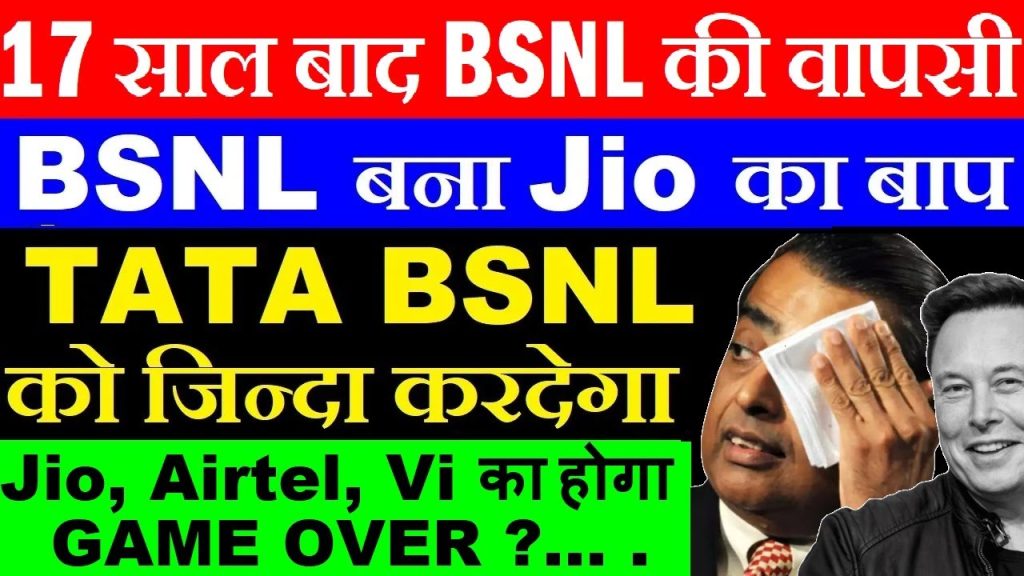
India’s telecom landscape is witnessing a historic turnaround as Bharat Sanchar Nigam Limited (BSNL), the state-owned telecom giant, has reported its first quarterly profit in 17 years. This monumental achievement, amounting to ₹262 crores in Q3 2023, signals a potential revival for the beleaguered public sector unit. But what fueled this resurgence? How does this impact competitors like Reliance Jio, Airtel, and Vodafone Idea? And what role does Starlink’s impending entry play? Let’s dive into the details.
BSNL’s Historic Profit After 17 Years: What Changed?
BSNL’s journey from financial turmoil to profitability marks a watershed moment for India’s telecom sector. The last time BSNL saw profits was in 2007, before intense competition from private players and bureaucratic hurdles led to massive losses. Fast-forward to 2023, and the company’s strategic 4G expansion, cost-cutting measures, and government-backed reforms have finally borne fruit.
Key factors behind BSNL’s turnaround:
- 4G Network Rollout: BSNL accelerated its 4G infrastructure deployment, targeting 100,000 towers nationwide. As of June 2023, 75,000 towers were installed, with 60,000 already operational.
- Debt Reduction: The company slashed its debt by ₹1,800 crores, easing financial strain and improving operational efficiency.
- Revenue Growth: Earnings before interest, taxes, depreciation, and amortization (EBITDA) doubled to ₹2,100 crores, driven by higher mobile, fiber-to-home (FTTH), and leased line service revenues.
Union Telecom Minister Jyotiraditya Scindia hailed this as a “significant turning point,” emphasizing BSNL’s focus on customer retention and service quality. With its subscriber base swelling to 9 crores (up from 8.4 crores), BSNL is now eyeing 5G readiness to stay competitive.
Strategic Moves: How BSNL Outpaced Its Own Legacy
BSNL’s revival wasn’t accidental. A mix of aggressive expansion and fiscal discipline paved the way:
1. 4G Expansion: Catching Up with Private Players
For years, BSNL lagged in 4G services, losing subscribers to Jio and Airtel. However, its recent nationwide 4G rollout—prioritizing rural and semi-urban areas—has bridged this gap. The government’s ₹1.64 lakh crores revival package in 2022 provided the necessary impetus, funding infrastructure upgrades and vendor partnerships.
2. Cost-Cutting and Operational Efficiency
BSNL trimmed unnecessary expenditures, renegotiated vendor contracts, and optimized workforce allocation. Employee costs, a longstanding burden, were reduced through voluntary retirement schemes (VRS), saving ₹500 crores annually.
3. Diversified Revenue Streams
Beyond mobile services, BSNL boosted earnings through:
- FTTH Broadband: A 30% surge in fiber subscribers.
- Enterprise Leased Lines: Catering to businesses requiring high-speed connectivity.
- Government Projects: Securing contracts for smart city initiatives and rural connectivity schemes.
The Ripple Effect: Jio, Airtel, and Vodafone Idea Under Pressure
BSNL’s resurgence couldn’t have come at a worse time for rivals. Here’s how the competition stacks up:
Reliance Jio: The 5G Frontrunner Faces New Challenges
Jio’s dominance in 4G and aggressive 5G rollout (targeting 1 billion users by 2024) now faces headwinds. With BSNL’s 4G services gaining traction in price-sensitive markets, Jio may need to rethink its tariff hike strategy to retain low-income subscribers.
Airtel: Balancing Premiumization and Mass Market
Airtel’s focus on ARPU (Average Revenue Per User) growth through premium plans contrasts with BSNL’s budget-friendly offerings. However, Airtel’s robust 5G coverage in urban hubs gives it an edge in high-revenue segments.
Vodafone Idea: Survival at Stake
Already grappling with ₹2.1 lakh crores in debt, Vodafone Idea risks losing more subscribers to BSNL. The government’s equity-for-debt swap offers a lifeline, but delayed 5G rollout and funding gaps could worsen its plight.
Starlink’s Entry: A Disruptor in the Making?
Elon Musk’s Starlink, poised to enter India’s telecom market, threatens to upend traditional players. While BSNL and Jio battle on terrestrial networks, Starlink’s satellite-based internet promises:
- Pan-India Coverage: Bridging urban-rural connectivity gaps.
- High-Speed Low-Latency Services: Ideal for enterprises and remote areas.
However, regulatory hurdles loom. Starlink’s 2021 attempt to launch services without licenses led to refunds and penalties. Now, partnering with local firms like Tata Group could ease its entry, but pricing remains a concern. At $80–100/month, Starlink targets premium users, leaving mass markets to BSNL and Jio.
Future Outlook: Can BSNL Sustain Its Momentum?
BSNL’s revival is commendable, but long-term success hinges on:
- 5G Preparedness: Accelerating 5G trials to match Jio and Airtel.
- Customer Experience: Reducing service outages and improving complaint resolution.
- Innovation: Leveraging partnerships for IoT, cloud services, and AI-driven solutions.
As Minister Scindia noted, “Profitability is step one; consistency is the real challenge.” With the telecom sector contributing 6.5% to India’s GDP, BSNL’s resurgence could redefine public sector efficiency and ignite fresh competition.
Conclusion: A New Era for Indian Telecom
BSNL’s ₹262 crore profit after 17 years is more than a financial milestone—it’s a testament to strategic grit and adaptability. For consumers, this revival promises better services and competitive pricing. For investors, it underscores the potential of reformed PSUs. And for competitors? It’s a wake-up call to innovate or risk obsolescence.
As Starlink lurks on the horizon and 5G reshapes connectivity, one thing is clear: India’s telecom sector is entering its most dynamic phase yet.