


Introduction to Today’s Financial Landscape
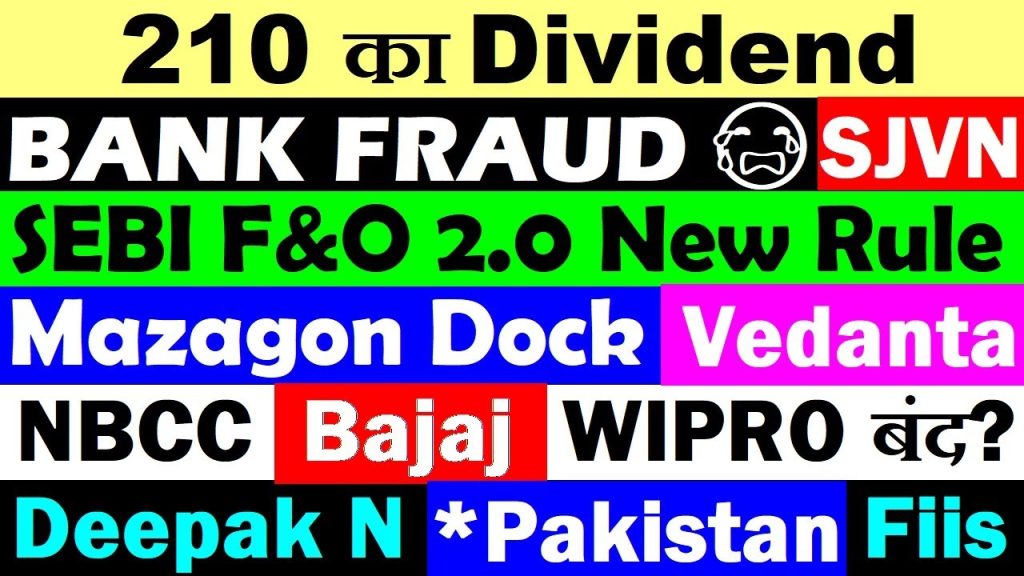
The financial markets are a whirlwind of activity, driven by macroeconomic data, corporate earnings, regulatory shifts, and geopolitical developments. Investors navigating this space need actionable insights to make informed decisions. This article covers critical updates, including the alarming rise in bank frauds, SEBI’s tightened F&O regulations, dividend declarations by major Indian companies, and global events impacting markets. Let’s explore these developments in detail to understand their implications for investors and the economy.
U.S. Market Volatility: GDP Data, Jobless Claims, and Trump’s Tariff Saga
The U.S. market has been a rollercoaster, with recent data releases sparking volatility. The latest GDP figures slipped into negative territory, signaling potential economic slowdown. Concurrently, jobless claims have risen, adding pressure to an already cautious market. Despite these bearish indicators, the market’s reaction has been muted. Why? A significant factor is the temporary halt of President Trump’s proposed tariffs by a U.S. court.
Trump’s Tariff Block and Market Reactions
The court’s decision to block Trump’s tariff plans provided a brief relief rally, with U.S. indices jumping 400–500 points initially. However, the optimism faded as markets digested the negative GDP and jobless claims data, leading to a sharp 780-point drop from the peak. Trump’s response was defiant, vowing to appeal the decision and explore alternative measures. This uncertainty keeps investors on edge, as future tariff policies could disrupt global trade and supply chains.
Implications for Global Markets
The U.S. market’s fluctuations have a ripple effect globally. Indian investors, in particular, should monitor these developments, as U.S. policies influence foreign institutional investor (FII) flows and currency movements. The uncertainty surrounding tariffs could lead to cautious FII behavior, impacting Indian indices like the Nifty and Sensex.
Bank Fraud Surge in India: A Growing Concern
Bank frauds in India have reached alarming levels, with the Reserve Bank of India (RBI) reporting a near-tripling in fraud value in the financial year 2025. While the number of fraud cases has slightly decreased—from 100 to approximately 90 cases—the monetary impact has skyrocketed, with losses amounting to ₹25,667 crore.
Public vs. Private Sector Banks: A Tale of Value and Volume
Public sector banks, despite reporting fewer fraud cases (around 6,900 compared to over 14,000 in private banks), bear a disproportionate financial burden due to the high value of individual frauds. For instance, a single high-value fraud in a public sector bank can cause losses equivalent to thousands of smaller frauds in private banks. Digital payment scams and loan-related frauds are the primary drivers, highlighting vulnerabilities in India’s financial ecosystem.
Addressing the Fraud Epidemic
To combat this, banks must enhance cybersecurity, adopt advanced fraud detection systems, and educate customers on digital safety. Regulators like the RBI are likely to tighten oversight, potentially impacting banking operations and investor confidence. Investors in banking stocks should factor in these risks when evaluating portfolio allocations.
SEBI’s F&O 2.0 Rules: Tightening the Reins on Derivatives
The Securities and Exchange Board of India (SEBI) has introduced stricter regulations for futures and options (F&O) trading, dubbed F&O 2.0. These rules aim to protect retail investors and enforce market discipline, addressing the speculative frenzy in the derivatives market.
Key Changes in F&O Regulations
SEBI’s new norms include tighter margin requirements, enhanced disclosure mandates, and measures to curb excessive speculation. The regulator’s intent is clear: reduce the risks associated with F&O trading, where retail investors often face significant losses. While large institutions dominate F&O profits, SEBI’s focus is on safeguarding smaller players.
Impact on Traders and Markets
These regulations could dampen F&O trading volumes, affecting brokerage firms and market liquidity. However, they also promote a more stable trading environment, potentially attracting conservative investors. Traders must adapt to these changes by refining strategies and prioritizing risk management.
Corporate Earnings and Dividend Announcements
Several Indian companies recently announced their quarterly results and dividend payouts, influencing stock prices and investor sentiment. Let’s break down the performances of key players like NBCC, SJVN, Mazagon Dock, and Bajaj Auto.
NBCC: Strong Growth and Mega Deal Prospects
NBCC, a leading public sector undertaking, reported robust quarterly results. Revenue grew by 16%, and net profit surged 29% to ₹176 crore. The company also declared a dividend, reinforcing its appeal to income-focused investors. Additionally, NBCC is in talks for a potential $10 billion deal, possibly with Reliance and Castrol BP. If finalized, this could be one of the year’s largest energy deals, boosting NBCC’s stock and India’s energy sector outlook.
SJVN: Mixed Results with Dividend Declaration
SJVN, another public sector player, reported a 5% revenue increase but posted a quarterly loss of ₹128 crore. Despite this, the company declared a modest dividend of ₹0.30 per share. SJVN’s stock has been popular among retail investors due to its past rallies, but the loss raises concerns about operational efficiency. Investors should monitor future quarters for signs of recovery.
Mazagon Dock Shipbuilders: Profit Decline but Dividend Support
Mazagon Dock Shipbuilders saw its consolidated profit after tax plummet 51% year-on-year to ₹325 crore, primarily due to deferred tax adjustments. The company announced a dividend of ₹2.71 per share, offering some relief to shareholders. Despite the profit drop, Mazagon Dock’s performance exceeded market expectations of ₹350 crore, suggesting potential for a positive market reaction.
Bajaj Auto: Dividend Bonanza Amid Profit Dip
Bajaj Auto reported a 10% year-on-year decline in quarterly profit, falling to ₹1,800 crore. However, the company announced a hefty dividend of ₹210 per share. While the dividend yield remains attractive, investors should note that Bajaj Auto’s high share price normalizes the yield. The company’s fundamentals remain strong, making it a stable pick for long-term investors.
Other Notable Performances
- Amara Raja: Reported a 29.7% drop in net profit but declared a final dividend of ₹0.5 per share.
- Deepak Nitrite: Showed stable performance, with numbers aligning with expectations, driving a positive stock reaction.
- Wipro: Shut down its manufacturing unit in Himachal’s Baddi, impacting 80 employees. This move reflects cost-cutting measures amid challenging market conditions.
- Vedanta: Gained from an interim relief by the NCLT Appellate Tribunal regarding its demerger plans, boosting share prices.
Global Geopolitical and Economic Developments
Geopolitical events continue to shape financial markets, with significant implications for India.
Pakistan’s Economic Lifeline from China
Pakistan received a $3.7 billion bailout from China, reinforcing its role as a strategic ally. Despite perceptions of economic fragility, global powers like China and Western nations are committed to keeping Pakistan afloat. This is driven by geopolitical interests, including arms trade and counterbalancing India’s growth. For Indian investors, this underscores the need for robust defense spending, which could strain fiscal resources but ensure national security.
India-U.S. Trade Talks: Navigating Trump’s Pressure
The U.S. is set to resume trade talks with India on June 5–6, 2025, amid Trump’s aggressive tariff rhetoric. India must tread carefully, leveraging its economic strengths to negotiate favorable terms. Trump’s tactics aim to create pressure, but India’s strategic approach could mitigate adverse impacts. Investors should watch for outcomes that could affect sectors like IT, pharmaceuticals, and manufacturing.
FII and DII Activity: A Wait-and-Watch Approach
Foreign institutional investors (FIIs) are adopting a cautious stance, with no significant buying or selling activity. Domestic institutional investors (DIIs), however, are actively buying, providing market stability. The rupee’s value at 85.38 and Gift Nifty’s range around 24,925 reflect a stable but cautious market outlook.
NVIDIA and U.S. Tech Giants: Tariff Relief Boost
NVIDIA outperformed expectations, surpassing Microsoft to become the most valued company by market cap. The tariff relief benefited U.S. tech giants like NVIDIA and Apple, which rely heavily on Asian manufacturing. This development highlights the interconnectedness of global supply chains and the impact of U.S. policies on tech stocks.
Strategic Investment Tips for Navigating Current Markets
To thrive in this volatile environment, investors should consider the following strategies:
- Diversify Portfolios: Spread investments across sectors like energy (NBCC), auto (Bajaj), and technology to mitigate risks.
- Monitor Regulatory Changes: Stay updated on SEBI’s F&O rules and their impact on trading strategies.
- Focus on Dividend Stocks: Companies like NBCC, Bajaj Auto, and Mazagon Dock offer attractive dividends, providing income stability.
- Track Global Events: U.S. tariff policies and India-U.S. trade talks could influence market sentiment and FII flows.
- Strengthen Risk Management: With rising bank frauds, prioritize investments in banks with robust cybersecurity measures.
Conclusion: Staying Ahead in a Dynamic Market
The financial markets are navigating a complex landscape marked by regulatory shifts, corporate earnings, and global uncertainties. From SEBI’s tightened F&O rules to the surge in bank frauds and significant dividend announcements, investors have a wealth of information to process. Global events, including U.S. tariff policies and Pakistan’s bailout, add further complexity. By staying informed and adopting a strategic approach, investors can capitalize on opportunities while managing risks effectively. Keep an eye on these developments to make well-informed decisions in this ever-evolving financial world.