


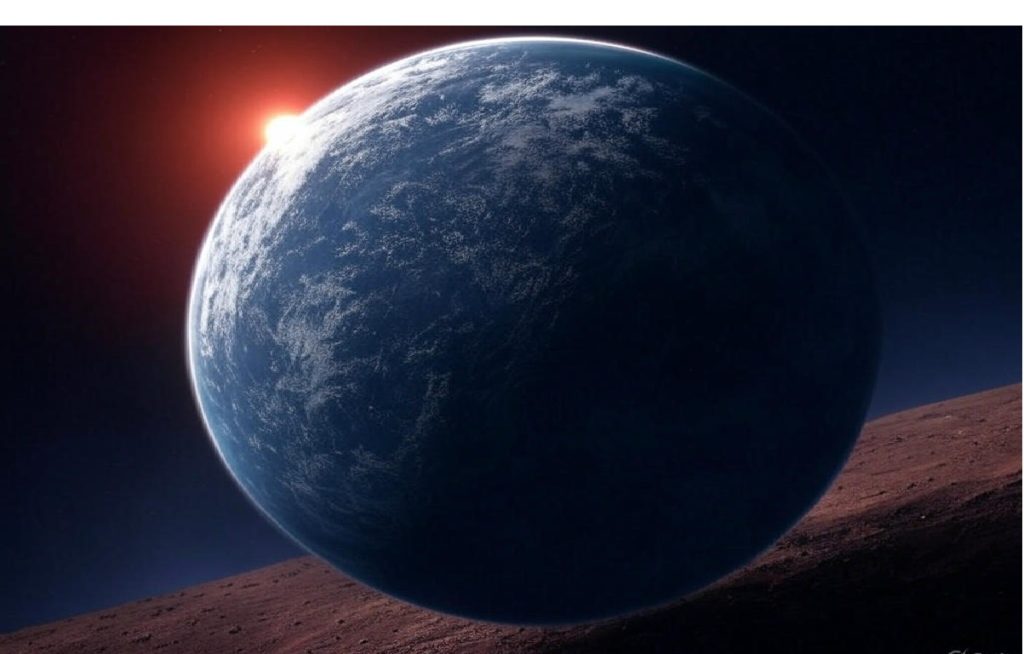
The quest to uncover whether humanity stands alone in the vast cosmos has captivated scientists and dreamers alike for centuries. With advancements in astronomical technology, researchers are now closer than ever to answering one of the universe’s greatest mysteries: Is there life beyond Earth? Recent discoveries surrounding an exoplanet, K2-18b, located 700 trillion miles from Earth, have sparked excitement in the scientific community. Using NASA’s James Webb Space Telescope, a team of Cambridge scientists has uncovered compelling evidence suggesting the presence of life on this distant world. This article delves into the groundbreaking findings, the science behind them, and what they mean for humanity’s search for extraterrestrial life.
The Cosmic Quest for Extraterrestrial Life
Since humanity first gazed at the stars, the question of whether life exists elsewhere has fueled exploration and imagination. The universe, with its billions of galaxies and countless stars, offers endless possibilities. Scientists have long hypothesized that among the trillions of planets orbiting distant stars, some may harbor conditions suitable for life. The discovery of exoplanets—planets outside our solar system—has transformed this hypothesis into a tangible pursuit.
K2-18b, an exoplanet orbiting a red dwarf star, has emerged as a prime candidate in this search. Located in the constellation Leo, this planet is 2.6 times larger than Earth and resides in its star’s habitable zone, where conditions might allow liquid water to exist—a key ingredient for life as we know it. The recent detection of specific gases in K2-18b’s atmosphere has ignited hope that this distant world could host living organisms.
Why K2-18b Matters
K2-18b’s significance lies in its similarities to Earth and its position in the habitable zone. Unlike gas giants like Jupiter, K2-18b is classified as a “super-Earth” or “mini-Neptune,” with a composition that may include a rocky core, liquid oceans, and a thick atmosphere. Its distance from Earth—700 trillion miles—makes direct observation challenging, but advanced telescopes like the James Webb Space Telescope (JWST) have made it possible to analyze its atmospheric makeup remotely.
The discovery of potential biosignatures on K2-18b marks a pivotal moment in exoplanet research. Biosignatures are chemical compounds or gases that indicate the presence of life. In this case, the detection of dimethyl sulfide (DMS) and dimethyl disulfide (DMDS) in K2-18b’s atmosphere has scientists buzzing with excitement. On Earth, these gases are produced exclusively by microscopic life forms, such as marine phytoplankton and bacteria, raising the possibility that similar organisms exist on this distant exoplanet.
The Role of the James Webb Space Telescope
The James Webb Space Telescope, launched in 2021, represents a quantum leap in our ability to study distant worlds. Unlike its predecessor, the Hubble Space Telescope, JWST is equipped with cutting-edge infrared technology that allows it to peer through cosmic dust and analyze the atmospheres of exoplanets with unprecedented precision. By studying the light from K2-18b’s host star as it passes through the planet’s atmosphere, JWST can identify the chemical composition of that atmosphere.
How JWST Detects Biosignatures
The process, known as transmission spectroscopy, involves analyzing the starlight filtered through an exoplanet’s atmosphere. As the planet transits its star, certain wavelengths of light are absorbed by atmospheric molecules, creating a unique spectral signature. By comparing these signatures to known chemical profiles, scientists can identify the presence of specific gases.
In the case of K2-18b, JWST detected the presence of DMS and DMDS, gases that are rare in the universe but abundant in Earth’s oceans, where they are produced by microbial life. The concentration of these gases on K2-18b is reportedly thousands of times higher than on Earth, prompting researchers to investigate whether biological processes are responsible.
The Cambridge Team’s Breakthrough
A team of scientists from the University of Cambridge, led by Professor Nikku Madhusudan, an astrophysicist of Indian descent, has spearheaded the analysis of K2-18b’s atmosphere. Their findings, published in 2023, have sent shockwaves through the scientific community. The team’s discovery of DMS and DMDS in K2-18b’s atmosphere provides the strongest evidence yet of potential life beyond our planet.
The Significance of DMS and DMDS
Dimethyl sulfide (DMS) and dimethyl disulfide (DMDS) are sulfur-based compounds that, on Earth, are produced by marine microorganisms such as phytoplankton and bacteria. These organisms release DMS as a byproduct of their metabolic processes, contributing to the sulfur cycle in Earth’s oceans. DMDS, a related compound, is also associated with microbial activity.
The presence of these gases on K2-18b is significant because they are not easily produced through non-biological processes. Geological phenomena, such as volcanic activity, rarely generate DMS or DMDS in significant quantities. The high concentrations of these gases in K2-18b’s atmosphere suggest that biological activity—perhaps similar to Earth’s marine ecosystems—could be at play.
Challenges in Confirming Life
While the discovery is groundbreaking, the Cambridge team emphasizes that it is not definitive proof of life. The presence of biosignatures like DMS and DMDS is a strong indicator, but other explanations must be ruled out. For example, unknown geological or chemical processes on K2-18b could theoretically produce these gases without the involvement of life.
To address this, the team is conducting laboratory experiments to determine whether DMS and DMDS can be synthesized in the absence of biological activity. If these experiments fail to produce the gases through non-biological means, the case for life on K2-18b will grow stronger. However, confirming the presence of life will require additional data, which may take one to two years to collect.
What K2-18b Tells Us About the Universe
The discovery of potential biosignatures on K2-18b has far-reaching implications for our understanding of the universe. If life exists on this exoplanet, it could suggest that life is more common in the cosmos than previously thought. The Milky Way galaxy alone contains billions of stars, many of which host planets in their habitable zones. A single instance of life on K2-18b could imply that countless other worlds harbor similar conditions.
A Glimpse into Alien Ecosystems
If K2-18b does host life, what might it look like? Based on the presence of DMS and DMDS, scientists speculate that the planet could support microbial life forms similar to Earth’s phytoplankton or bacteria. These organisms might thrive in liquid oceans beneath the planet’s thick atmosphere, possibly powered by chemical or geothermal energy rather than sunlight, given the dimness of K2-18b’s red dwarf star.
Alternatively, K2-18b could be a “Hycean” planet—a hybrid between a rocky world and a gas giant, with vast oceans and a hydrogen-rich atmosphere. Such environments could support unique ecosystems unlike anything found on Earth. While the planet’s surface remains a mystery, JWST’s data suggests the presence of liquid water, a critical component for life.
The Broader Implications for Exoplanet Research
The findings on K2-18b underscore the importance of continued investment in exoplanet research. As telescopes become more advanced and our understanding of biosignatures improves, scientists will be better equipped to identify habitable worlds. The discovery also highlights the need for interdisciplinary collaboration, combining expertise in astronomy, chemistry, and biology to interpret complex data.
Debunking Alternative Theories
Not all scientists are convinced that K2-18b hosts life. Some argue that the planet may be a gas giant with no solid surface, rendering it inhospitable to life as we know it. Others suggest that the detected gases could result from abiotic processes, such as chemical reactions in the planet’s atmosphere or subsurface.
Addressing the Gas Giant Hypothesis
The gas giant hypothesis posits that K2-18b is a massive ball of gas, similar to Neptune, with no solid surface or liquid oceans. However, JWST’s observations challenge this view. The telescope’s data indicates the presence of water vapor and other molecules consistent with a rocky or oceanic planet. While K2-18b’s exact composition remains uncertain, the evidence leans toward a world capable of supporting liquid water—and potentially life.
Investigating Abiotic Sources
To rule out abiotic sources of DMS and DMDS, the Cambridge team is exploring whether these gases can be produced through geological or atmospheric processes. For example, volcanic activity or lightning strikes could theoretically generate sulfur-based compounds. However, the high concentrations of DMS and DMDS on K2-18b are difficult to explain without invoking biological processes, as such levels are unprecedented in non-living systems.
The Future of the Search for Alien Life
The discovery of potential biosignatures on K2-18b is just the beginning. Over the next few years, scientists will collect additional data from JWST and other telescopes to confirm or refute the presence of life. Future missions, such as the European Space Agency’s ARIEL telescope, will further enhance our ability to study exoplanet atmospheres.
The Role of Next-Generation Telescopes
Next-generation telescopes will play a crucial role in the search for alien life. ARIEL, set to launch in 2029, will survey the atmospheres of hundreds of exoplanets, providing a wealth of data on their chemical compositions. Similarly, ground-based observatories like the Extremely Large Telescope (ELT) will complement space-based missions by offering high-resolution spectroscopy.
The Importance of Patience
As exciting as the K2-18b findings are, patience is essential. Confirming the presence of life on another planet is a monumental task that requires rigorous analysis and replication of results. The Cambridge team estimates that it may take one to two years to gather sufficient evidence to draw a definitive conclusion. In the meantime, the scientific community remains cautiously optimistic, recognizing that each discovery brings us closer to answering the ultimate question: Are we alone?
Why This Discovery Resonates with Humanity
The possibility of life on K2-18b captures the imagination because it speaks to our deepest curiosities about our place in the universe. For centuries, philosophers, scientists, and storytellers have pondered whether other worlds harbor life. The discovery of potential biosignatures on a distant exoplanet brings this age-old question into the realm of science, offering hope that we may soon find answers.
Inspiring Future Generations
The K2-18b findings are not just a scientific milestone—they are a source of inspiration. For young people interested in astronomy, biology, or space exploration, this discovery highlights the limitless possibilities of scientific inquiry. It underscores the importance of curiosity, collaboration, and perseverance in unraveling the mysteries of the cosmos.
A New Perspective on Earth
The search for alien life also prompts us to reflect on our own planet. Earth’s delicate ecosystems, capable of producing unique biosignatures like DMS, remind us of the fragility and beauty of life. As we explore distant worlds, we gain a deeper appreciation for the conditions that make our planet a haven for life.
Conclusion: A Step Closer to the Stars
The discovery of potential biosignatures on K2-18b is a landmark achievement in humanity’s quest to find life beyond Earth. While it is too early to declare the presence of extraterrestrial life, the evidence is compelling and warrants further investigation. The James Webb Space Telescope, combined with the expertise of scientists like those at Cambridge, has opened a new chapter in exoplanet research, bringing us closer to answering one of the greatest questions in science.
As we await further data, the K2-18b findings remind us of the power of human curiosity and innovation. Whether or not this distant exoplanet harbors life, the journey to uncover the truth is transforming our understanding of the universe and our place within it. For now, K2-18b stands as a beacon of possibility, inviting us to dream of a cosmos teeming with life.