


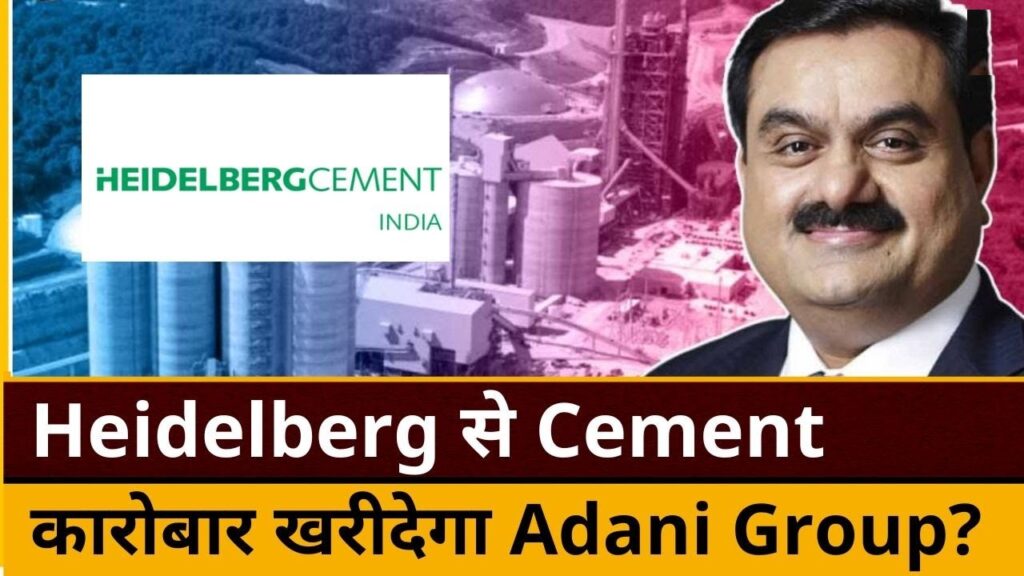
HeidelbergCement India saw a sharp 18% surge in its share price on Monday, following reports of a potential buyout by the Adani Group. The proposed acquisition would involve HeidelbergCement’s Indian operations and Zuari Cement, both owned by Germany’s Heidelberg Materials. Shares of HeidelbergCement spiked by 17.95%, hitting ₹257.85 on the BSE.
Ambuja Cements to Lead ₹10,000 Crore Acquisition
According to insiders cited by The Economic Times, Ambuja Cements, a key player under the Adani Group, is leading discussions to acquire HeidelbergCement’s Indian division in a deal valued at approximately ₹10,000 crore ($1.2 billion). If successful, the acquisition would mark a significant step in Adani’s growing footprint in India’s cement industry.
Despite the buzz around the deal, Ambuja Cements’ stock dipped by over 3%, while the Adani Group’s stock climbed more than 1% during early trading hours on the BSE.
Expansion Strategy: Boosting Ambuja’s Cement Capacity
HeidelbergCement India boasts an annual production capacity of 14 million tonnes, while Zuari Cement contributes 7 million tonnes. Adding this to Ambuja Cements’ current 89 million tonnes would significantly bolster its output, positioning the company closer to Adani Group’s ambitious target of achieving a total capacity of 140 million tonnes by 2028.
Market Performance of HeidelbergCement and Ambuja Cements
Though HeidelbergCement’s stock performance has been relatively flat for the year, it saw a notable surge recently. Over the past year, the stock has gained more than 23%, including a 3% increase in the past month and over 2.5% year-to-date.
In contrast, Ambuja Cements has faced a mixed bag. Its shares have declined by 13% in the last three months but have climbed more than 14% year-to-date, delivering over 36% returns in the past year.
HeidelbergCement Hits 52-Week High Amid Acquisition Talks
On October 7, HeidelbergCement India shares hit a 52-week high of ₹257.85, propelled by news of Adani Group’s potential acquisition. The report, initially published by The Economic Times, indicates that Adani is in advanced talks to acquire the cement business from its German parent, Heidelberg Materials. This deal could represent another milestone in Adani’s cement industry expansion, which began in 2022 with the acquisition of Holcim’s local units.
Competitors in the Cement Race: UltraTech Cement and JSW Cement
Adani Group isn’t the only contender for HeidelbergCement India. According to previous reports by The Hindu BusinessLine, UltraTech Cement and IPO-bound JSW Cement were also in the running for the buyout. UltraTech Cement, in particular, has been a fierce competitor in India’s cement sector, having recently acquired India Cements to strengthen its position in the southern market.
HeidelbergCement’s Legacy in India
Heidelberg Materials, the parent company, entered India’s cement market in 2006 through a series of domestic acquisitions. Today, it operates four plants across the country, with a combined annual production capacity of 12.6 million tonnes. Over the years, HeidelbergCement has established itself as a reputable player in the Indian cement industry.
India’s Cement Market: A Growing Powerhouse
India is the second-largest cement producer in the world, accounting for over 8% of global installed capacity, according to the India Brand Equity Foundation (IBEF). The country’s cement sector is driven by robust industrial growth, which has rebounded strongly after the pandemic. Recent government initiatives, including the development of 98 smart cities, are expected to further fuel the demand for cement, offering immense growth potential in the long run.
Conclusion
The potential acquisition of HeidelbergCement and Zuari Cement by the Adani Group marks a pivotal moment in the Indian cement industry. If completed, this deal would significantly enhance Ambuja Cements’ capacity, bringing the Adani Group one step closer to its goal of becoming a leading cement producer in India. As competition heats up with industry giants like UltraTech and JSW Cement, the sector is poised for further consolidation and expansion, with strong growth prospects driven by increasing infrastructure and industrial demand.