


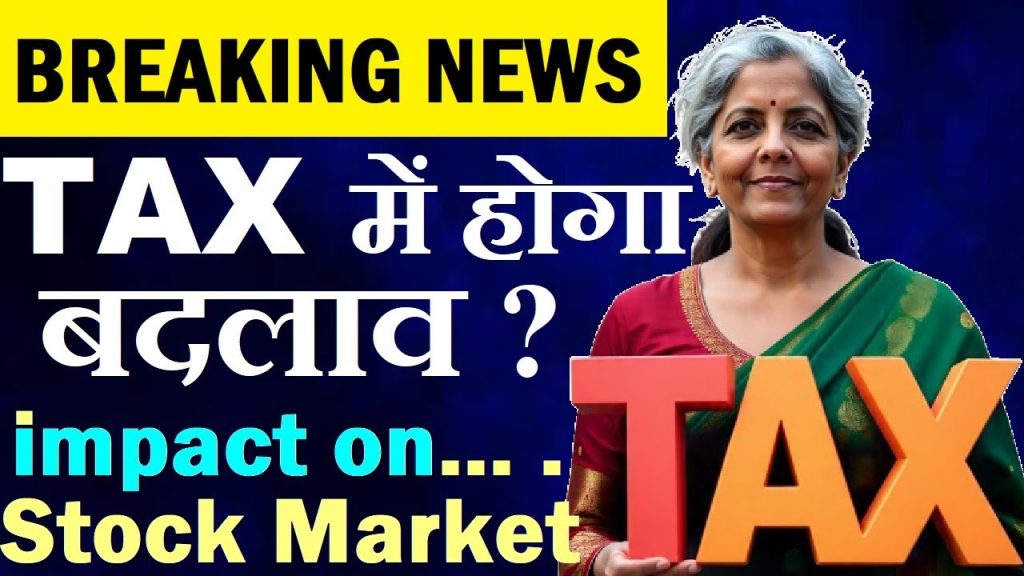
India’s Goods and Services Tax (GST) system, introduced in 2017, transformed the nation’s tax landscape by replacing a patchwork of indirect taxes with a unified framework. As Finance Minister Nirmala Sitharaman prepares for the next GST Council meeting, slated for July 2025, speculation is rife about potential rate rationalization—a move that could simplify the tax structure, influence consumer prices, and ripple through the stock market. This article dives deep into the proposed GST changes, their implications for businesses and consumers, and how they might affect stock market sectors. With a focus on clarity and actionable insights, we’ll explore what these changes mean for you.
Understanding GST and Its Current Structure
GST is an indirect tax levied on the supply of goods and services across India. Unlike direct taxes, such as income tax, which apply based on earnings, GST impacts every consumer purchasing goods or services—from a chocolate bar to a restaurant meal. The current GST structure operates on four primary tax slabs: 5%, 12%, 18%, and 28%, with certain essential items exempt at 0%. Luxury goods, like high-end electronics, typically fall under the 28% slab, while essentials like certain food items are taxed at 5%.
The GST Council, chaired by the Finance Minister and comprising state finance ministers, periodically reviews these rates to ensure fairness and efficiency. However, the complexity of four slabs has sparked debates about disputes and inefficiencies, particularly around the 12% and 18% rates, where classification of goods often creates confusion.
What Is GST Rate Rationalization?
Rate rationalization refers to simplifying the GST slab structure to reduce complexity, enhance compliance, and create a more predictable tax environment. The idea has been under discussion for years, with proposals to reduce the number of slabs from four to three. The goal is to streamline tax rates, minimize disputes over product classification, and make the system more consumer-friendly.
Recent reports suggest that the GST Council is leaning toward eliminating the 12% slab, redistributing affected items to either the 5% or 18% slabs. This potential change has garnered strong support from the Group of Ministers (GoM) advising the Council, though a final decision awaits the July 2025 meeting.
Why Rationalize GST Rates?
- Simplify Compliance: Multiple slabs create confusion for businesses, especially small and medium enterprises, in determining the correct tax rate for their products.
- Reduce Disputes: The overlap between 12% and 18% slabs often leads to classification disputes, increasing litigation and administrative costs.
- Enhance Efficiency: A leaner tax structure could boost economic efficiency by reducing the compliance burden and improving tax collection.
Proposed GST Changes: What’s on the Table?
The latest buzz around GST rate rationalization centers on removing the 12% slab. Items currently taxed at 12% would either shift to the 5% slab, making them cheaper, or to the 18% slab, increasing their cost. While no official announcement has confirmed this change, sources indicate strong backing from the GoM, with Finance Minister Nirmala Sitharaman and her team set to make the final call.
Current GST Slabs and Their Items
To understand the potential impact, let’s look at the items currently taxed at 12% and 18%:
- 12% Slab: Includes everyday goods like butter, ghee, processed foods, almonds, mobile phones, fruit juices, vegetable preparations, nuts, pickles, chutneys, jams, jellies, packed coconut water, and umbrellas.
- 18% Slab: Encompasses hair oil, capital goods, toothpaste, soap, ice cream, pasta, corn, printers, and computers.
If the 12% slab is eliminated, items like butter or mobile phones could either become cheaper (if moved to 5%) or more expensive (if shifted to 18%). The decision on where each item lands will depend on the GST Council’s assessment of its necessity and economic impact.
Potential Scenarios for Rate Rationalization
Three primary scenarios have been floated in past discussions, with the latest reports favoring the first:
- Eliminate the 12% Slab: Move items to 5% or 18%, leaving three slabs: 5%, 18%, and 28%. This is the most likely option based on recent reports.
- Eliminate the 18% Slab: Shift items to 5%, 12%, or 28%. This is less favored due to the higher number of items in the 18% slab, which could complicate redistribution.
- Merge 12% and 18% into a New 15% Slab: This would create a three-slab structure of 5%, 15%, and 28%. While proposed in earlier GST Council meetings, it has not gained traction recently.
The focus on removing the 12% slab stems from its relatively smaller share of items compared to the 18% slab, making it easier to redistribute products without causing significant disruption.
How GST Rate Changes Could Affect Consumers
The proposed elimination of the 12% slab would have a direct impact on consumer prices, depending on where items are reassigned:
- Items Moved to 5%: Products like butter, ghee, or packed coconut water could become cheaper, benefiting consumers. For example, a ₹100 pack of butter currently taxed at 12% (₹12 tax) would cost ₹105 with a 5% tax (₹5 tax), saving consumers ₹7 per pack.
- Items Moved to 18%: Goods like mobile phones or fruit juices could become pricier. A ₹10,000 mobile phone currently taxed at 12% (₹1,200 tax) would cost ₹11,800 with an 18% tax (₹1,800 tax), increasing the price by ₹600.
These price changes could influence consumer behavior, with cheaper essentials boosting demand and pricier discretionary items potentially seeing reduced sales.
Impact on Household Budgets
For the average Indian household, GST changes could have mixed effects:
- Lower-Income Households: These households spend a larger share of their income on essentials like food items. If products like butter or processed foods move to 5%, they could see savings, easing budget constraints.
- Middle- and High-Income Households: These groups are more likely to purchase items like mobile phones or packaged juices, which could become costlier if shifted to 18%. However, their overall spending power may absorb these increases.
GST Changes and the Stock Market: Sectoral Impacts
GST rate rationalization doesn’t just affect consumers—it could significantly influence stock market performance, particularly for companies in sectors tied to affected goods. Here’s a breakdown of how key sectors might respond:
1. Consumer Goods Sector
- Positive Impact (Items Moved to 5%): Companies producing essentials like butter, ghee, or processed foods (e.g., Amul, Parle, or Bikaner) could see increased demand if prices drop. Lower prices could boost sales volumes, improving revenue and stock performance.
- Negative Impact (Items Moved to 18%): Firms manufacturing fruit juices, jams, or packaged coconut water (e.g., Dabur, Patanjali) may face reduced demand if prices rise, potentially pressuring profit margins and stock prices.
2. Mobile and Electronics Sector
- Potential Headwinds: If mobile phones shift from 12% to 18%, companies like Dixon Technologies or retailers like Reliance Digital could face higher product prices, potentially dampening consumer demand. However, premium brands may absorb the tax hike to maintain market share.
- Opportunity for Budget Brands: If budget smartphones remain at 12% or move to 5% (less likely), companies catering to price-sensitive consumers could gain a competitive edge.
3. Retail and E-Commerce
- Mixed Impact: E-commerce giants like Amazon and Flipkart, which sell a wide range of products, could see varied effects. Lower taxes on essentials could drive higher sales volumes, while higher taxes on discretionary items like electronics might reduce demand. Retail chains selling processed foods or daily essentials could benefit from price reductions.
4. Luxury Goods Sector
- The 28% slab, which includes luxury items, is unlikely to change. Companies in this segment, such as those in high-end electronics or automobiles, should see minimal direct impact from rate rationalization.
Stock Market Strategies for Investors
Investors should approach GST rate changes strategically:
- Monitor GST Council Announcements: The July 2025 meeting will clarify which items move to 5% or 18%. Investors should track these decisions to identify winners and losers.
- Focus on Consumer Staples: Companies producing essentials likely to shift to 5% could see stock price gains due to increased demand.
- Be Cautious with Discretionary Stocks: Firms dealing in goods that may move to 18% could face short-term volatility as consumers adjust to higher prices.
- Diversify Investments: Spread investments across sectors to mitigate risks from tax-related price changes.
Economic Implications of GST Rate Rationalization
Beyond consumers and the stock market, GST changes could have broader economic effects:
- Inflation Dynamics: Moving items to 18% could increase prices for certain goods, contributing to inflation. Conversely, shifting essentials to 5% could ease inflationary pressure on low-income households.
- Government Revenue: The government’s tax revenue depends on the balance between items moved to 5% (lower revenue) and 18% (higher revenue). A well-calibrated shift could maintain or even boost collections.
- Business Competitiveness: Simplified tax slabs could reduce compliance costs, enabling businesses, especially SMEs, to operate more efficiently and compete globally.
Challenges and Considerations for GST Rationalization
While rate rationalization promises simplification, it faces hurdles:
- State-Central Consensus: GST decisions require agreement between the central government and states, which often have differing priorities. States reliant on tax revenue may resist changes that reduce collections.
- Item Classification: Deciding which items move to 5% or 18% is complex. Essential goods must be prioritized for lower rates to avoid burdening consumers.
- Implementation Timeline: Even if approved in July 2025, implementing changes could take months, requiring businesses to adjust pricing and supply chains.
Preparing for GST Changes: What You Can Do
Whether you’re a consumer, business owner, or investor, here’s how to prepare for potential GST rate changes:
- For Consumers: Monitor price changes for frequently purchased items like food, mobile phones, or household goods. Adjust budgets to account for potential cost increases in non-essential items.
- For Businesses: Review your product portfolio to identify items in the 12% slab. Prepare for pricing adjustments and communicate changes transparently to customers.
- For Investors: Stay informed about GST Council updates and analyze sector-specific impacts. Consider reallocating investments to companies likely to benefit from lower tax rates.
The Road Ahead: What to Expect from the GST Council
The upcoming GST Council meeting in July 2025 will be pivotal. While the proposal to eliminate the 12% slab has strong support, the final decision rests with Finance Minister Nirmala Sitharaman and the Council. Key factors influencing the outcome include:
- Economic Context: With India’s economy navigating global uncertainties, the Council may prioritize consumer relief to boost demand.
- Political Considerations: Tax changes affecting essentials could influence public sentiment, especially with state elections on the horizon.
- Stakeholder Input: Businesses, industry associations, and state governments will provide feedback, shaping the final structure.
Conclusion: Navigating the GST Landscape
GST rate rationalization is more than a tax policy tweak—it’s a transformative step that could reshape consumer spending, business operations, and stock market dynamics. By potentially eliminating the 12% slab, the GST Council aims to simplify India’s tax system, but the impact will hinge on how items are redistributed. Consumers could see savings on essentials or higher costs for discretionary goods, while businesses and investors must adapt to shifting market dynamics.
As we await the GST Council’s decision in July 2025, staying informed and proactive is key. Whether you’re budgeting for household expenses, running a business, or investing in the stock market, understanding these changes will help you make informed decisions. Keep an eye on official announcements, and consider how GST rationalization could open new opportunities—or challenges—in your financial journey.