


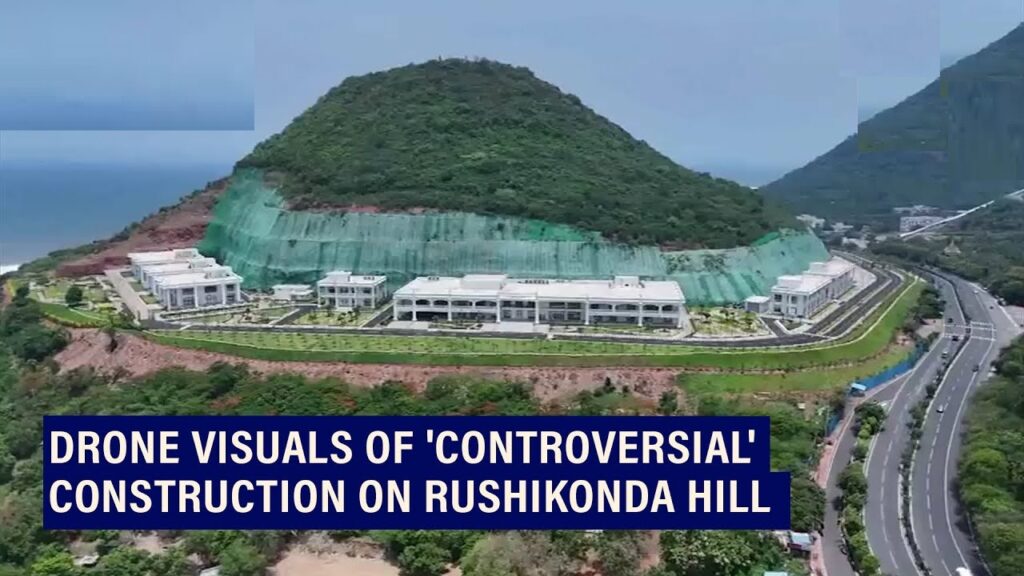
A luxurious 9.88-acre sea-facing property, often referred to as a palace, has become a significant political flashpoint in Andhra Pradesh. This lavish estate, constructed by former Andhra Pradesh Chief Minister Jagan Mohan Reddy on Rushikonda Hill, has reportedly cost over 450 crores INR, sparking a heated debate amid the state’s financial struggles. What is The Future of Jagan Palace On Hills at Rushikonda.
The Lavishness of Rushikonda Palace
Extravagant Expenses
The Rushikonda Palace, often compared to Saddam Hussein’s palace and even Buckingham Palace, is adorned with luxury items that boggle the mind. Reports indicate that the palace boasts a bathtub worth INR 36 lakhs, a commode priced at INR 3.5 lakhs, and royal furniture contributing to the overall cost of INR 500 crores. The palace’s opulence is staggering, with significant amounts spent on its beautification, lighting, and interior design.
Breakdown of Costs
- Bathtub: INR 36 lakhs
- Commode: INR 3.5 lakhs
- Beautification: INR 50 crores
- Special Lighting: INR 30 crores
- Interior Design: INR 80 crores
- Drainage System: INR 100 crores
Public Outrage and Ethical Concerns
The extravagant expenditure on Rushikonda Palace has outraged the public, raising ethical questions about the use of taxpayer money. Comparisons to Saddam Hussein’s palace and Buckingham Palace underscore the lavishness of the estate. Critics argue that such opulence is inappropriate for a government building and represents a significant misuse of public funds.
Political Reactions and Accusations
Allegations from the BJP and TDP
The Bharatiya Janata Party (BJP) and the Telugu Desam Party (TDP) have been vocal in their criticism of Jagan Reddy’s palace. They allege that the project represents rampant corruption and misuse of public funds. The secretive nature of the palace’s construction has only fueled these accusations.
YSRCP’s Defense
The Yuvajana Sramika Rythu Congress Party (YSRCP) has defended the construction, asserting that the palace is not a private residence but a government asset. They argue that the previous government, led by Chandrababu Naidu, also engaged in similar expenditures for temporary secretariats and other projects. However, the YSRCP’s explanations have done little to quell public anger.
The Broader Impact on Andhra Pradesh
Misuse of Public Funds
The controversy surrounding Rushikonda Palace highlights the broader issue of misuse of public funds in Andhra Pradesh. The state’s citizens are left questioning whether their hard-earned money is being spent wisely. The palace’s luxurious features, such as a INR 36 lakh bathtub and exorbitant interior design costs, are seen as excessive and unnecessary.
Call for Accountability
There is a growing demand for accountability and transparency in government expenditures. Many believe that public funds should be used for public welfare, such as improving education, healthcare, and infrastructure, rather than on luxurious buildings. The controversy has reignited calls for stricter oversight of government projects.
Potential Solutions and Future Actions
Repurposing the Palace
One potential solution proposed by critics is to repurpose the palace for public use. Suggestions include converting it into a hotel or a public facility that can generate revenue and benefit the citizens of Andhra Pradesh. This would ensure that the public money spent on the palace is not wasted.
Legal and Political Actions
The TDP and other opposition parties have hinted at legal actions to investigate and potentially reclaim the funds spent on the palace. They argue that if the palace was built with public money, it should be accessible to the public or sold to recover the costs.
Building Public Trust
Restoring public trust in the government will require transparency and responsible use of public funds. The controversy surrounding Rushikonda Palace serves as a reminder of the need for ethical governance and accountability in public expenditures.
The Extravagant Details of Jagan Palace
The property, now dubbed ‘Jagan Palace,’ has exceeded its initial budget significantly. Originally estimated to cost 240 crores INR, the final expenditure ballooned to an astounding 484 crores INR. This opulent estate comprises seven building blocks, each featuring presidential suites, banquet halls, deluxe rooms, conference halls, recreational centers, business centers, restaurants, lounges, washrooms, and parking facilities.
Inside the Lavish Interiors
India Today has obtained exclusive images of the interior, revealing the extent of the luxury within. The palace boasts high-end features such as a bathtub valued at 40 lakh INR and toilet fittings costing between 10 to 12 lakh INR each. The furnishings are equally extravagant, including a spa room with a premium massage table and luxurious marble finishes.
Political Reactions and Accusations
The extravagant spending on the palace has not gone unnoticed. Andhra Pradesh Minister Nara Lokesh has vehemently criticized Jagan Mohan Reddy, accusing him of misusing public funds for personal luxury. He highlighted the incongruity of spending nearly 500 crores INR on such luxuries while the state struggles with a debt of approximately 12 lakh crores INR. Lokesh demanded justice and a thorough investigation into the matter.
Calls for Accountability
Adding to the controversy, Jagan’s sister, now affiliated with the Andhra Congress, has also demanded a detailed inquiry. She pointed out that the YSR Congress Party (YSRCP) government has accrued a debt of around 8 lakh crores INR in the past five years. She emphasized the irresponsibility of allocating funds to such ventures and called for appropriate action if necessary.
YSRCP’s Defense
In response to the allegations, the YSRCP has denied any wrongdoing, asserting that the palace is a government asset, not a private property of Jagan Mohan Reddy. They claim that the building is intended for government use and should be viewed as a valuable state asset, constructed to serve various government purposes. The party insists that the accusations are baseless and politically motivated.
The Future of Jagan Palace
As the political tug-of-war continues, the fate of the palace remains uncertain. Currently, the keys to this grand mansion are with the Telugu Desam Party (TDP). The coming months will reveal how this property will be utilized and whether it will continue to be a point of contention in Andhra Pradesh’s political landscape.
Conclusion
The Jagan Palace on Rushikonda Hill stands as a symbol of luxury and excess amid a backdrop of financial struggle and political conflict. The debate over its construction and funding reflects broader issues of governance and accountability in Andhra Pradesh. As the state grapples with significant debt, the palace’s existence and the controversies surrounding it will likely continue to fuel political debates and calls for transparency and justice.