


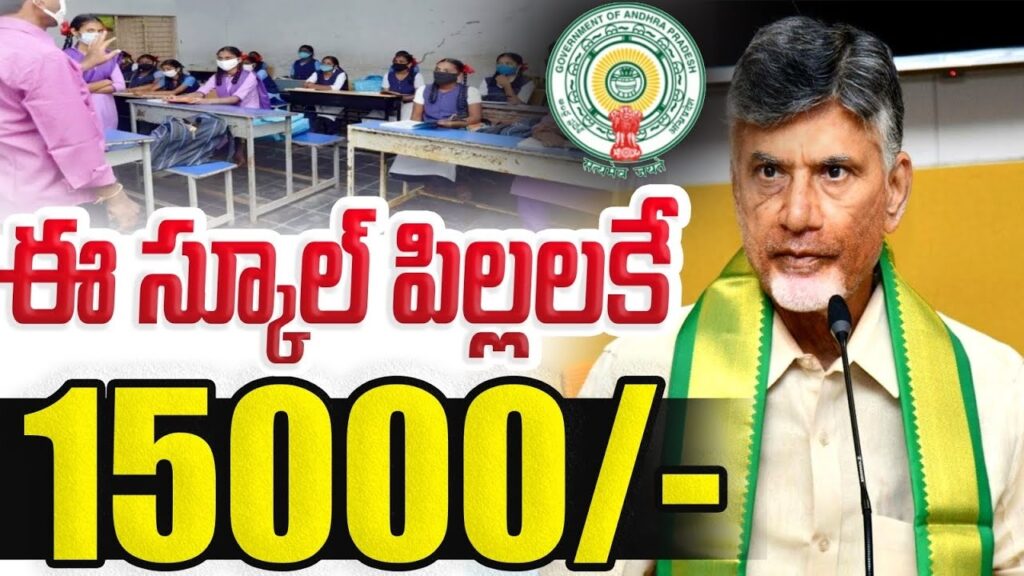
Talliki Vandanam: Comprehensive Guidelines for 2024-25
The School Education Department has released fundamental guidelines for the Talliki Vandanam Scheme for the academic year 2024-25. These guidelines apply to students from Class I to Class XII and aim to support underprivileged families in ensuring their children receive uninterrupted education.
Introduction to Talliki Vandanam Scheme
Overview of Talliki Vandanam
The Talliki Vandanam Scheme is part of the Government of Andhra Pradesh’s flagship programs, designed to provide financial assistance to mothers or recognized guardians of children from Class I to XII. The initiative aims to reduce dropout rates by offering Rs. 15,000 per annum to eligible families, ensuring children continue their education without financial hindrances.
Talliki Vandanam Scheme Details
Scheme Overview
- Name of the Scheme: Talliki Vandanam
- Financial Assistance: Rs. 15,000 per child annually
- Launching Year: 2024-25
- Administering Department: Department of School Education
- Eligibility: Students from Class I to Class XII
- Official Website: To be announced soon
Objectives and Benefits of Talliki Vandanam
Primary Goals
The primary goal of the Talliki Vandanam Scheme is to ensure that no child misses out on education due to poverty. By providing direct financial support to mothers, the scheme aims to significantly reduce the dropout rate and promote regular school attendance.
Key Benefits
- Financial Assistance: Each eligible mother or guardian receives Rs. 15,000 per annum to support their child’s education.
- Comprehensive Support: The scheme includes providing essential school supplies like textbooks, notebooks, uniforms, shoes, belts, ties, socks, and other necessary materials.
- Transparency and Efficiency: The use of Aadhaar for identity verification simplifies the delivery process, making it more transparent and efficient.
Implementation and Eligibility Criteria
Eligibility Requirements
To avail of the benefits under the Talliki Vandanam Scheme, individuals must meet the following criteria:
- Aadhaar Requirement: Beneficiaries must possess an Aadhaar number or undergo Aadhaar authentication.
- Application for Aadhaar: Those without an Aadhaar number must apply for one with parental or guardian consent if they are minors.
- Attendance Criteria: Students must maintain at least 75% attendance to qualify for the benefits.
Required Documents
In cases where Aadhaar is not available, the following documents are required:
- Aadhaar Enrolment identification slip (if enrolled)
- One of the following: Bank or Post Office Passbook with Photo, PAN Card, Passport, Ration Card, Voter Identity Card, MGNREGA card, Kisan Photo Passbook, Driving License, or a certificate of identity with a photo issued by a Gazetted Officer or Tahsildar.
Notification and Public Awareness
Publicity and Awareness
To ensure beneficiaries are aware of the Aadhaar requirement and other essential information, the Department of School Education will conduct extensive publicity campaigns through various media channels.
Handling Aadhaar Authentication Issues
Remedial Mechanisms
In cases where Aadhaar authentication fails due to poor biometrics or other reasons, the following measures will be adopted:
- Alternate Biometric Methods: Iris scans or face authentication will be used.
- One-Time Password (OTP) Authentication: Aadhaar OTP or Time-based One-Time Password (TOTP) will be used if biometric authentication fails.
- Physical Aadhaar Verification: If all else fails, the physical Aadhaar letter with a Quick Response (QR) code will be used for verification.
Ensuring No Beneficiary is Deprived
Exception Handling Mechanism
To ensure no legitimate beneficiary is deprived of their entitlements, the Department will follow the exception handling mechanism outlined in the Office Memorandum of the DBT Mission, Cabinet Secretariat, Government of India, dated December 19, 2017.
Conclusion
The Talliki Vandanam Scheme represents a significant step towards ensuring that every child in Andhra Pradesh has access to education, regardless of their financial background. By providing substantial financial support and streamlining the process with Aadhaar, the scheme aims to create a more inclusive and equitable educational environment for all students.