


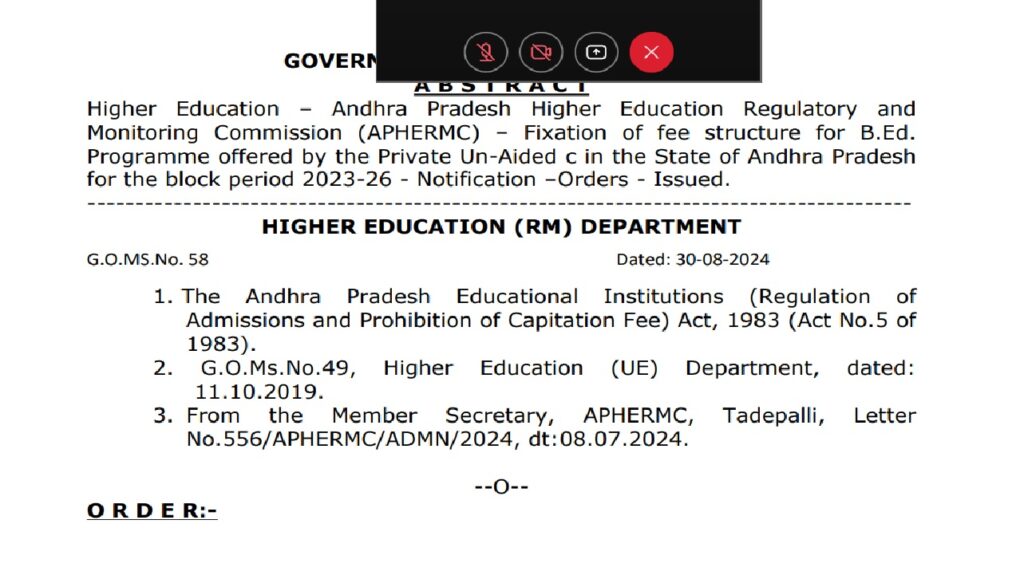
The Government of Andhra Pradesh, Andhra Pradesh Higher Education Regulatory and Monitoring Commission (APHERMC) – Fixation of fee structure for B.Ed Programme offered by the Private Un-Aided c in the State of Andhra Pradesh for the block period 2023-26 GO 58 Dated: 30-08-2024. through its Higher Education Regulatory and Monitoring Commission (APHERMC), has established the fee structure for B.Ed. programs offered by private, unaided colleges across the state. These regulations, outlined for the block period 2023-26, ensure transparency and fairness in the education sector. The guidelines also align with the state’s commitment to preventing the exploitation of students through capitation fees and other unlawful charges.
Introduction to Fee Regulation in Higher Education
Higher education in Andhra Pradesh has undergone significant transformations over the years. The state has continuously worked towards making education accessible, affordable, and free from malpractices such as capitation fees. The Andhra Pradesh Higher Education Regulatory and Monitoring Commission (APHERMC) is a key body responsible for ensuring that educational institutions adhere to these principles. The recent notification regarding the fee structure for B.Ed. programs underlines the state’s commitment to maintaining these standards.
Legal Framework Governing the Fee Structure
The notification issued by the Government of Andhra Pradesh is grounded in the legal framework established by the Andhra Pradesh Educational Institutions (Regulation of Admissions and Prohibition of Capitation Fee) Act, 1983. This Act empowers the state to regulate admissions and fee structures to protect students from unfair practices. Additionally, the APHERMC Rules, 2019, further reinforce these regulations, providing a clear directive for the implementation of the fee structure.
Key Provisions of the Notification
The government, after thorough examination and based on recommendations from the APHERMC, has issued a detailed notification regarding the fee structure for B.Ed. programs for the period 2023-26. Here are the critical aspects of this notification:
1. All-Inclusive Annual Fee
The fee determined by the government is comprehensive, covering various aspects of a student’s educational experience. This includes tuition fees, affiliation fees, and costs related to identity cards, medical expenses, sports, cultural activities, internet access, college magazines, and other student-related activities. The fee also encompasses charges for examinations, maintenance, extracurricular activities, and development funds, ensuring that students are not burdened with additional costs.
2. Continuity of Fees for the Block Period
Students who are admitted during the 2023-24 to 2025-26 period will pay the same fee throughout their course duration. This provision ensures that students are not subjected to arbitrary fee hikes during their education.
3. Affiliation Requirements
Colleges must maintain their affiliations with the respective universities. Institutions that fail to secure or renew their affiliations for the academic year 2022-23 are prohibited from collecting any fees. This measure ensures that only accredited institutions can operate and charge fees, safeguarding students’ interests.
4. Fee Structure for New Colleges
For new colleges or courses introduced during this block period, the fee structure will be set at the minimum level among similar programs. This provision prevents new institutions from charging exorbitant fees compared to established colleges.
5. Prohibition of Additional Charges
Institutions are strictly prohibited from charging any fees beyond what is specified in the notification. Any additional charges, including donations or fees under other guises, will be treated as capitation fees. Institutions found violating this rule will face severe penalties under the Andhra Pradesh Educational Institutions Act, 1983, and the APHERMC Act, 2019.
Accountability and Transparency in Fee Collection
The notification emphasizes the need for institutions to maintain proper accounts, adhering to lawful accounting practices such as the Accrual/Mercantile basis of accounting. Colleges are required to process all payments and receipts through banks, ensuring transparency and traceability. The APHERMC has made it clear that failure to comply with these regulations will result in the rejection of fee proposals, preventing institutions from collecting any fees.
Penalties for Non-Compliance
The APHERMC holds the authority to impose penalties on institutions that do not adhere to the prescribed fee structure or engage in unlawful practices. The Commission can review and adjust the fee structure at any time, even after it has been notified. This ensures that the fee regulations remain fair and relevant throughout the academic period.
Importance of Recognition and Permissions
The notification also clarifies that the government’s fee fixation does not automatically grant institutions the right to operate B.Ed. programs. Colleges must still obtain the necessary recognition and permissions from the relevant authorities, including the All India Council for Technical Education (AICTE), University Grants Commission (UGC), National Council for Teacher Education (NCTE), and the concerned university.
Conclusion
The Government of Andhra Pradesh’s decision to regulate the fee structure for B.Ed. programs through APHERMC reflects its commitment to providing quality education at a reasonable cost. By ensuring that fees are transparent, fair, and regulated, the state protects students from financial exploitation while promoting a more equitable education system. The rigorous guidelines set forth in this notification not only benefit students but also uphold the integrity and credibility of the state’s higher education institutions.