


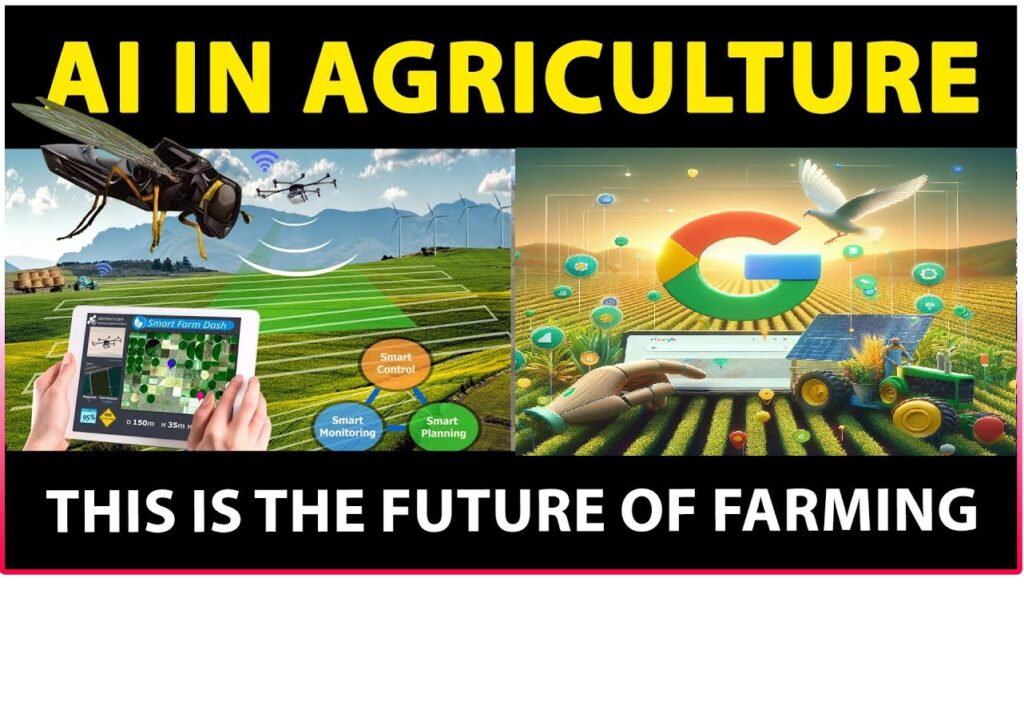
Google Launches AI-Based Agricultural Information Tool for India: Enhancing Crop Yields and Farm Efficiency
Google has unveiled an innovative AI-based tool, the Agricultural Landscape Understanding (ALU), to revolutionize farming practices in India. Designed to provide granular agricultural insights, the ALU tool leverages high-resolution satellite imagery and machine learning to support farmers in drought preparedness, irrigation management, and market access. This groundbreaking initiative aims to make agricultural practices more data-driven, thereby boosting crop yields and efficiency across the Indian agricultural landscape.
Transforming Indian Agriculture with AI: The ALU Tool
The ALU tool, announced at Google I/O Connect in Bengaluru, is a testament to Google’s commitment to harnessing AI for social good. By offering detailed information on crop types, field sizes, water availability, and access to roads and markets, the tool addresses the myriad challenges faced by Indian farmers. Built on Google Cloud, the ALU tool is developed in collaboration with the Anthro Krishi team and India’s digital AgriStack. The tool is already being explored by prominent organizations like Ninjacart, Skymet, Team-Up, IIT Bombay, and the Government of India.
Empowering Farmers with Data-Driven Insights
The AI platform’s ability to provide granular-level information is crucial for the Indian agricultural sector. Using high-resolution satellite imagery and machine learning algorithms, the ALU tool can delineate field boundaries and offer precise data on drought readiness and irrigation needs. This empowers farmers to make informed decisions, optimize resource usage, and improve crop yields.
Google’s initiative aims to tackle significant issues such as accessing capital and subsidies, improving yields, and enhancing market access. By tracking individual farm fields across the country, the ALU tool provides valuable insights that can help farmers enhance their productivity and sustainability.
AI in Indian Agriculture: A Collaborative Effort
Google’s ALU tool is part of a broader effort to integrate AI into Indian agriculture. The Indian government has also embraced AI to improve farm yields through initiatives like Kisan-e-Mitra, an AI-powered chatbot that provides farmers with information on government schemes and the National Pest Surveillance System (NPSS), which uses AI and machine learning to identify crop issues. These efforts highlight the potential of AI to transform the agricultural sector by offering timely and accurate information to farmers.
New AI Tools for Indian Developers
In addition to the ALU tool, Google has introduced several new AI tools aimed at Indian developers. Project Vaani, in collaboration with the Indian Institute of Science (IISc), has gathered 14,000 hours of speech data across 58 languages, making it one of the largest language datasets in India. This project aims to enhance the capabilities of Large Language Models (LLMs) on Indic languages, facilitating more accurate and contextually relevant AI applications.
Google has also launched the Composition of Language Models (CALM) tool, enabling coding in regional languages. This tool allows developers to create more nuanced and efficient solutions by combining specialized language models with general-purpose AI models like Gemma.
Supporting India’s Startup Ecosystem
Google’s commitment to fostering AI innovation in India extends to supporting startups through the MeitY Startup Hub. By training 10,000 startups in AI and providing up to $350,000 in Google Cloud credits, Google aims to ignite innovation across India’s vibrant startup ecosystem. This initiative includes programs like the Gen AI Hackathon and the Solve for India Startup Bootcamp, which support early-stage startups in tackling challenges across healthcare, climate change, agriculture, cybersecurity, and digital public infrastructure using AI.
Expanding AI Capabilities with Gemini and Gemma
Google’s Gemini models, designed to be multimodal, allow developers to reason across text, images, videos, code, and more. The expansion of the 2 million token context window on Gemini 1.5 Pro enables developers to process and understand large volumes of data in a single request. This capability is particularly beneficial for organizations like i-Saksham, which uses Gemini to extract actionable insights from coaching sessions conducted in Hindi.
Gemma 2, the next generation of open models for responsible AI innovation, features significant performance improvements and safety advancements. These models are optimized by NVIDIA to run efficiently on next-gen GPUs and a single TPU host in Vertex AI, making them accessible to developers in India.
Innovations in On-Device AI and Software Development
Google’s Matformer framework, developed by the Google DeepMind team in India, enhances on-device AI capabilities. This framework allows developers to mix and match different sized Gemini models within a single framework, optimizing performance and resource consumption. This ensures smoother, faster, and more accurate AI experiences on mobile devices, even in areas with unreliable networks.
To streamline software development, Google introduced Firebase AI Monitoring, Project IDX integrations, and AI Testing Agents in Firebase App Distribution. These tools provide real-time insights into LLM-powered features, enable rapid native Android app development, and assist in app testing, making the development process more efficient and intuitive.
Conclusion
Google’s introduction of the Agricultural Landscape Understanding (ALU) tool marks a significant milestone in leveraging AI to transform Indian agriculture. By providing detailed and accurate insights to farmers, the ALU tool has the potential to enhance productivity, sustainability, and profitability in the agricultural sector. Combined with Google’s broader efforts to support AI innovation and development in India, these initiatives position the country at the forefront of the global AI revolution.